mCLASS Leveled Practice Library

Introduction

Each of the links below launches a video of a student being assessed. Each video opens in a new window. You may wish to use headphones since they all feature audio. 

Select the difficulty level you feel is appropriate for your current skill set. Using your device, score the student’s responses, and check your results against the answer key at the end. 

Bookmark this page so you can come back to it easily. For questions, contact Amplify Customer Services at (800) 823-1969.

mCLASS with DIBELS 8th Edition Scoring Practice

PSF – Phonemic Segmentation Fluency

NWF – Nonsense Word Fluency

WRF – Word Reading Fluency

ORF – Oral Reading Fluency

mCLASS Lectura Scoring Practice

FNL – Fluidez en nombrar letras

FSS – Fluidez en la segmentación de sílabas

QQ – ¿Qué queda?

  • G2 Easy             YouTube    

FSL – Fluidez en los sonidos de letras

LSS – Fluidez en los sonidos de sílabas

  • G1 Easy                YouTube   
  • GK Challenge      YouTube   

FEP – Fluidez en la lectura de palabras

  • G1 Easy                YouTube    
  • G3 Medium           YouTube    

FLO – Fluidez en la lectura oral

G4 Challenge        YouTube   

G1 Easy                 YouTube    

G3 Medium           YouTube  

G1 Challenge        YouTube  

The High Impact Tutoring Implementation Workshop Series

To view this protected page, enter the password below:


The High-Impact Tutoring Implementation Workshop Series

To view this protected page, enter the password below:


Utah ELA Review for Grades PK–5

Thank you for taking the time to review Amplify’s core ELA program for PK–5. Amplify Core Knowledge Language Arts® (CKLA) is a state-approved core ELA curriculum designated as a primary core program that fully meets the Science of Reading requirements outlined in SB 127.

Amplify CKLA, developed in partnership with the Core Knowledge Foundation, was designed to help teachers implement Science of Reading principles and evidence-based instructional practices. Scroll down to learn how CKLA is uniquely designed to help all your students make learning leaps in literacy.

Illustration of a diverse group of people engaged in creative activities, including a woman holding architectural plans and a young girl reading a book.

Step 1: Program Introduction

Welcome to Amplify CKLA! Before you dive into our materials, watch the video below to learn about the big picture behind Amplify CKLA’s pedagogy.

In this video, Susan Lambert (Chief Academic Officer and host of Science of Reading: The Podocast) shares why Amplify CKLA was created, how it is built on the Science of Reading, and the impact it’s making across the country.

Step 2: Program Overview

Amplify CKLA is different for a reason. Watch the overview video below to learn about these differences and why educators love them.

In this video, you’ll get an in-depth look at the program’s overall structure and organization, the design behind our proven lessons, and the materials included to support teaching and learning.

The Amplify CKLA Program Guide also provides an in-depth view of how Amplify CKLA works, how it’s structured, and why it’s uniquely capable of helping you bring reading instruction based on the Science of Reading to your classroom.

Evidence-based design

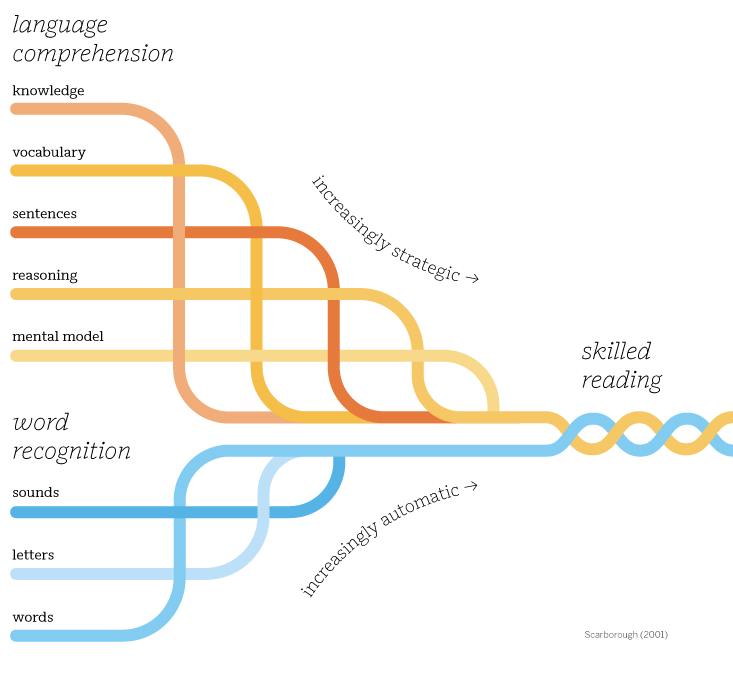
Amplify CKLA is rooted in Science of Reading research. Mirroring Scarborough’s Rope, Amplify CKLA delivers a combination of explicit foundational skills with meaningful knowledge-building.

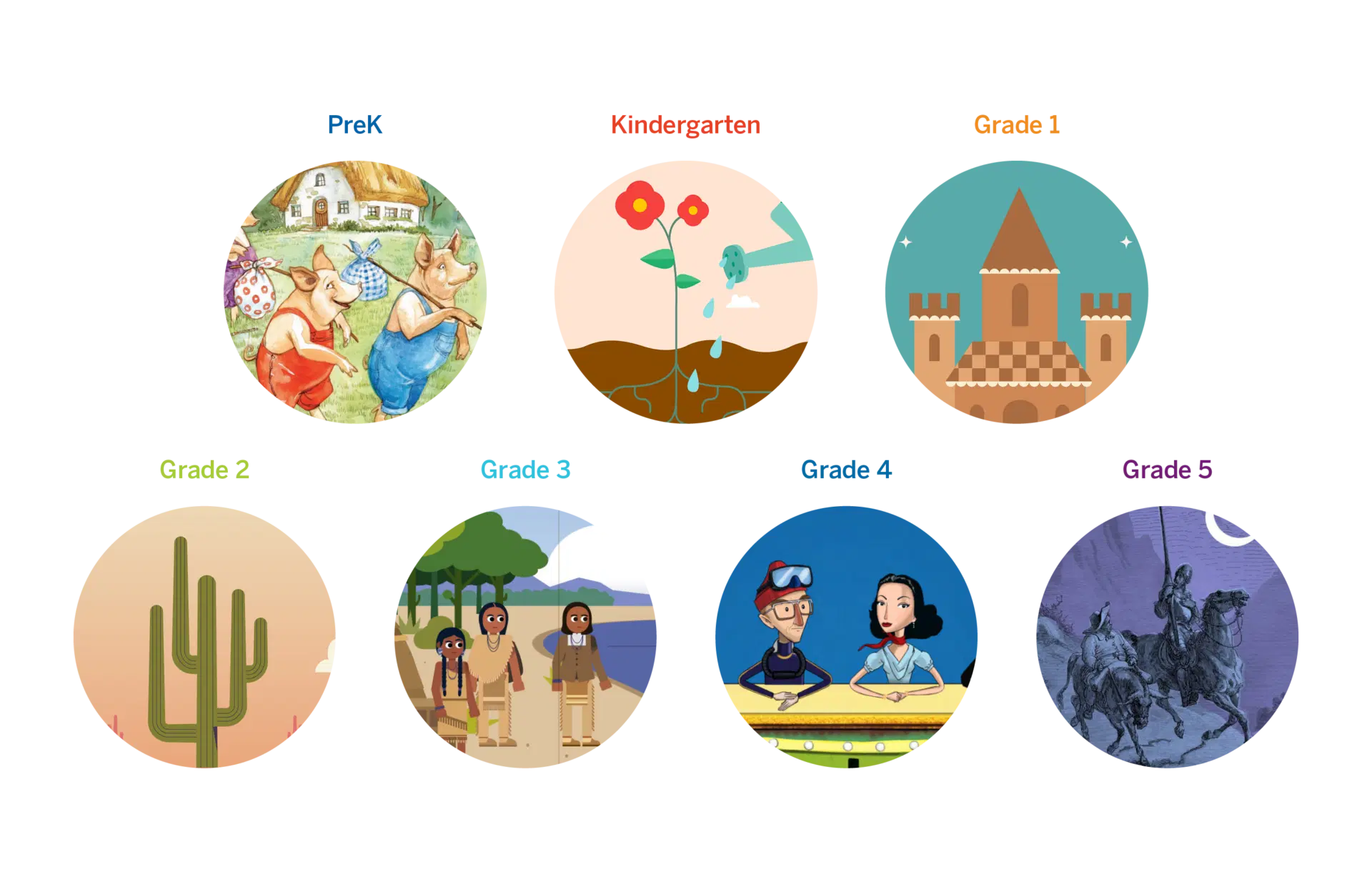
  • In Grades PK–2, dedicated knowledge-building and explicit skills instruction are taught simultaneously through two distinct instructional strands.
  • In Grades 3–5, dedicated knowledge-building and explicit skills instruction are woven together and delivered through one integrated strand.
Scarborough's Rope

Grades K–2 Skills and Knowledge Strands
Every day students in Grades K–2 complete one full lesson that explicitly and systematically builds foundational reading skills in the Skills Strand, as well as one full lesson that builds robust background knowledge to access complex text in the Knowledge Strand. Through learning in each of these strands, students develop the early literacy skills necessary to help them become confident readers and build the context to understand what they’re reading.

Grades 3–5 Integrated Strand
In Grades 3–5, Knowledge and Skills are integrated in one set of instructional materials. Lessons begin to combine skills and knowledge with increasingly complex texts, close reading, and a greater writing emphasis. Students can then use their skills to go on their own independent reading adventures.

Key features

For each Amplify CKLA key feature below, click the drop down arrow to learn more.

Built out of the latest research in the Science of Reading, Amplify CKLA delivers explicit instruction in both foundational literacy skills (systematic phonics, decoding, and fluency) and background knowledge in grades PK–2 with an integrated approach to explicit instruction in grades 3–5.

Review this Science of Reading toolkit to learn more about the Science of Reading best practices integrated throughout CKLA.

Amplify CKLA aligns with the instructional principles recommended by Orton Gillingham and LETRS.

  • Structured–Concepts are taught through consistent routines
  • Sequential–Concepts are taught in a logical, well-planned sequence
  • Systematic–Phonemes are taught from simplest to most complex
  • Explicit–Decoding and encoding concepts are taught directly and explicitly
  • Multi-sensory–Instruction is delivered through visual, auditory, and kinesthetic-tactile pathways
  • Cumulative–Concepts are applied in decodable, connected texts with constant review and reinforcement

Watch this video to learn more!

Additionally, great reading instruction starts with helping kids develop great decoding skills. Our instruction is supported by:

The Science of Reading reveals knowledge as an essential pillar of reading comprehension and lifelong literacy. Hear from author Natalie Wexler and CKLA customers on edWebinar about the importance of knowledge-building in reading instruction.

Students build grade-appropriate subject-area knowledge and vocabulary in history, science, literature, and the arts while learning to read, write, and think creatively and for themselves. Our instruction is supported by:

  • Knowledge builders that provide a quick overview of each domain with its key ideas.
  • Interactive Read-Alouds designed to build knowledge and vocabulary.
  • Content-rich anchor texts that support students as they tackle increasingly complex text and sharpen their analytical skills.
  • Social and emotional learning paired with lessons in civic responsibility.

Amplify CKLA not only received an all-green rating from the rigorous evaluators at EdReports, but it was also recently recognized by the Knowledge Matters Campaign as a high-quality literacy program that excels in building knowledge. Our shared message: background knowledge is essential to literacy and learning.

Student-led reading practice should be purposeful and connected to the core. That’s why Amplify createdBoost Reading. As an optional add-on to Amplify CKLA, students have the opportunity to practice skills directly tied to the skills they’ve been working on during core reading time. Boost Reading also adapts to each student to address their personal gaps and bolsters foundational skills at a pace that supports their individual development.

Boost Reading’s collection of 40+ adaptive games target foundational reading skills and develops them in alignment with Science of Reading principles. Unlike other adaptive games, we ensure students:

  • Practice the right skills at the right time. Our embedded placement tool ensures students receive the content and skill practice most appropriate for their current reading level. From there, students move through our curriculum along their own learning pathway where they encounter personalized content tailored to their evolving skill and grade levels.
  • Progress along a pathway that adapts on multiple dimensions, not just one. For example, a student can work on early first-grade decoding in one game while building more advanced vocabulary knowledge in another.
  • Practice skills in tandem. For example, a student is never forced to master one skill area before proceeding to the next. Instead, we offer students that opportunity to work on multiple skills concurrently.
  • Feel supported with scaffolding, instruction, and practice that adapts based on student performance.
  • Stay engaged by giving them immediate and clear feedback. These results are never punitive. Instead our always-positive feedback is delivered in the context of the game world and is designed to motivate students to keep trying.

Click the buttons below to learn more:

Step 3: Program Resources

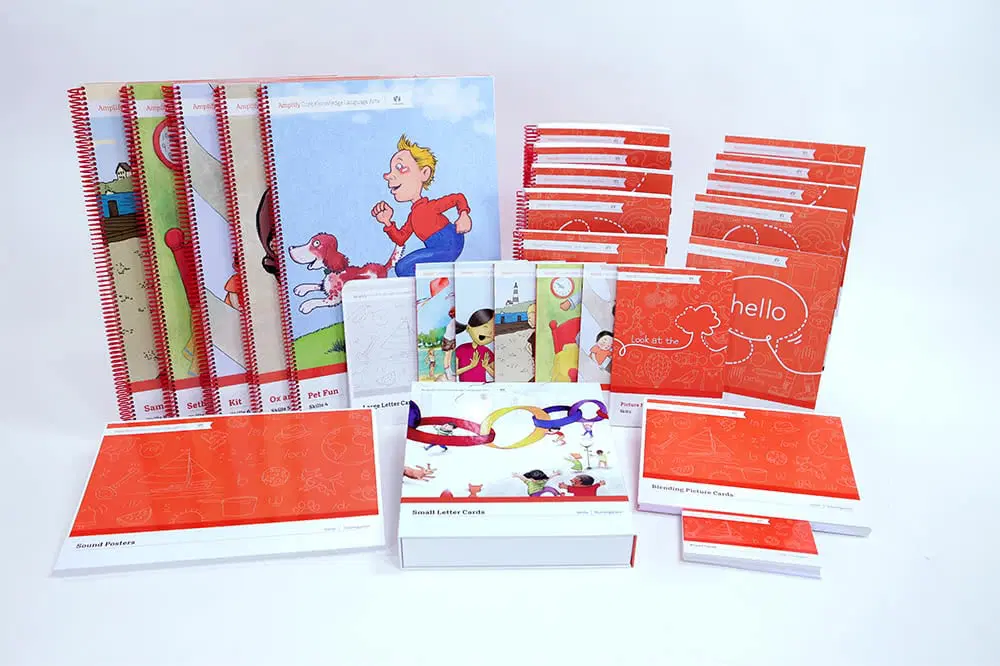
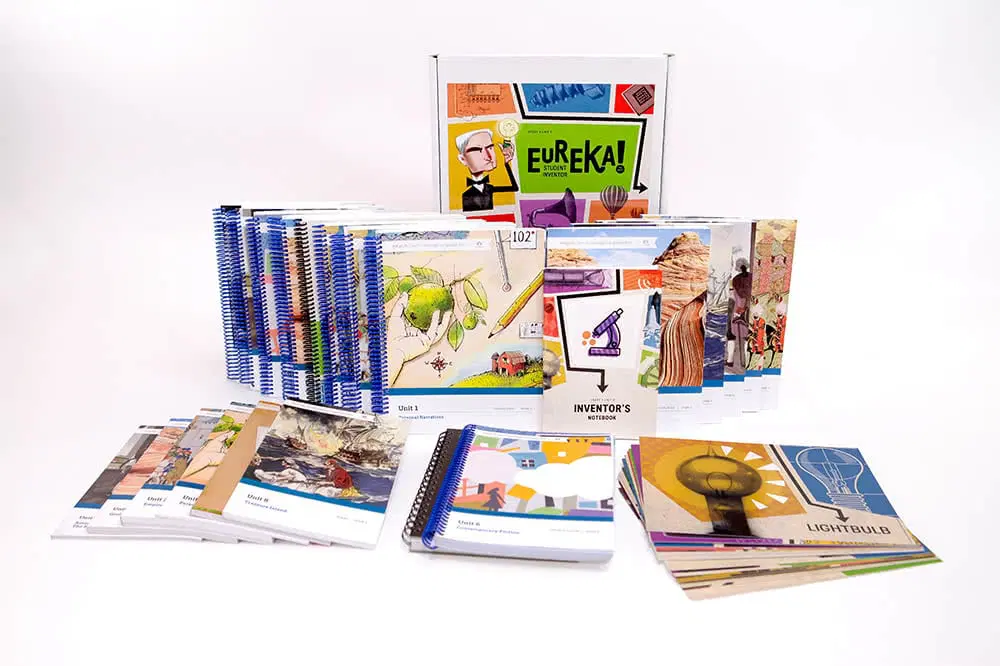
Easy-to-use print materials

Amplify CKLA’s easy-to-use materials bring foundational skills and knowledge to life in the classroom.

Download the Amplify CKLA Components guide to see components by grade and watch the print materials walkthrough below.

Engaging CKLA digital experience

The top-rated content of Amplify CKLA is now live with the digital experience that enhances instruction and saves time.

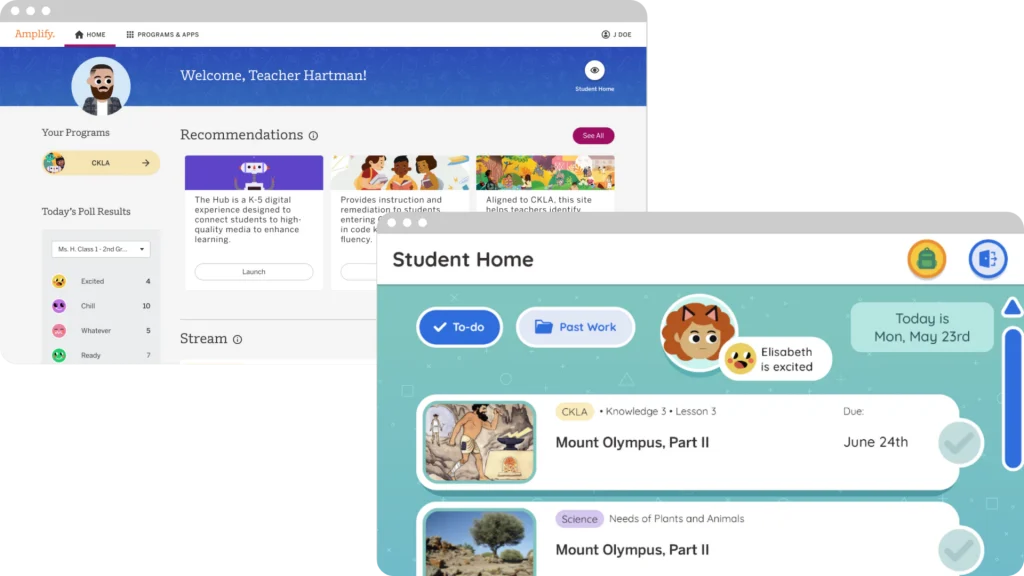
Two digital dashboards are displayed: one for teachers showing recommendations and a program list, and one for students showing to-do items and a lesson named Mount Olympus, Part II.

With the digital experience, everything is in one place, making it easier and more engaging than ever to plan lessons, present digital content, and review student work. Click the arrows below to learn more.

With the digital experience, teachers have access to ready-to-use and customizable lesson presentation slides, complete with all the prompts from the print Teacher Guide embedded in the teacher view. As teachers deliver each lesson, students can engage with the content in one cohesive experience—through these CKLA resources: Activity Books, slides, digital components, videos, Student Readers, and more.

The innovative live review tool found in the digital experience enables you to keep an eye on all of your students as they work on drawing, recording audio, uploading and capturing images, and typing or writing in pre-placed textboxes in their Activity Pages. This dynamic tool provides countless classroom management benefits, enabling you to spot and correct common mistakes as they’re happening, praise your students for thoughtful work, and identify students who are not engaged in the task at hand. Simply put, it will give you those valuable “eyes in the back of your head” you’ve warned your students about!

The digital experience integrates with various LMSs, allowing you and your students to access Amplify CKLA with the software you’re already comfortable using.

In the Amplify CKLA student digital experience, your students have one intuitive access point to fully engage with classroom instruction. Through the Student Home, students can easily access digital lessons with slides, Activity Pages, ebooks, videos, and other interactives from one simple dashboard. Students can draw, record audio, upload and capture images, and type or write in pre-placed text boxes in their Activity Pages.

CKLA review resources

Step 4: State Review Resources

Step 5: Program Access

Explore as a teacher

Before logging in, watch this brief video on navigating the CKLA Teacher Platform.

Ready to explore as a teacher? Follow these instructions:

  • Click the Amplify CKLA Teacher Platform button below.
  • Select Log in with Amplify.
  • Enter the teacher username: t1.utcklapk5@demo.tryamplify.net
  • Enter the teacher password: Amplify1-utcklapk5
  • Choose CKLA from the “Your Programs” menu on Educator Home.
  • Select a grade level from the drop-down menu at the top of the page.

Ready to explore as a Student? Follow these instructions:

  • Click the Amplify CKLA Teacher Platform button below.
  • Select Log in with Amplify.
  • Enter the student username: s1.utahcklapk5@demo.tryamplify.net
  • Enter the student password: Amplify1-utahcklapk5

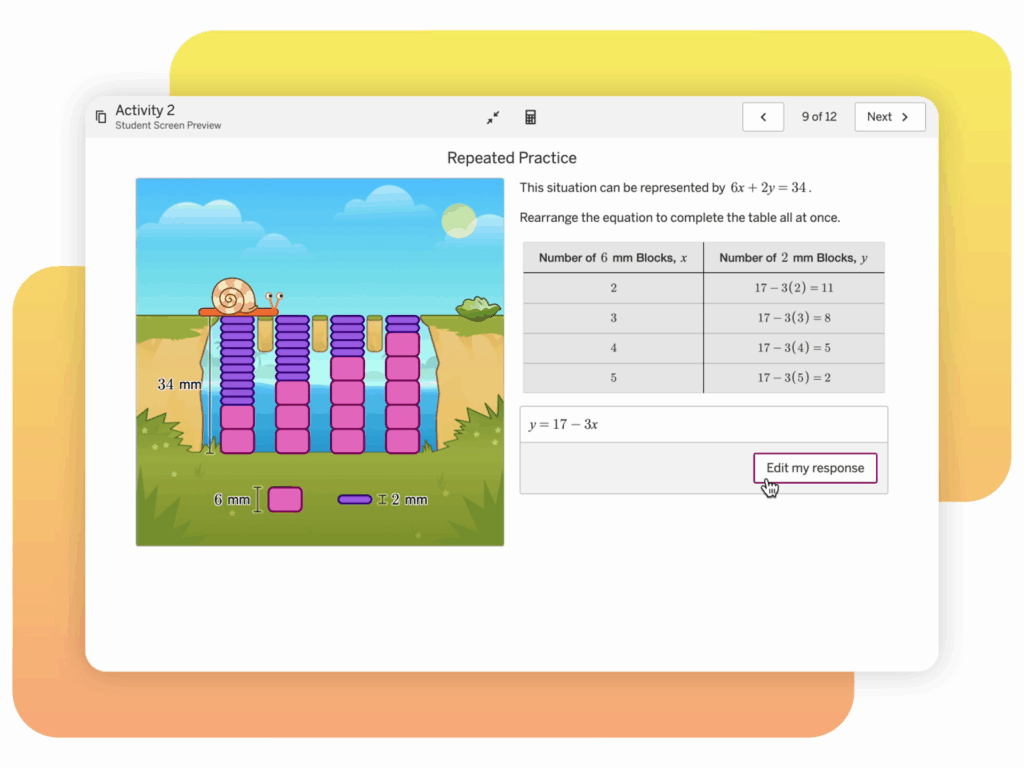
See what math that motivates looks like.

In Amplify Desmos Math, a structured approach to problem-based learning builds on students’ curiosity while strategically developing math fluency and lasting grade-level understanding.

This video library will give you a sense of what Amplify Desmos Math looks like in the classroom.

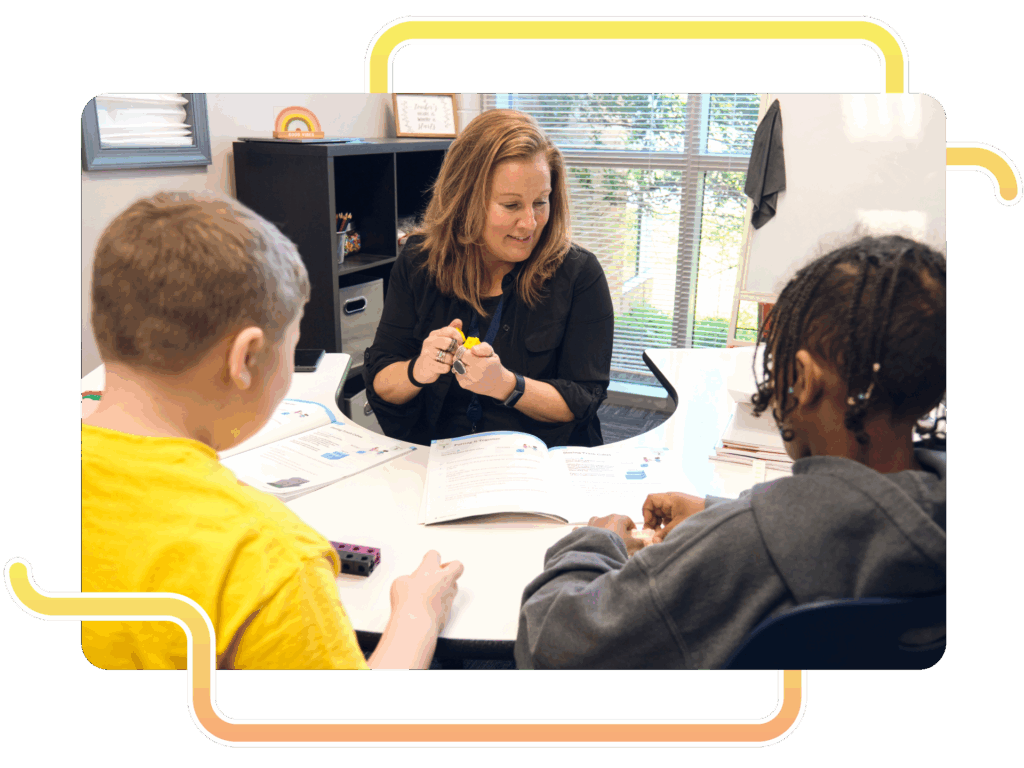
Two girls sit at a table with open books, one making hand gestures while smiling, the other looking at her and giving a thumbs up. Behind them are shelves filled with books, capturing the lively atmosphere of a math classroom.

Amplify Desmos Math in Action (K–5)

See the teachable structure in action with these videos showing a typical Amplify Desmos Math lesson. View print resources and try this lesson for free: Grade 3, Unit 2, Lesson 5: Rectangles and Arrays. In this lesson, students describe how the areas of rectangles are alike or different.

Warm-Up

Every Amplify Desmos Math lesson begins with a whole-class Warm-Up, an invitational Instructional Routine intended to provide a social moment at the start of the lesson in which every student has an opportunity to contribute. Some Warm-Ups build fluency or highlight a strategy that may be helpful in the current lesson. Other Warm-Ups act as an invitation into the math of the lesson. The Warm-Up for the first lesson of each unit introduces the Unit Story for the Unit.

Launch

The launch is a short, whole-class conversation that creates a need or excitement, provides clarity, or helps students connect to their prior knowledge or personal experience, which ensures that everyone has access to the upcoming work.

Monitor

As students work individually, in pairs, or in groups, teachers explore student thinking, ask questions, and provide support to help move the conversations closer to the intended math learning goal.

Connect

Teachers connect students’ ideas to the key learning goals of the lesson, facilitating class discussions that help students synthesize and solidify the big ideas.

Synthesis

Teachers ensure that students end the lesson with accurate and enduring understandings of the math goal through a synthesis of student ideas, explicit instruction, and reflection.

Show What You Know

Each lesson has a daily formative assessment focused on one of the key concepts in the lesson. Show What You Know moments are carefully designed to minimize the time students take to complete while maximizing the insight the teacher receives on a daily basis to attend to student needs during the following class.

Amplify Desmos Math in Action (6–A1)

See the teachable structure in action with these videos showing a typical Amplify Desmos Math lesson. View print resources and try this lesson for free: Grade 7, Unit 2, Lesson 9: Gallon Challenge. In this lesson, students use graphs to identify constants of proportionality.

Warm-Up

Every Amplify Desmos Math lesson begins with a whole-class Warm-Up, an invitational Instructional Routine intended to provide a social moment at the start of the lesson in which every student has an opportunity to contribute. Some Warm-Ups build fluency or highlight a strategy that may be helpful in the current lesson. Other Warm-Ups act as an invitation into the math of the lesson. The Warm-Up for the first lesson of each unit introduces the Unit Story for the Unit.

Launch

The launch is a short, whole-class conversation that creates a need or excitement, provides clarity, or helps students connect to their prior knowledge or personal experience, which ensures that everyone has access to the upcoming work.

Monitor

As students work individually, in pairs, or in groups, teachers explore student thinking, ask questions, and provide support to help move the conversations closer to the intended math learning goal.

Connect

Teachers connect students’ ideas to the key learning goals of the lesson, facilitating class discussions that help students synthesize and solidify the big ideas.

Synthesis

Teachers ensure that students end the lesson with accurate and enduring understandings of the math goal through a synthesis of student ideas, explicit instruction, and reflection.

Show What You Know

Each lesson has a daily formative assessment focused on one of the key concepts in the lesson. Show What You Know moments are carefully designed to minimize the time students take to complete while maximizing the insight the teacher receives on a daily basis to attend to student needs during the following class.

Hear from teachers.

Hear from teachers, administrators, and students across the country who are using Amplify Desmos Math in their classrooms right now.

A woman with straight, shoulder-length blonde hair smiles at the camera, wearing a striped sweater and hoop earrings. Shelves with books are visible in the background.

The Ohio High Impact Tutoring Consultancy Series

To view this protected page, enter the password below:


Buffalo Consultancy

To view this protected page, enter the password below:


Puyallup 6–8 Science Review | Amplify

To view this protected page, enter the password below:


See what an interactive 21st-century science curriculum looks like.

In Amplify Science, students take on the role of a scientist or engineer to actively investigate compelling phenomena through engaging hands-on activities, immersive digital simulations, comprehensive reading and writing activities, and lively classroom discussions.

This video library will give you a sense of what Amplify Science looks like in the classroom.

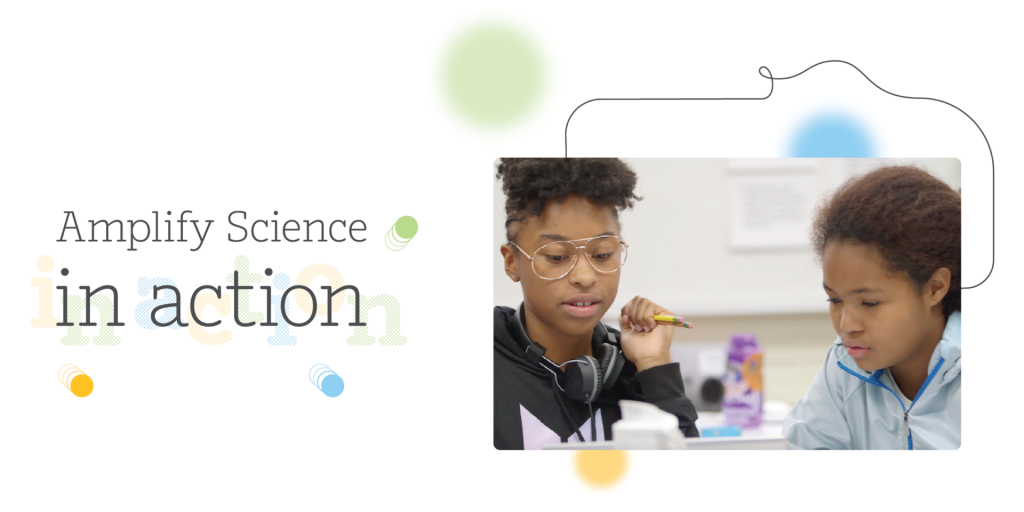
Two students, one wearing headphones, closely observe a science experiment in a classroom setting with the text "amplify science in action" above them.

Immersive experiences

Watch how Amplify Science integrates hands-on learning and digital modeling tools to support three-dimensional (3D) learning in elementary and middle school.

Inspiring curiosity with hands-on investigations

Grades K-5: As part of Amplify Science’s Animal and Plant Relationships unit, students take on the role of plant scientists. In this video, second-grade students from Chicago Public Schools are engaging with a hands-on model in which they simulate animal dispersal of seeds, measure how many seeds were dispersed to places where the seeds are likely to grow, and analyze their results.

Grades 6-8: As part of Amplify Science’s Populations and Resources unit, students take on the role of ecologists. In this video, sixth-grade students from Denver Public Schools are conducting a hands-on investigation involving yeast to test the effects of the availability of food on the size of a population.

Collecting evidence with simulations and modeling tools

Grades K-5: As part of Amplify Science’s Earth’s Features unit, students take on the role of geologists. In this video, fourth-grade students from Chicago Public Schools are using digital modeling tools to investigate how fossils and rocks can be used to make inferences about past environments.

Grades 6-8: As part of Amplify Science’s Chemical Reactions unit, students take on the role of chemists. In this video, seventh-grade students from Chicago Public Schools are using a digital simulation to find and observe substances that do and do not react when mixed together.

Literacy connections

Watch how Amplify Science integrates literacy and discourse to support three-dimensional (3D) learning in elementary and middle school.

Making cross-curricular connections with literacy

Grades K-5: As part of Amplify Science’s Animal and Plant Relationships unit, students take on the role of plant scientists. In this video, second-grade students from Chicago Public Schools use Student Books to gather information, practice reading skills, and respond to writing prompts to construct evidence-based arguments.

Grades 6-8: As part of Amplify Science’s Matter and Energy in Ecosystems unit, students take on the role of ecologists. In this video, sixth-grade students from Denver Public Schools are reading science articles, then responding to writing prompts to create arguments using evidence.

Talking like scientists

Grades K-5: As part of Amplify Science’s Weather and Climate unit, students take on the role of meteorologist. In this video, third-grade students from Chicago Public Schools are discussing the data they collected, as well as which Science and Engineering Practices they used during the lesson.

Grades 6-8: As part of Amplify Science’s Matter and Energy in Ecosystems unit, students take on the role of ecologists. In this video, sixth-grade students from Denver Public Schools are using evidence to support their claims as part of a classroom discussion.

Hear from teachers.

Hear from teachers, administrators, and students across the country who are using Amplify Science in their classrooms right now.

A week in the life

Grades K-5: We asked Keniesha Charleston, a second-grade teacher from Chicago Public Schools, to talk through an example of what one week of using Amplify Science is like in her classroom.

Grades 6-8: We asked Amy Trujillo, a sixth-grade teacher from Denver Public Schools, to talk through an example of what one week of using Amplify Science is like in her classroom.

From the classroom

Grades K-5: Hear from elementary school teachers, administrators, and students about the impact of using Amplify Science in their districts.

Grades 6-8: Hear from middle school teachers, administrators, and students about the impact of using Amplify Science in their districts.

Access a free sample

Ready to take a closer look at Amplify Science? No problem. Just complete the form for instant digital access to two sample units.

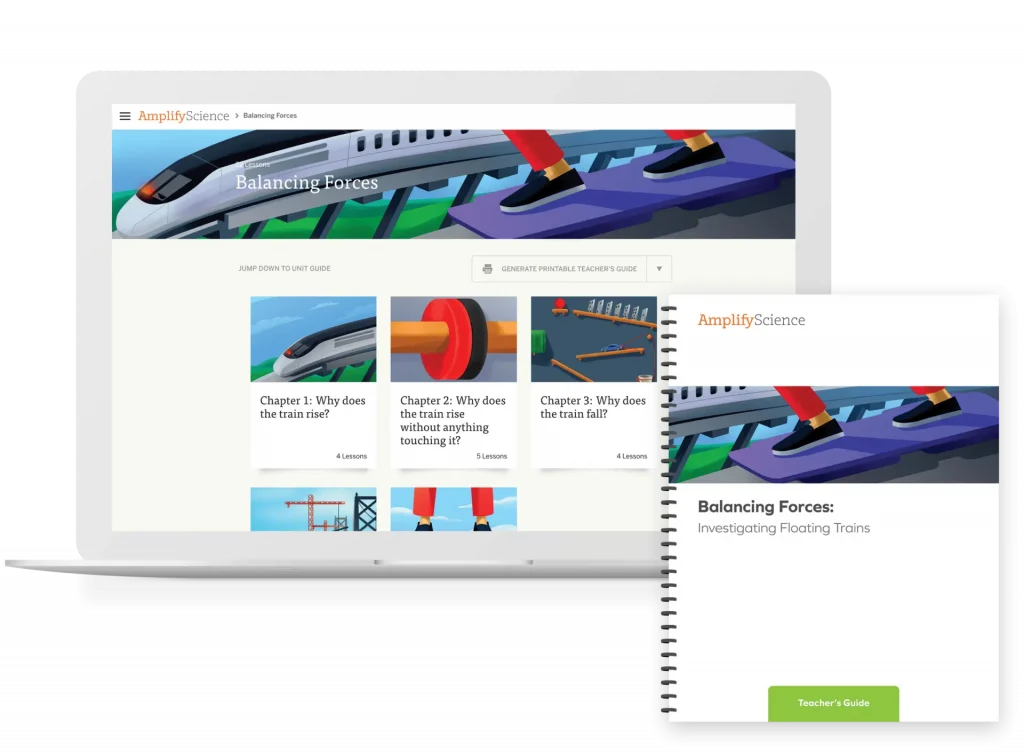
Una computadora portátil muestra un programa científico titulado "Equilibrio de fuerzas" con capítulos de lecciones sobre trenes. Frente a la computadora portátil, hay una guía para maestros encuadernada en espiral con imágenes y títulos coincidentes.

Embedded routine modeling for Amplify K–2 Skills instruction

New embedded support for Amplify Core Knowledge Language Arts (CKLA) and Amplify Caminos 3rd Edition brings expert guidance to the point of instruction. Short instructional modeling videos clarify how critical foundational literacy routines look, sound, and feel, taking the guesswork out of teaching and allowing educators to focus on cultivating more aha moments with students.

High-impact literacy routines

Lead K–2 foundational literacy instruction with clarity. These videos model the exact pacing, teaching script, physical cues, and feedback required for critical routines like Introducing the Spelling, Chaining, Blending, and more.

Just-in-time support

Embedded at the lesson level in the Amplify Classroom digital platform, modeling videos paired with downloadable routine guides provide immediate, point-of-use support. This eliminates the need to track down resources and ensures that foundational literacy skills are taught with consistency and fidelity across classrooms.

Parity across programs

With dedicated modeling videos and routine guides for both Amplify CKLA and Amplify Caminos, every teacher has access to expert guidance for foundational literacy instruction.

Real-time scaffolding and differentiation

Moving beyond the what of the lesson helps educators master the how. Each video provides specific scaffolds and strategies to help differentiate instruction and reach all learners in the moment.

CKLA Review for Scottsdale

Thank you for taking the time to review Amplify’s core ELA program for K–5.

Amplify Core Knowledge Language Arts (CKLA) is a cutting-edge and effective core ELA program for students in grades K–5. It was developed in partnership with the Core Knowledge Foundation, was specifically designed to help teachers implement Science of Reading principles, and features proven evidence-based instructional practices.

Step 1: Program Introduction

Welcome to Amplify CKLA! Before you dive into our materials, watch the video below to learn about the big picture behind Amplify CKLA’s pedagogy.

In this video, Susan Lambert (Chief Academic Officer and host of Science of Reading: The Podocast) shares why Amplify CKLA was created, how it is built on the Science of Reading, and the impact it’s making across the country.

Step 2: Program Overview

Amplify CKLA is different for a reason. Watch the overview video below to learn about these differences and why educators love them.

In this video, you’ll get an in-depth look at the program’s overall structure and organization, the design behind our proven lessons, and the materials included to support teaching and learning.

The Amplify CKLA Program Guide also provides an in-depth view of how Amplify CKLA works, how it’s structured, and why it’s uniquely capable of helping you bring reading instruction based on the Science of Reading to your classroom.

Evidence-based design

Amplify CKLA is rooted in Science of Reading research. Mirroring Scarborough’s Rope, Amplify CKLA delivers a combination of explicit foundational skills with meaningful knowledge-building.

  • In Grades PK–2, dedicated knowledge-building and explicit skills instruction are taught simultaneously through two distinct instructional strands.
  • In Grades 3–5, dedicated knowledge-building and explicit skills instruction are woven together and delivered through one integrated strand.

Grades K–2 Skills and Knowledge Strands
Every day students in Grades K–2 complete one full lesson that explicitly and systematically builds foundational reading skills in the Skills Strand, as well as one full lesson that builds robust background knowledge to access complex text in the Knowledge Strand. Through learning in each of these strands, students develop the early literacy skills necessary to help them become confident readers and build the context to understand what they’re reading.

Grades 3–5 Integrated Strand
In Grades 3–5, Knowledge and Skills are integrated in one set of instructional materials. Lessons begin to combine skills and knowledge with increasingly complex texts, close reading, and a greater writing emphasis. Students can then use their skills to go on their own independent reading adventures.

Key features

Built out of the latest research in the Science of Reading, Amplify CKLA delivers explicit instruction in both foundational literacy skills (systematic phonics, decoding, and fluency) and background knowledge in grades K–2 with an integrated approach to explicit instruction in grades 3–5.

Review this Science of Reading toolkit to learn more about the Science of Reading best practices integrated throughout CKLA.

Great reading instruction starts with helping kids develop great decoding skills. By building a solid foundation of phonological awareness and phonics, reading the words on the page becomes automatic so that comprehension and critical thinking can happen. Our instruction is supported by:

  • Step-by-step lessons with multi-sensory approaches, clear lesson objectives, and embedded formative assessments.
  • Decodable books and student readers with ebook and audiobook versions that feature engaging plots and relatable characters.
  • An engaging sound library with fun songs and videos that develop phonological awareness.
  • An interactive Vocab App featuring engaging activities with immediate feedback and automated, customized instruction based on student performance.

Students build grade-appropriate subject-area knowledge and vocabulary in history, science, literature, and the arts while learning to read, write, and think creatively and for themselves. Our instruction is supported by:

  • Knowledge builders that provide a quick overview of each domain with its key ideas.
  • Interactive Read-Alouds designed to build knowledge and vocabulary.
  • Content-rich anchor texts that support students as they tackle increasingly complex text and sharpen their analytical skills.
  • Social and emotional learning paired with lessons in civic responsibility.

Getting students caught up on reading skills requires more than just an extra mini-lesson here or there. It requires targeted and intensive instruction delivered in short bursts. Our intervention component:

  • Assesses and analyzes students’ areas of mastery and growth.
  • Automatically groups students with like needs.
  • Provides educators with ready-to-teach, research-based instructional progressions that last 10-days.
  • Progress monitors students, updates their skill profiles, and reforms groups for the next 10-day period.

Student-led reading practice should be purposeful and connected to the core. In addition to practicing skills directly tied to the skills they’ve been working on during ELA time, Amplify CKLA students have opportunities to interact with adaptive content that addresses their personal gaps and bolsters foundational skills at a pace that supports their individual development.

Our collection of 40+ adaptive games target foundational reading skills and develops them in alignment with Science of Reading principles. Unlike other adaptive games, we ensure students:

  • Practice the right skills at the right time. Our embedded placement tool ensures students receive the content and skill practice most appropriate for their current reading level. From there, students move through our curriculum along their own learning pathway where they encounter personalized content tailored to their evolving skill and grade levels.
  • Progress along a pathway that adapts on multiple dimensions, not just one. For example, a student can work on early first-grade decoding in one game while building more advanced vocabulary knowledge in another.
  • Practice skills in tandem. For example, a student is never forced to master one skill area before proceeding to the next. Instead, we offer students that opportunity to work on multiple skills concurrently.
  • Feel supported with scaffolding, instruction, and practice that adapts based on student performance.
  • Stay engaged by giving them immediate and clear feedback. These results are never punitive. Instead our always-positive feedback is delivered in the context of the game world and is designed to motivate students to keep trying.

From the printed page to the screen, we bring foundational skills and knowledge to life in the classroom.

Download the Amplify CKLA Components guide to see components by grade.

Download the Remote and hybrid learning guide to learn how we support in-person, remote, and hybrid instruction.

Engaging digital experience

The top-rated content of Amplify CKLA is now live with the digital experience that enhances instruction and saves time.

With the digital experience, everything is in one place, making it easier and more engaging than ever to plan lessons, present digital content, and review student work. Click the arrows below to learn more.

With the digital experience, teachers have access to ready-to-use and customizable lesson presentation slides, complete with all the prompts from the print Teacher Guide embedded in the teacher view. As teachers deliver each lesson, students can engage with the content in one cohesive experience—through these CKLA resources: Activity Books, slides, digital components, videos, Student Readers, and more.

The innovative live review tool found in the digital experience enables you to keep an eye on all of your students as they work on drawing, recording audio, uploading and capturing images, and typing or writing in pre-placed textboxes in their Activity Pages. This dynamic tool provides countless classroom management benefits, enabling you to spot and correct common mistakes as they’re happening, praise your students for thoughtful work, and identify students who are not engaged in the task at hand. Simply put, it will give you those valuable “eyes in the back of your head” you’ve warned your students about!

The digital experience integrates with various LMSs, allowing you and your students to access Amplify CKLA with the software you’re already comfortable using.

In the Amplify CKLA student digital experience, your students have one intuitive access point to fully engage with classroom instruction. Through the Student Home, students can easily access digital lessons with slides, Activity Pages, ebooks, videos, and other interactives from one simple dashboard. Students can draw, record audio, upload and capture images, and type or write in pre-placed text boxes in their Activity Pages.

Step 3: Program Resources

Digital navigation walkthrough

Physical materials walkthrough

Step 4: Arizona Review Resources

Arizona resources:

CKLA review resources:

Step 5: Demo Program Access

Explore as a teacher

Before logging in, watch this brief video on navigating the CKLA Teacher Platform.

Ready to explore as a teacher? Follow these instructions:

  • Click the Amplify CKLA Teacher Platform button below.
  • Select Log in with Amplify.
  • Enter the teacher username: t1.scottsdaleunified@demo.tryamplify.net
  • Enter the password: Amplify1-scottsdaleunified
  • Click the CKLA icon.
  • Select a grade level from the drop-down menu at the top of the page.

Explore as a student

Before logging in, watch this brief video on navigating the CKLA Student Hub.

Ready to explore as a student? Follow these instructions:

  • Click the CKLA Student Hub button below.
  • Select Log in with Amplify.
  • Enter the student username: s1.scottsdaleunified@demo.tryamplify.net
  • Enter the password: Amplify1-scottsdaleunified
  • Click the Hub icon
  • Select a grade level.

A powerful partnership

Amplify Science was developed by the science education experts at UC Berkeley’s Lawrence Hall of Science and the digital learning team at Amplify.

The word "Amplify" is written in orange bold letters with a period at the end against a white background.
The logo for The Lawrence Hall of Science, University of California, Berkeley, features blue text on a light background and is recognized by educators using Amplify Science for middle school science programs.

Back to school 2020–21 updates

Back to school 2020 is coming! Click here for more information on all of the improvements and new features we’re adding to Amplify Science for the new school year.

Program introduction

Onboarding: what to expect

Welcome to Amplify Science! To help you know what’s coming next, we created the following outline of the steps of the onboarding process. You can use it as a reference.

Administrators receive launch email

  • Share the information with teachers
  • Submit the shipping survey sent to your email

Log In

  • Go to learning.amplify.com
  • Click on Log in with Clever or Google 
  • Enter your FCPS credentials
  • Demo Account for full access to Amplify Curriculum without access to personalized class rosters:
    • Go to learning.amplify.com
    • Click on login with Amplify
    • Username: t.Fayette2020@tryamplify.net
    • Password:  AmplifyNumber1

Ensure you have received all materials and components

  • Teachers have access to a series of “Unboxing your materials kit” videos. If you’re interested in watching those, click here.

Check out the professional learning opportunities and/or access the Getting Started Resources below.

If you need assistance, please see the help resources or reach out to your Educational Partnerships Manager or PD manager at caffleck@amplify.com, pworks@amplify.com with any questions.

K–5 resources

To ensure your first day using Amplify Science in the classroom is as seamless and smooth as possible, we recommend reviewing the following checklist before the first day of school.

A graphic with the text "Pre-launch checklist for teachers" and an orange "Download PDF" button below. An icon of a checklist with a down arrow is on the left.

What’s coming to my school?

Each unit of Amplify Science comes with a hands-on materials kit. Each hands-on materials kit arrives in one to three boxes and contains:

  • Consumable materials for two uses of 25 or 36 students (depending on school purchase)
  • Non-consumable materials
  • Classroom wall materials
  • Premium print materials (card sorts, vocabulary rings, etc.).
  • 18 copies of each Student Book (5 titles each unit, K–1 will receive 5 big books per unit)
  • A blackline master of the Student Investigation Notebook

You can find complete materials lists for each unit in the following PDF. This information is also available in the digital Teacher’s Guide within the program.

Button for downloading a PDF of a K-5 materials list. An icon of a document with a downward arrow is on the left.

Onboarding videos

Our team has created a series of short videos to help get you started with Amplify Science:

What’s online?

Planning strategies

How to log in and navigate

NGSS introduction

Planning guides

As you prepare to plan for a unit, download our planning guides to help walk you through the most important resources to locate in either the print or digital Teacher’s Guide to help you plan:

    Additional resources

    If you’re interested in learning more about each unit’s anchor phenomena, the Student Books in each unit, and more program features, download the resources below:

      Oregon Enhanced ELA State Review for K–5

      To view this protected page, enter the password below:


      Welcome, Minnesota educators!

      Thank you for taking the time to review Amplify’s CKLA resources for K–5.

      Amplify Core Knowledge Language Arts® (CKLA) is an effective core literacy resource for students in grades K–5. CKLA was developed in partnership with the Core Knowledge Foundation and was specifically designed to help teachers implement proven evidence-based instructional practices. CKLA is all green on EdReports- read the full review on EdReports.org.

      Click here for correlations to the Minnesota Learning Standards.

      Illustration featuring diverse cultural and historical elements like an african woman, an egyptian sphinx, a space rocket, and urban and natural landscapes under a starry sky.

      Virtual presentations

      Amplify CKLA for Grades K–2

      Amplify CKLA for Grades 3–5

      About CKLA

      Amplify CKLA is a core ELA program for grades K–5 that delivers:

      • A combination of explicit foundational skills with meaningful knowledge-building.
      • Embedded support and differentiation that get all students reading grade-level texts together.
      • Opportunities for students to see the strengths and experiences that all people share while celebrating each others’ unique identities and experiences.
      • Authentic Spanish language arts instruction with Amplify Caminos.

      How it Works

      Amplify CKLA teaches both foundational skills and background knowledge in grades K–2 and combines them in 3–5.

      • In grades K–2, students complete one full lesson that builds foundational reading skills and one full lesson that builds background knowledge.
      • In grades 3–5, students complete one integrated lesson combining skills and knowledge with increasingly complex texts, close reading, and a greater emphasis on writing

      What students Explore

      Amplify CKLA builds knowledge coherently across subjects and grades.

      Students make connections from year to year by exploring grade-appropriate subject-area knowledge and vocabulary in history, science, literature, and the arts while learning to read, write, and think creatively and for themselves.

      What students read

      Amplify CKLA puts a variety of texts in the hands of students every day to build and strengthen background knowledge and vocabulary, listening and reading comprehension, and decoding and fluency skills.

      A comprehensive approach to literacy instruction requires students to have a wide range of text experiences, including reading, listening, discussing, and writing. Check out our text complexity guide to learn more by clicking here. Most questions, tasks, and assignments in CKLA materials are text-dependent. See how we use questioning and analysis skills to help students understand text in CKLA here.

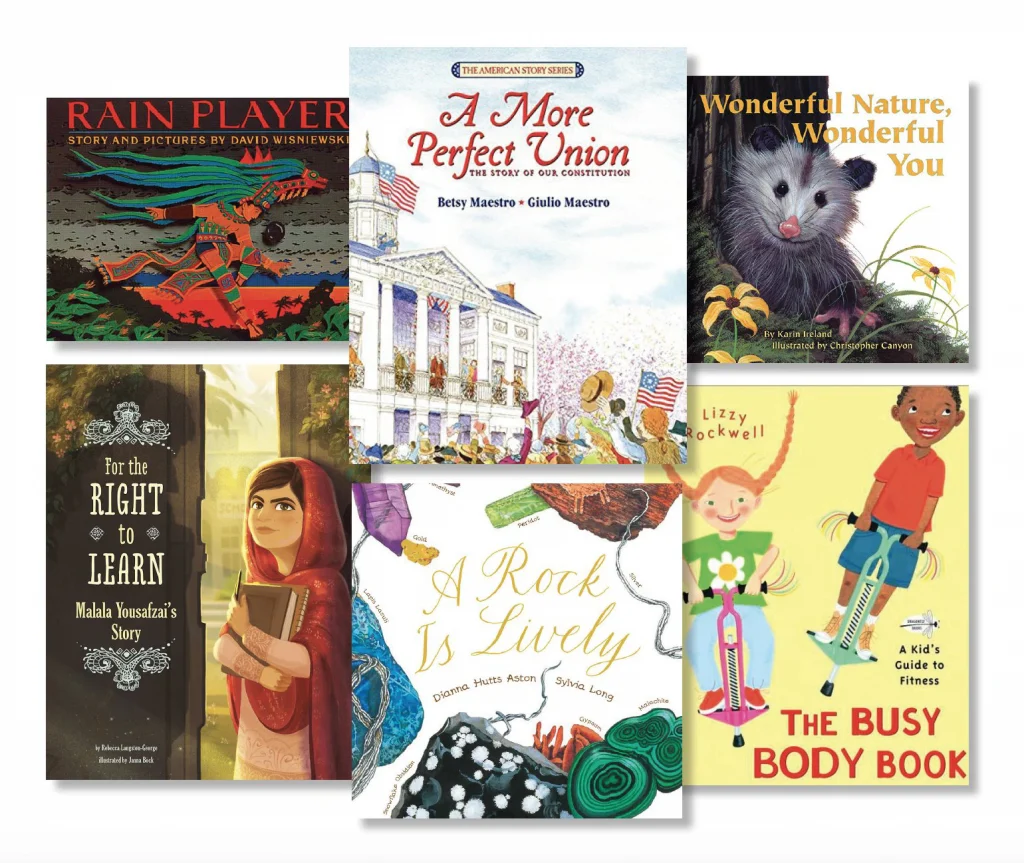
      More than that, we ensure the texts students read represent the world around them. With a diverse range of authors, topics, and characters, all students have ample access to both windows and mirrors. Our texts include the following:

      • Authentic books
      • Authentic text passages
      • Student Readers
      • Novel Guides (grades 3–5)

      Download a list of K-5 student texts.

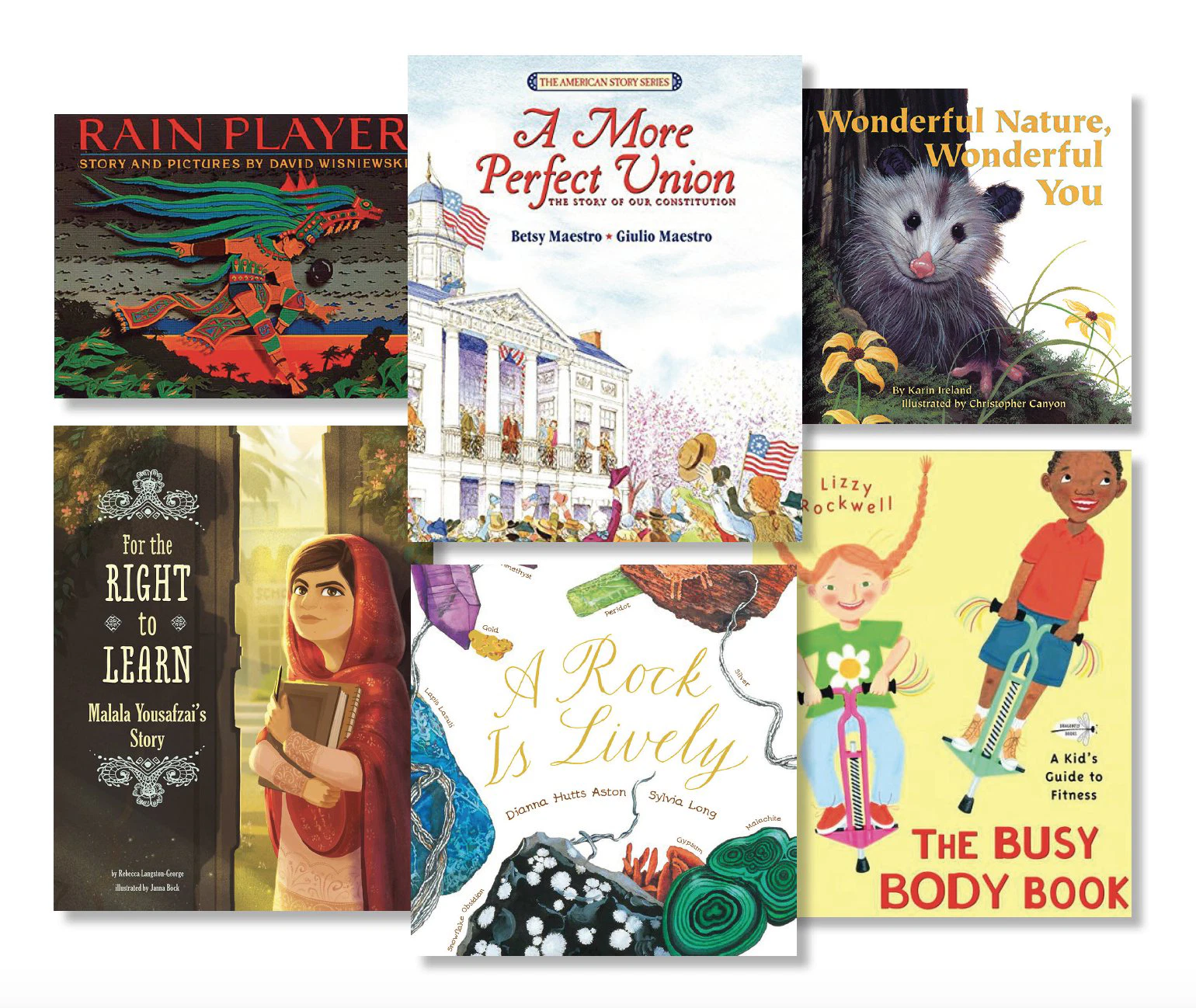
      Six children's book covers arranged in two rows, featuring colorful illustrations of animals, people, and nature. Titles include "Rain Player," "A More Perfect Union," and "The Busy Body Book.

      Supports LETRS

      Amplify CKLA aligns with the instructional principles recommended by LETRS.

      • Structured: Concepts are taught through consistent routines.
      • Sequential: Concepts are taught in a logical, well-planned sequence.
      • Systematic: Phonemes are taught from simplest to most complex.
      • Explicit: Decoding and encoding concepts are taught directly and explicitly.
      • Multi-sensory: Instruction is delivered through visual, auditory, and kinesthetic-tactile pathways.
      • Cumulative: Concepts are applied in decodable, connected texts with constant review and reinforcement.

      A comprehensive and cohesive solution

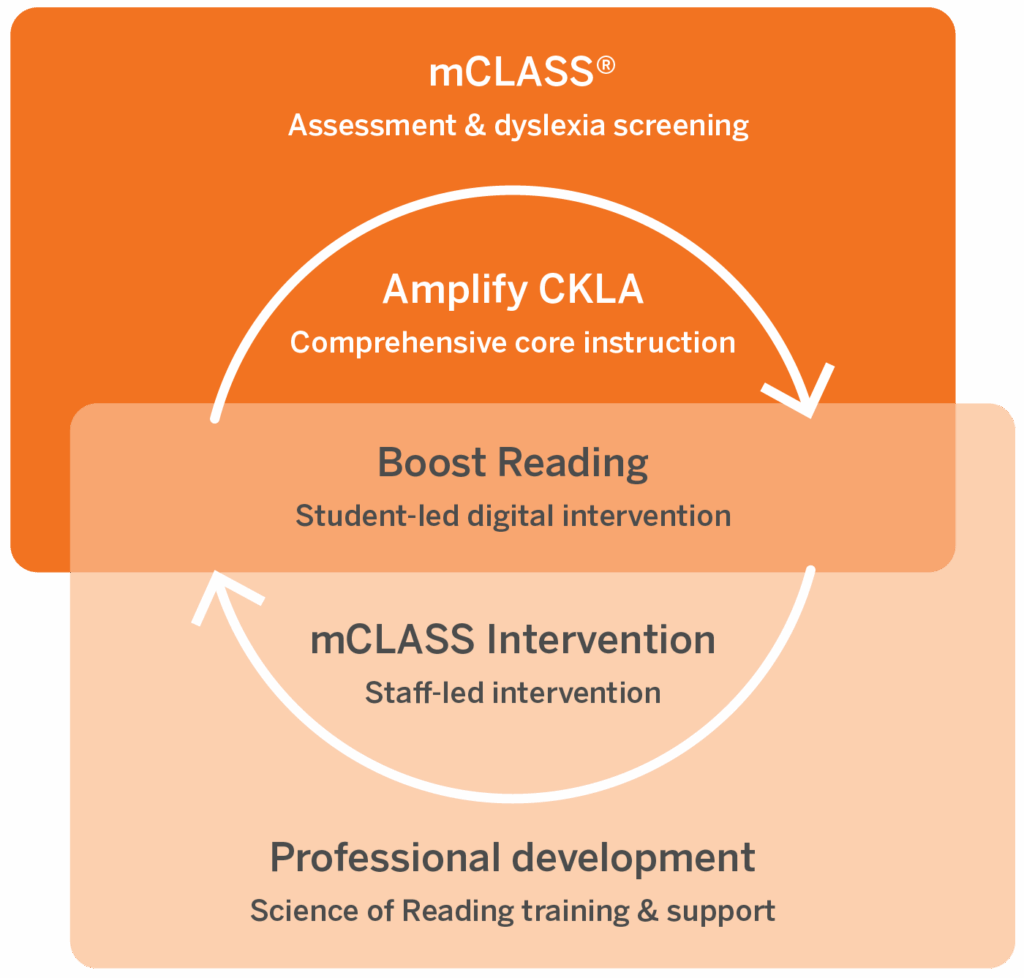
      A strong literacy program is more than a reading program or an assessment tool: it combines curriculum, instruction, regular practice, intervention, and assessments.

      Amplify has brought these components together in our early literacy curriculum suite to ensure you have what you need for multi-tiered support.

      Infographic describing a cycle of K–5 literacy solutions: mCLASS screening, Amplify CKLA instruction, digital and staff-led interventions, and professional development within an early literacy suite grounded in the science of reading.

      Trial Access

      Ready to explore on your own? Follow the instructions below to access your demo account.

      Explore CKLA’s digital site:

      Go to my.amplify.com
      Select Log in with Amplify
      Teacher login: t1.mde-mn@demo.tryamplify.net
      Password: Amplify1-mde-mn
      Select the CKLA icon and your desired grade level

      Screenshot of the CKLA curriculum webpage displaying a list of materials, including Activity Book, Teacher Guide, Answer Key, and other educational resources.

      Additional Resources

      Check out the information below to learn more about Amplify CKLA and see how Amplify CKLA is impacting classrooms all over the country.

      Elk Grove Science K5

      To view this protected page, enter the password below:


      Welcome to Amplify CKLA!

      Amplify Core Knowledge Language Arts (CKLA) is a cutting-edge and effective core ELA program for students in grades K–5. It was developed in partnership with the Core Knowledge Foundation, features proven evidence-based instructional practices, and was specifically designed to help teachers implement Science of Reading principles.

      Note: We’re continually adding information to this site, including specific details regarding our alignment with your non-negotiables. Keep checking back with us between now and April 20, 2023.

      Getting Started

      On this site, you’ll find a variety of resources designed to support your review and evaluation of the program. Before you dive in, watch the Orientation Overview and Program Overview videos below to learn about CKLA’s alignment to CCSD’s ELA adoption requirements, as well as where to find key program resources.

      [Video] Orientation Overview

      [Video] Program Overview

      In the video below, learn about CKLA’s structure and materials, as well the research behind the curriculum.

      Evidence-Based

      [Video] Pedagogical Overview with Simple View of Reading

      In the video below, Amplify’s Chief Academic Officer Susan Lambert shares the big picture of CKLA, and explains why it was created and the impact it’s making across the country. Below are a few portions of the video that you may find particularly helpful as you conduct your review.

      • 0-1:00 Why CKLA?
      • 1:00-4:40 How CKLA was built on the Simple View of Reading
      • 4:40-8:00 How to review the CKLA Components
      • 8:00-end Teacher Testimonial

      [Features] Supporting the Simple View of Reading

      Built out of the latest research in the Science of Reading, Amplify CKLA delivers explicit instruction in both foundational literacy skills (systematic phonics, decoding, and fluency) and background knowledge in grades K–2 with an integrated approach to explicit instruction in grades 3–5.

      Review this Science of Reading toolkit to learn more about the Science of Reading best practices integrated throughout CKLA.

      See our Science of Reading solutions in action! Click here to see a real example of how one Ohio district is implementing and educating their K–8 community on the Science of Reading as a response to Ohio’s Plan to Raise Literacy Achievement Initiative.

      Great reading instruction starts with helping kids develop great decoding skills. By building a solid foundation of phonological awareness and phonics, reading the words on the page becomes automatic so that comprehension and critical thinking can happen. Our instruction is supported by:

      • Step-by-step lessons with multisensory approaches, clear lesson objectives, and embedded formative assessments.
      • Decodable books and student readers with ebook and audiobook versions that feature engaging plots and relatable characters.
      • An engaging sound library with fun songs and videos that develop phonological awareness.
      • An interactive Vocab App featuring engaging activities with immediate feedback and automated, customized instruction based on student performance.

      Students build grade-appropriate subject-area knowledge and vocabulary in history, science, literature, and the arts while learning to read, write, and think creatively and for themselves. Our instruction is supported by:

      • Knowledge builders that provide a quick overview of each domain with its key ideas.
      • Interactive Read-Alouds designed to build knowledge and vocabulary.
      • Content-rich anchor texts that support students as they tackle increasingly complex text and sharpen their analytical skills.
      • Social and emotional learning paired with lessons in civic responsibility.

      Easy-to-Use Materials

      Amplify CKLA offers a number of digital and multimedia resources to support instruction and enhance the teacher and student experience.

      • Amplify CKLA Digital Experience Site: All teacher and student materials are posted on this site for planning and information purposes, including Teacher Guides, Readers, Activity Books, Ancillary Materials, videos, additional resources, and links to other useful sites, such as the Professional Learning site.
      • The Professional Learning Site: This site includes training materials, best practices, and other resources to develop program expertise. Access professional development anywhere, anytime.
      • Intervention Toolkit: The Intervention Toolkit provides easy-to use resources to assist teachers in filling gaps in students’ foundational skills. Teachers will find hundreds of activities to support phonics, fluency, comprehension, handwriting, and other key skills.
      • The Science of Reading: The Podcast: Hosted by Susan Lambert, The Podcast delivers the latest insights from researchers and practitioners in early reading. Each episode takes a conversational approach and explores a timely topic related to the Science of Reading.

      In addition to the videos below, our CKLA Components Guide can be a helpful tool as you explore the materials provided within your sample tubs.

      [Video] Physical Materials Walkthrough

      As you explore your physical samples, the material walkthrough video below can be a helpful resource. In particular, we suggest watching the following portions of the video.

      • 0-4:38 CKLA components for K–2
      • 4:38-7:00 CKLA components for 3–5
      • 7-7:30 CKLA Program Guide
      • 10:12-13:20 CKLA’s Teacher Resource Site

      Note: The below video covers both our K-5 program (Amplify CKLA) as well as our 6-8 program (Amplify ELA).

      [Video] Digital Materials Walkthrough

      In the video below, learn about CKLA’s digital tools for teachers and students across both classroom and asynchronous environments.

      As you prepare to explore our digital platform, be sure to watch and refer to the video below.

      Diverse Texts

      In Amplify CKLA, texts serve a variety of purposes, from building background knowledge, vocabulary, and comprehension to building decoding and fluency skills.

      In grades K–2, instruction is segmented between two strands: Knowledge and Skills.

      • Reading within the Knowledge Strand is centered around authentic read-alouds and trade books that are intentionally sequenced to build content knowledge and vocabulary in specific domain topics around literature, history, science, and the arts. Because research shows that students’ listening comprehension outpaces their reading comprehension until their early teens, Amplify CKLA strategically uses read-aloud text in this strand, allowing students to focus their cognitive energy on gaining meaning from the words and better understanding from the images.
      • Reading within the Skills Strand centers around carefully crafted Student Readers that teach students how to read. Structured as chapter books, these readers are 100% decodable and were developed to align with Amplify CKLA’s scope and sequence for phonics, directly connecting instruction to student practice in connected texts. Students use the Readers to practice decoding, fluency, and comprehension during shared reading lessons, targeted close reading sessions, in small groups, and independently.

      In grades 3–5, integrated units bring the Skills and Knowledge strands together as students become increasingly automatic and strategic in their word recognition and language comprehension skills. Student reading and comprehension activities involve a variety of reading materials:

      • Authentic Read-Alouds and trade books ensure students encounter a variety of perspectives as they use these complex text to increase their knowledge while practicing vocabulary and listening comprehension skills.
      • Student Readers connect to each theme and are designed to increase in complexity over time, providing a continual challenge as students’ reading and listening comprehension skills develop and strengthen throughout the year.
      • Novel Guides provide teachers a flexible option for extending authentic reading and text-based activities in the classroom using award-winning and acclaimed novels.
      • ReadWorks articles give students access to additional high-quality texts aligned to both Amplify CKLA knowledge topics and the topics outlined in the Common Core State Standards.

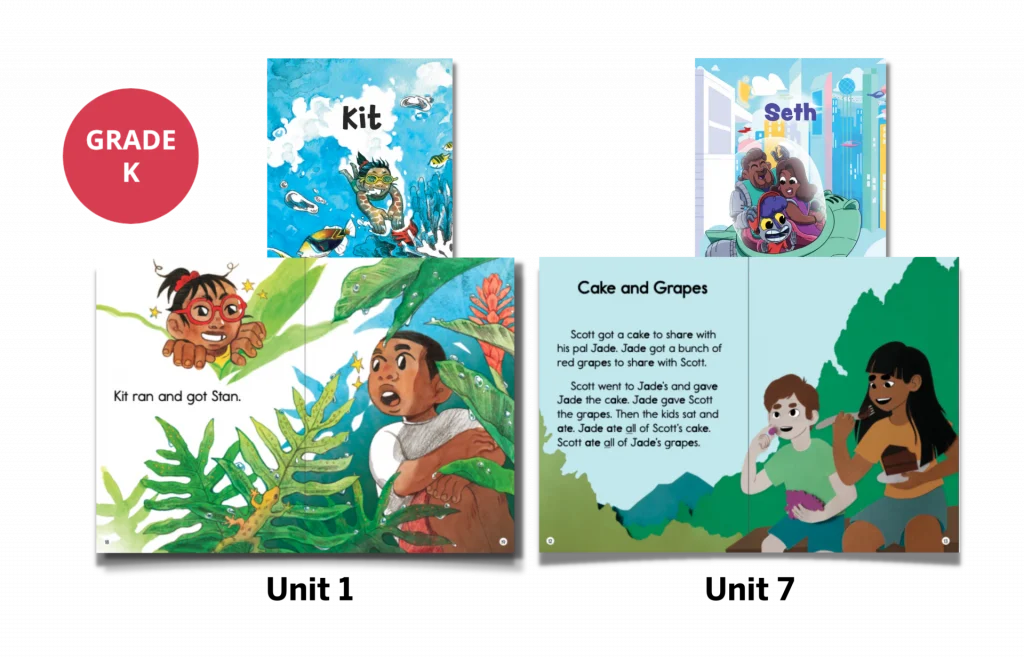
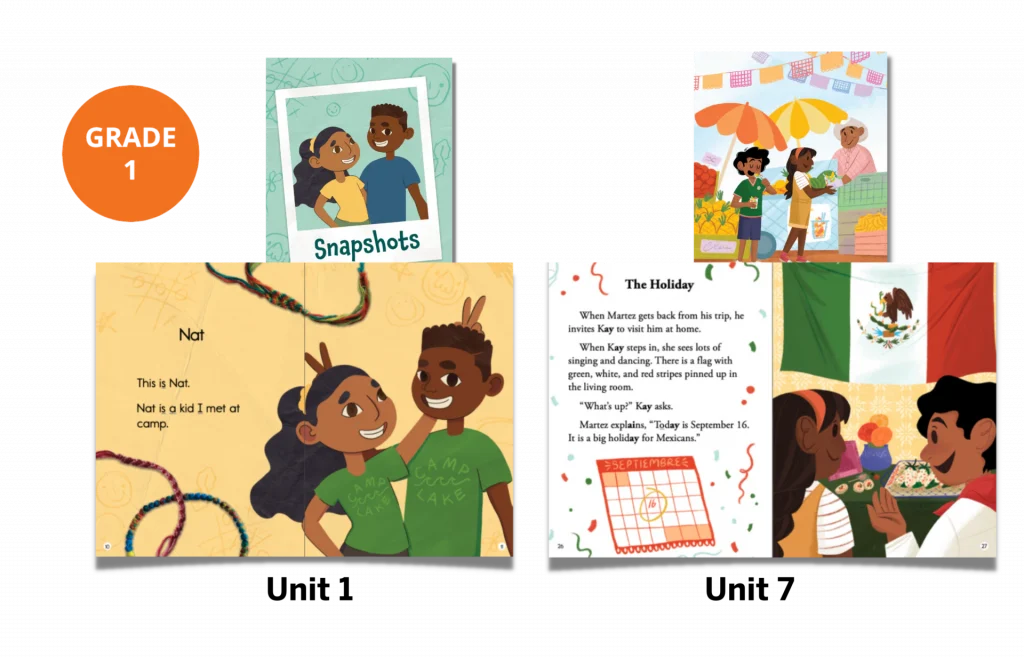
      Decodable Readers at Grades K–2

      Our Decodable Readers are designed to progress in skills, mirroring the scope and sequence of instruction, which allows students to immediately apply what they are learning to 100% decodable text. More specifically, our decodables:

      • Are uniquely designed to provide intensive practice with the CKLA code while students read compelling and engaging stories and informational texts for the first time.
      • Gradually introduce students to “tricky” spelling concepts, such as different sounds that use the same letter code.
      • Increase in text complexity (i.e., content, length, and vocabulary) as students progress through the grades.
      • Include fiction and nonfiction text.
      • Are available as ebooks and audiobooks.

      Below, you can see how students grow from year-to-year across grades K–2.

      Student Readers at Grades 3–5

      By grades 3–5, students have mastered the basics of decoding and are hungry to use what they’ve learned to reach out to the world. Although Read-Alouds remain an important part of lessons, students are also encouraged to practice independent reading starting in grade 3 with the support of carefully crafted Student Readers. These readers are chock-full of various text types, cultural stories, and a blend of fiction and nonfiction texts that are tied to and support the overarching theme of the unit.

      Read-alouds

      Authentic literature exposes students to a variety of text types and perspectives to deepen their knowledge of fascinating topics in social studies, science, literature, and the arts. Authentic texts support text-to-self, text-to-world, and text-to-text connections for readers.

      Trade books

      Our optional Trade Book Collection (and suggested list of additional trade books) align with our grade-level topics, and extend the knowledge students are learning through an authentic text.

      Novel Guides

      Novel Guides bring students beyond the CKLA curriculum. We provide fifteen full days of instruction on contemporary trade books, as well as writing prompts that help students navigate the authentic literature they love.

      ReadWorks

      Amplify CKLA and ReadWorks® have partnered to deliver high-quality texts curated to support the Amplify CKLA Knowledge Sequence and to extend student learning. Texts include high-interest nonfiction articles in topics in social studies, science, literature, and the arts. These texts are accompanied by vocabulary supports and standards-aligned formative assessment opportunities. Teachers can monitor their students’ progress using the ReadWorks reporting features.

      Reading resources

      The following resources may be helpful as you explore our approach to reading and the role that diverse texts play in the program.

      Writing

      CKLA is rich with opportunities for students to develop, practice, and hone their writing skills. While the shape of writing instruction looks slightly different at each grade level, a commonality across all grades K–5 is that writing isn’t taught in isolation. Rather, it’s embedded within the context of each unit, and is connected to what students read.

      At Grades K–2, writing takes place in both the Skills and Knowledge strands.

      • Explicit instruction in writing skills (such as sentence structure) and handwriting takes place in the Skills Strand, and is tied to the decodable readers used within each unit.
      • Extended writing and writing process activities take place in the Knowledge Strand.

      At Grades 3–5, writing is embedded through the integrated units.

      • Across each unit, students work on smaller, more discrete writing skills alongside their Student Reader. These skills eventually culminate at the end of each unit in the form of a writing project.
      • In 4th and 5th grades, we expand writing even further with the addition of Poetry units.

      Writing and text-dependent questions

      The overwhelming majority of questions, tasks, and assignments in CKLA materials are text-dependent. Every CKLA unit and domain is based around key texts that are either read aloud, with a peer, or independently. These readings are followed by class discussions where students are expected to refer to these texts when answering literal, inferential, and evaluative questions, both orally during class discussions and through written responses.

      • Literal questions assess students’ recall of key details from the text. These are text-dependent questions that require students to paraphrase and/or refer back to the portion of the text where the specific answer is provided.
      • Inferential questions ask students to infer information from the text and to think critically. These text-dependent questions require students to summarize and/or reference the portions of the text that lead to and support the inference they are making.
      • Evaluative questions ask students to build on what they have learned from the text using analytical and application skills, often to form an opinion or make a judgment. These questions require students to paraphrase and/or cite the textual evidence that substantiates their argument or opinion.

      In addition, students are often asked to generate additional questions based on the texts. Students further demonstrate understanding in writing by applying what they have learned and providing evidence from the text to back up their answers and opinions. For example, Grade 3 students learning about sea exploration write a paragraph from the perspective of a sailor on John Cabot’s ship, stating their opinion of whether the hardships they experienced are worth the adventure or glory and citing examples from the text to support their response. Grade 5 students studying the Adventures of Don Quixote write a four-paragraph persuasive essay arguing whether they believe Don Quixote’s good intentions justify his often calamitous actions, using reasons and evidence from the text to support their claims.

      Writing with authentic literature

      Novel Guides are designed around authentic texts students love. They not only help students foster a love for reading, they also present authentic opportunities for students to express themselves through writing. Novel Guides provide daily text-based writing and discussion through five activity types:

      • Ask contains questions for discussion, reflection, or brief written responses. These questions cover information all students should understand as they read the text.
      • Explore prompts offer brief research opportunities centered around items mentioned in the text.
      • Imagine activities promote creativity and further reflection.
      • Observe items ask students to take notes or make other kinds of observations about what they have read.
      • Understand questions push students to explore connections to the text.

      Writing and enrichment

      Writing tasks throughout the program provide almost limitless opportunities for extension. Feedback from the teacher, peers, and self-reflection provide students opportunities to strengthen their writing. For example, advanced students can be encouraged to:

      • Use more complex and unusual descriptive vocabulary.
      • Incorporate figurative language into their writing.
      • Write multi-clause sentences with more complex joining words.
      • Create longer or richer opinion, explanatory, and narrative pieces.
      • Evaluate the use of informational textual characteristics and use in their own writing (e.g., headers, bullets).

      Writing resources

      The following resources may be helpful as you explore our approach to writing and how writing develops across the program.

      Access the program

      Explore as a teacher

      Before logging in, watch this brief video on navigating the CKLA Teacher Resource Site.

      Ready to explore as a teacher? Follow these instructions:

      • Click the CKLA Teacher Resource Site button below.
      • Select Log in with Amplify.
      • Enter the username: t1.ccsd-k5-ckla@demo.tryamplify.net
      • Enter the password: Amplify1-ccsd-k5-ckla
      • Click the CKLA Teacher Resource icon
      • Select a grade level

      Explore as a student

      Before logging in, watch this brief video on navigating the CKLA Student Hub.

      Ready to explore as a student? Follow these instructions:

      • Click the CKLA Teacher Resource Site button below.
      • Select Log in with Amplify.
      • Enter the username: s1.ccsd-k5-ckla@demo.tryamplify.net
      • Enter the password: Amplify1-ccsd-k5-ckla
      • Click the CKLA Teacher Resource icon
      • Select a grade level

      Check out these additional resources

      Nevada submission resources:

      CKLA review resources:

      Oklahoma ELA Review for grades K–5

      Thank you for taking the time to review Amplify’s core ELA program for K–5.

      Amplify Core Knowledge Language Arts (CKLA) is a cutting-edge and effective core ELA program for students in grades K–5. It was developed in partnership with the Core Knowledge Foundation, was specifically designed to help teachers implement Science of Reading principles, and features proven evidence-based instructional practices.

      Getting started

      On this site, you’ll find a variety of resources designed to support your review and evaluation of the program. Before you start scrolling, watch the video below to learn about CKLA.

      Curriculum background

      Pedagogical overview

      In the video below, Amplify’s Chief Academic Officer Susan Lambert shares the big picture of Amplify CKLA, explaining why it was created and the impact it’s making across the country.

      Program overview

      In the video below, learn about CKLA’s structure and materials, as well the research behind the curriculum.

      Program features

      Built on the latest research in the Science of Reading, Amplify CKLA delivers explicit instruction in both foundational literacy skills (systematic phonics, decoding, and fluency) and background knowledge in grades K–2, with an integrated approach to explicit instruction in grades 3–5.

      Review this Science of Reading toolkit to learn more about the Science of Reading best practices integrated throughout CKLA.

      When students build a solid foundation of phonological awareness and phonics, reading words on the page becomes automatic so that comprehension and critical thinking can happen.

      • Step-by-step lessons with multisensory approaches, clear lesson objectives, and embedded formative assessments.
      • Decodable books and Student Readers with ebook and audiobook versions that feature engaging plots and relatable characters.
      • An engaging sound library with fun songs and videos that develop phonological awareness.
      • An interactive App featuring engaging activities with immediate feedback and automated, customized instruction based on student performance.

      Students build grade-appropriate subject-area knowledge and vocabulary in history, science, literature, and the arts while learning to read, write, and think creatively and for themselves. Our instruction is supported by:

      • Knowledge Builders that provide a quick overview of each domain with its key ideas.
      • Interactive Read-Alouds designed to build knowledge and vocabulary.
      • Content-rich anchor texts that support students as they tackle increasingly complex text and sharpen their analytical skills.

      Getting students caught up on reading skills requires more than just an extra mini-lesson here or there. It requires targeted and intensive instruction delivered in short bursts. Our intervention component:

      • Assesses and analyzes students’ areas of mastery and growth.
      • Automatically groups students with like needs.
      • Provides educators with ready-to-teach, research-based instructional progressions that last 10 days.
      • Progress monitors students, updates their skill profiles, and reforms groups for the next 10-day period.

      Student-led reading practice should be purposeful and connected to the core. In addition to practicing skills directly tied to the skills they’ve been working on during ELA time, Amplify CKLA students have opportunities to interact with adaptive content that addresses their personal gaps and bolsters foundational skills at a pace that supports their individual development.

      Our collection of 40+ adaptive games targets foundational reading skills and develops them in alignment with Science of Reading principles. Unlike other adaptive games, ours ensure students:

      • Practice the right skills at the right time. Our embedded placement tool ensures students receive the content and skill practice most appropriate for their current reading level. From there, students move through our curriculum along their own learning pathway, where they encounter personalized content tailored to their evolving skill and grade levels.
      • Progress along a pathway that adapts on multiple dimensions, not just one. For example, a student can work on early first-grade decoding in one game while building more advanced vocabulary knowledge in another.
      • Practice skills in tandem. For example, a student is never forced to master one skill area before proceeding to the next. Instead, we offer students the opportunity to work on multiple skills concurrently.
      • Feel supported with scaffolding, instruction, and practice that adapts based on student performance.
      • Stay engaged by giving them immediate and clear feedback. These results are never punitive. Instead, our always-positive feedback is delivered in the context of the game world and is designed to motivate students to keep trying.

      From the printed page to the screen, we bring foundational skills and knowledge of the world to your young learners, and make the transition from classroom to home learning seamless.

      Download the Amplify CKLA Components guide to see components by grade.

      Download the Remote and hybrid learning guide to learn how we support in-person, remote, and hybrid instruction.

      Digital experience overview

      In the video below, learn about CKLA’s digital tools for teachers and students across both classroom and asynchronous environments.

      Curriculum review

      Digital navigation walkthrough

      Physical materials walkthrough

      Access the program

      Explore as a teacher

      Before logging in, watch this brief video on navigating the CKLA Teacher Resource Site.

      Ready to explore as a teacher? Follow these instructions:

      • Click the CKLA Teacher Resource Site button below.
      • Select Log in with Amplify.
      • Enter the teacher username and password found on the login flyer PDF provided to you.
      • Click the CKLA Teacher Resource icon.
      • Select a grade level.

      Explore as a student

      Before logging in, watch this brief video on navigating the CKLA Student Hub.

      Ready to explore as a student? Follow these instructions:

      • Click the CKLA Student Hub button below.
      • Select Log in with Amplify.
      • Enter the student username and password found on the login flyer PDF provided to you.
      • Click the CKLA Student Hub icon.
      • Select a grade level.

      Check out these additional resources

      Oklahoma submission resources:

      CKLA review resources:

      Nevada ELA Review for grades K–5

      Thank you for taking the time to review Amplify’s core ELA program for K–5.

      Amplify Core Knowledge Language Arts (CKLA) is a cutting-edge and effective core ELA program for students in grades K–5. It was developed in partnership with the Core Knowledge Foundation, was specifically designed to help teachers implement Science of Reading principles, and features proven evidence-based instructional practices.

      Getting started

      On this site, you’ll find a variety of resources designed to support your review and evaluation of the program. Before you start scrolling, watch the video below to learn about CKLA’s alignment to Nevada’s literacy initiatives as well as where to find key program resources.

      Curriculum background

      Pedagogical overview

      In the video below, Amplify’s Chief Academic Officer Susan Lambert shares the big picture of CKLA, and explains why it was created and the impact it’s making across the country.

      Program overview

      In the video below, learn about CKLA’s structure and materials, as well the research behind the curriculum.

      Program features

      Built out of the latest research in the Science of Reading, Amplify CKLA delivers explicit instruction in both foundational literacy skills (systematic phonics, decoding, and fluency) and background knowledge in grades K–2 with an integrated approach to explicit instruction in grades 3–5.

      Review this Science of Reading toolkit to learn more about the Science of Reading best practices integrated throughout CKLA.

      Great reading instruction starts with helping kids develop great decoding skills. By building a solid foundation of phonological awareness and phonics, reading the words on the page becomes automatic so that comprehension and critical thinking can happen. Our instruction is supported by:

      • Step-by-step lessons with multisensory approaches, clear lesson objectives, and embedded formative assessments.
      • Decodable books and student readers with ebook and audiobook versions that feature engaging plots and relatable characters.
      • An engaging sound library with fun songs and videos that develop phonological awareness.
      • An interactive Vocab App featuring engaging activities with immediate feedback and automated, customized instruction based on student performance.

      Students build grade-appropriate subject-area knowledge and vocabulary in history, science, literature, and the arts while learning to read, write, and think creatively and for themselves. Our instruction is supported by:

      • Knowledge builders that provide a quick overview of each domain with its key ideas.
      • Interactive Read-Alouds designed to build knowledge and vocabulary.
      • Content-rich anchor texts that support students as they tackle increasingly complex text and sharpen their analytical skills.
      • Social and emotional learning paired with lessons in civic responsibility.

      Amplify CKLA provides built-in differentiation strategies in every lesson for all students,
      including supports for ELLs.

      • Access supports for ELLs—Integrated ELD supports in each lesson segment
        for ELLs are specific to students’ mastery of the lesson’s objectives.
      • Support and Challenge for all learners—Lessons include Support and Challenge suggestions that provide assistance or opportunities for more advanced work toward the goal of the lesson. These supports are suitable for all learners, including ELLs.
      • 30 minutes of Additional Support in every Skills lesson–In the Skills Strand, every lesson concludes with an Additional Support section of recommendations for 30 minutes of extended instruction and activities, directly aligned to the skills taught in the lesson to assist students who need more support in mastering the lesson’s objectives.
      • Intervention Toolkit–The Intervention Toolkit provides easy-to-use resources to assist teachers in filling gaps in students’ foundational skills. Teachers will find of hundreds of activities to support phonics, fluency, comprehension, handwriting, and other key skills.

      The slides-based Amplify CKLA digital experience enhances instruction while saving you time. Everything you need is all in one place, making it easier than ever to plan lessons, present digital content, and review student work.

      • Simplify planning and instruction–Teachers have access to ready-to-use and customizable lesson presentation slides, complete with all the prompts from the print Teacher Guide embedded in the teacher view. As teachers deliver each lesson, students can engage with the content in one cohesive
        experience—through Activity Books, slides, digital components, videos, Student Readers, and more.
      • Interactive student activities–Through the Student Home, students can easily access digital lessons with slides, Activity Pages, ebooks, videos, and other interactive resources from one simple dashboard.
      • Your teacher command center–You’re provided with the tools you need to ensure a productive digital experience that’s personalized to meet your students’ needs. This includes a teacher home from which to launch and track lessons, LMS integrations such as Google Classroom and Microsoft Teams, and other customizations based on classroom needs.
      • Get real-time insights into your students’ work–The innovative live review tool enables you to keep an eye on students drawing, recording audio, uploading and capturing images, and typing or writing in pre-placed text boxes in their Activity Pages.

      Curriculum review

      Digital experience overview

      In the video below, learn about CKLA’s digital tools for teachers and students across both classroom and asynchronous environments.

      Digital navigation walkthrough

      Physical materials walkthrough

      Curriculum implementation

      See our Science of Reading solutions in action! Click here to see a real example of how one Ohio district is implementing and educating their K–8 community on the Science of Reading as a response to Ohio’s Plan to Raise Literacy Achievement Initiative.

      Access the program

      Explore as a teacher

      Before logging in, watch this brief video on navigating the CKLA Teacher Resource Site.

      Ready to explore as a teacher? Follow these instructions:

      • Click the CKLA Teacher Resource Site button below.
      • Select Log in with Amplify.
      • Enter the username: t1.nvk5@tryamplify.net
      • Enter the password: AmplifyNumber1
      • Click the CKLA Teacher Resource icon
      • Select a grade level

      Explore as a student

      Before logging in, watch this brief video on navigating the CKLA Student Hub.

      Ready to explore as a student? Follow these instructions:

      • Click the CKLA Teacher Resource Site button below.
      • Select Log in with Amplify.
      • Enter the username: s1.nvk5@tryamplify.net
      • Enter the password: AmplifyNumber1
      • Click the CKLA Teacher Resource icon
      • Select a grade level

      Check out these additional resources

      Nevada submission resources:

      CKLA review resources:

      CKLA Review for Arizona

      Thank you for taking the time to review Amplify’s core ELA program for K–5.

      Amplify Core Knowledge Language Arts (CKLA) is a cutting-edge and effective core ELA program for students in grades K–5. It was developed in partnership with the Core Knowledge Foundation, was specifically designed to help teachers implement Science of Reading principles, and features proven evidence-based instructional practices.

      Step 1: Program Introduction

      Welcome to Amplify CKLA! Before you dive into our materials, watch the video below to learn about the big picture behind Amplify CKLA’s pedagogy.

      In this video, Susan Lambert (Chief Academic Officer and host of Science of Reading: The Podcast) shares why Amplify CKLA was created, how it is built on the Science of Reading, and the impact it’s making across the country.

      Step 2: Program Overview

      Amplify CKLA is different for a reason. Watch the overview video below to learn about these differences and why educators love them.

      In this video, you’ll get an in-depth look at the program’s overall structure and organization, the design behind our proven lessons, and the materials included to support teaching and learning.

      The Amplify CKLA Program Guide also provides an in-depth view of how Amplify CKLA works, how it’s structured, and why it’s uniquely capable of helping you bring reading instruction based on the Science of Reading to your classroom.

      Evidence-based design

      Amplify CKLA is rooted in Science of Reading research. Mirroring Scarborough’s Rope, Amplify CKLA delivers a combination of explicit foundational skills with meaningful knowledge-building.

      • In Grades K–2, dedicated knowledge-building and explicit skills instruction are taught simultaneously through two distinct instructional strands.
      • In Grades 3–5, dedicated knowledge-building and explicit skills instruction are woven together and delivered through one integrated strand.

      Grades K–2 Skills and Knowledge Strands
      Every day students in Grades K–2 complete one full lesson that explicitly and systematically builds foundational reading skills in the Skills Strand, as well as one full lesson that builds robust background knowledge to access complex text in the Knowledge Strand. Through learning in each of these strands, students develop the early literacy skills necessary to help them become confident readers and build the context to understand what they’re reading.

      Grades 3–5 Integrated Strand
      In Grades 3–5, Knowledge and Skills are integrated in one set of instructional materials. Lessons begin to combine skills and knowledge with increasingly complex texts, close reading, and a greater writing emphasis. Students can then use their skills to go on their own independent reading adventures.

      Key features

      Built out of the latest research in the Science of Reading, Amplify CKLA delivers explicit instruction in both foundational literacy skills (systematic phonics, decoding, and fluency) and background knowledge in grades K–2 with an integrated approach to explicit instruction in grades 3–5.

      Review this Science of Reading toolkit to learn more about the Science of Reading best practices integrated throughout CKLA.

      Great reading instruction starts with helping kids develop great decoding skills. By building a solid foundation of phonological awareness and phonics, reading the words on the page becomes automatic so that comprehension and critical thinking can happen. Our instruction is supported by:

      • Step-by-step lessons with multi-sensory approaches, clear lesson objectives, and embedded formative assessments.
      • Decodable books and student readers with ebook and audiobook versions that feature engaging plots and relatable characters.
      • An engaging sound library with fun songs and videos that develop phonological awareness.
      • An interactive Vocab App featuring engaging activities with immediate feedback and automated, customized instruction based on student performance.

      Students build grade-appropriate subject-area knowledge and vocabulary in history, science, literature, and the arts while learning to read, write, and think creatively and for themselves. Our instruction is supported by:

      • Knowledge builders that provide a quick overview of each domain with its key ideas.
      • Interactive Read-Alouds designed to build knowledge and vocabulary.
      • Content-rich anchor texts that support students as they tackle increasingly complex text and sharpen their analytical skills.
      • Lessons in civic responsibility.

      Getting students caught up on reading skills requires more than just an extra mini-lesson here or there. It requires targeted and intensive instruction delivered in short bursts. Our intervention component:

      • Assesses and analyzes students’ areas of mastery and growth.
      • Automatically groups students with like needs.
      • Provides educators with ready-to-teach, research-based instructional progressions that last 10-days.
      • Progress monitors students, updates their skill profiles, and reforms groups for the next 10-day period.

      Student-led reading practice should be purposeful and connected to the core. In addition to practicing skills directly tied to the skills they’ve been working on during ELA time, Amplify CKLA students have opportunities to interact with adaptive content that addresses their personal gaps and bolsters foundational skills at a pace that supports their individual development.

      Our collection of 40+ adaptive games target foundational reading skills and develops them in alignment with Science of Reading principles. Unlike other adaptive games, we ensure students:

      • Practice the right skills at the right time. Our embedded placement tool ensures students receive the content and skill practice most appropriate for their current reading level. From there, students move through our curriculum along their own learning pathway where they encounter personalized content tailored to their evolving skill and grade levels.
      • Progress along a pathway that adapts on multiple dimensions, not just one. For example, a student can work on early first-grade decoding in one game while building more advanced vocabulary knowledge in another.
      • Practice skills in tandem. For example, a student is never forced to master one skill area before proceeding to the next. Instead, we offer students that opportunity to work on multiple skills concurrently.
      • Feel supported with scaffolding, instruction, and practice that adapts based on student performance.
      • Stay engaged by giving them immediate and clear feedback. These results are never punitive. Instead our always-positive feedback is delivered in the context of the game world and is designed to motivate students to keep trying.

      From the printed page to the screen, we bring foundational skills and knowledge to life in the classroom.

      Download the Amplify CKLA Components guide to see components by grade.

      Download the Remote and hybrid learning guide to learn how we support in-person, remote, and hybrid instruction.

      Engaging digital experience

      The top-rated content of Amplify CKLA is now live with the digital experience that enhances instruction and saves time.

      With the digital experience, everything is in one place, making it easier and more engaging than ever to plan lessons, present digital content, and review student work.

      With the digital experience, teachers have access to ready-to-use and customizable lesson presentation slides, complete with all the prompts from the print Teacher Guide embedded in the teacher view. As teachers deliver each lesson, students can engage with the content in one cohesive experience—through these CKLA resources: Activity Books, slides, digital components, videos, Student Readers, and more.

      The innovative live review tool found in the digital experience enables you to keep an eye on all of your students as they work on drawing, recording audio, uploading and capturing images, and typing or writing in pre-placed textboxes in their Activity Pages. This dynamic tool provides countless classroom management benefits, enabling you to spot and correct common mistakes as they’re happening, praise your students for thoughtful work, and identify students who are not engaged in the task at hand. Simply put, it will give you those valuable “eyes in the back of your head” you’ve warned your students about!

      The digital experience integrates with various LMSs, allowing you and your students to access Amplify CKLA with the software you’re already comfortable using.

      In the Amplify CKLA student digital experience, your students have one intuitive access point to fully engage with classroom instruction. Through the Student Home, students can easily access digital lessons with slides, Activity Pages, ebooks, videos, and other interactives from one simple dashboard. Students can draw, record audio, upload and capture images, and type or write in pre-placed text boxes in their Activity Pages.

      Step 3: Program Resources

      Digital navigation walkthrough

      Physical materials walkthrough

      Step 4: Arizona Review Resources

      Arizona resources:

      CKLA review resources:

      A digital experience exclusively for Amplify CKLA 2nd Edition

      Amplify Core Knowledge Language Arts (CKLA) 2nd Edition’s top-rated content is available with a digital experience that enhances instruction and saves time. With everything you need in one place, this platform makes it easier and more engaging to plan lessons, present digital content, and review student work.

      Information on this page relates to Amplify CKLA 2nd Edition. Access Amplify CKLA 3rd Edition here.

      A teacher presenting a slide titled "introducing the read-aloud" for a lesson on "the aztec: the legend of the eagle and the serpent," featuring colorful graphics on a computer screen.

      Simplify planning and instruction

      With the digital experience, teachers have access to ready-to-use and customizable lesson presentation slides, complete with all the prompts from the print Teacher Guide embedded in the teacher view. As teachers deliver each lesson, students can engage with the content in one cohesive experience—through these CKLA resources: Activity Books, slides, digital components, videos, Student Readers, and more.

      Get real-time insights into your students’ work

      The innovative live review tool found in the digital experience enables you to keep an eye on all of your students as they work on drawing, recording audio, uploading and capturing images, and typing or writing in pre-placed textboxes in their Activity Pages. This dynamic tool provides countless classroom management benefits, enabling you to spot and correct common mistakes as they’re happening, praise your students for thoughtful work, and identify students who are not engaged in the task at hand. Simply put, it will give you those valuable “eyes in the back of your head” you’ve warned your students about!

      Learning Management System integrations

      The digital experience integrates with various LMSs, allowing you and your students to access Amplify CKLA with the software you’re already comfortable using.

      Engage your students with one easy-to-use access point

      In the Amplify CKLA student digital experience, your students have one intuitive access point to fully engage with classroom instruction. Through the Student Home, students can easily access digital lessons with slides, Activity Pages, ebooks, videos, and other interactives from one simple dashboard. Students can draw, record audio, upload and capture images, and type or write in pre-placed text boxes in their Activity Pages.

      Welcome, K–5 Atlanta Public Schools!

      To view this protected page, enter the password below:


      See Amplify CKLA Skills in action.

      Step inside a kindergarten classroom and watch students light up during a fun, interactive lesson. From phonics and decoding to fluency, see how structured practice with Amplify CKLA Skills builds the confidence and abilities students need to become strong readers.

      Follow along as a real teacher brings Unit 7, Lesson 10: Review Single-Syllable, Short-Vowel Words to life. You’ll see students building foundational reading skills—and you might even pick up a few instructional tips along the way!

      A teacher sits at a table with two young students, guiding them as they look at a book together in a classroom setting.

      Inside the classroom

      Oral segmenting

      The lesson kicks off with a phonemic warm-up: segmenting words like frost and raising a finger for each sound. After practicing together, individual students take turns modeling for the class, blending movement and sound to show what they know. 

      Sound/spelling review

      The teacher presents cards with letters and digraphs, prompting the whole class to say the sounds and match them to hand motions. She traces key letters, reinforces spelling patterns, and invites individual students to identify sounds, letters, and digraphs aloud.

      Spelling and handwriting practice

      Students follow along as the teacher models how to identify, read, and write words with digraphs, first working together and then on their own, while the teacher moves around the room to offer guidance. This routine supports phonics, spelling, and handwriting all at once.

      Introduce the story

      Students review digraphs they’ve just practiced by identifying and circling them in sample words they’ll encounter in an upcoming story. Then, they set a purpose for reading: getting ready to listen for key details.

      Read the story

      The teacher models fluent reading using a big book. Then, the class reads aloud together, tracking each word with their fingers. To wrap up, students point out digraphs, punctuation, and details in the story to show what they’ve learned.

      Discuss the story

      Students respond to questions about the story, first as a class and then with a partner, using the book to support their answers. They listen closely to their partners, build on each other’s thinking, and share their partners’ ideas with the whole class. 

      Partner reading

      Students reread the story in pairs, applying their decoding skills together. Because the text is 100% decodable, they can rely on what they’ve learned and on each other when they get stuck. The teacher stays close by to offer support as needed.

      Math that motivates: Amplify Desmos Math success stories

      It’s no secret that student engagement and the prevalence of math anxiety are real problems in math classrooms. Incorporating more problem-based learning can help, but it can feel intimidating and difficult to know where to start. That’s why we’re here!

      Amplify Desmos Math is a curiosity-driven K–12 math program that introduces a structured approach to problem-based learning and builds students’ lifelong math proficiency. Teachers help students build off of each other’s ideas and find confidence in their math identities, creating a community of math learners.

      But don’t take our word for it—see how real teachers and students are unlocking new levels of engagement and comprehension, proving that everyone can be a math person.

      A woman with straight, shoulder-length blonde hair smiles at the camera, wearing a striped sweater and hoop earrings. Shelves with books are visible in the background.
      “With Amplify Desmos Math, I’ve noticed a huge shift of engagement because there’s so much interaction. Yes, there is pencil and paper, but there’s so much more. They’re getting immediate feedback and motivation to continue on. So if they don’t get something right the first time, they want to! ”

      —Kristi Melick

      Sixth-grade teacher, San Diego Unified School District, CA

      School spotlight: Decatur Classical Elementary School

      See how Amplify Desmos Math is making an impact in Chicago, Illinois, with our latest case study.

      Cover page of a PDF titled "Making the shift to more student-centered math instruction," featuring an outline of Illinois and text about Decatur Classical Elementary School.

      A structured approach to problem-based learning

      Witness teachers and students working together and see how Amplify Desmos Math revolutionizes K–12 math education through a structured approach to problem-based learning that fosters a collaborative math community.

      The power of the pause

      See what happens when teachers use the pause–one of the teacher facilitation tools and core differentiators in Amplify Desmos Math. You won’t believe how students react!

      Everyone’s a math person.

      See how Amplify Desmos Math helps every student see themselves as a math person.

      What Teachers Say

      What educators say about Amplify Desmos Math

      Shifting to this problem-based curriculum now is allowing students to open up. I think they’re taking control and ownership. They’re coming up with the strategies, they’re sharing the strategies. It offers an opportunity for the students to look around the classroom to see what their friends are doing. And in turn, if they’re stuck, they’re comfortable turning to other students and problem-solving through sharing.

      Joseph Croce

      Seaford School District, DE

      What educators say about Amplify Desmos Math

      When we went district-wide with our Amplify Desmos Math curriculum our teachers became the facilitators of learning. And our students are the doers of mathematics. And what we’ve seen, what I’ve seen in the classroom, is kids are engaged in a problem, they’re collaborative, and they’re having fun. And it’s like they’re not even realizing that they’re really doing math.

      Jessica Walsh

      San Diego Unified School District, CA

      What educators say about Amplify Desmos Math

      So many kids have stated, ‘Oh, I’m not a math person.’ Or they’re scared of getting the answer incorrect. And I think with this curriculum, they feel safe.

      Brendan Simon

      Assistant Principal, San Diego Unified School District, CA

      Best practices from real educators like you

      Learn tried and true strategies for leveling up math instruction from Beyond My Years podcast guests like Amplify’s own Dan Meyer, teacher and My Kindergarten Math Workbook author Keri Brown, educator and speaker Mike Flynn, teacher and I Hate Math author Ian Brown, and more!

      Two women work together at a desk with a laptop and papers; the image appears on the cover of a document titled “Foundational research” for Amplify Desmos Math Grades K–Al.

      Program efficacy

      Explore the research behind Amplify Desmos Math.

      Ready to make the shift to curiosity-driven learning?

      Get access to free digital samples today.

      Request a sample or demo

      Welcome, Granite SD, to Amplify CKLA!

      Thank you for taking the time to review Amplify’s core ELA program for K–5. Amplify Core Knowledge Language Arts® (CKLA) is a state-approved core ELA curriculum designated as a primary core program that fully meets the Science of Reading requirements outlined in SB 127.

      Amplify CKLA, developed in partnership with the Core Knowledge Foundation, was designed to help teachers implement Science of Reading principles and evidence-based instructional practices. Scroll down to learn how CKLA is uniquely designed to help all your students make learning leaps in literacy.

      Step 1: Program Introduction

      Welcome to Amplify CKLA! Before you dive into our materials, watch the video below to learn about the big picture behind Amplify CKLA’s pedagogy.

      In this video, Susan Lambert (Chief Academic Officer and host of Science of Reading: The Podcast) shares why Amplify CKLA was created, how it is built on the Science of Reading, and the impact it’s making across the country.

      Step 2: Program Overview

      Amplify CKLA is different for a reason. Watch the overview video below to learn about these differences and why educators love them.

      In this video, you’ll get an in-depth look at the program’s overall structure and organization, the design behind our proven lessons, and the materials included to support teaching and learning.

      The Amplify CKLA Program Guide also provides an in-depth view of how Amplify CKLA works, how it’s structured, and why it’s uniquely capable of helping you bring reading instruction based on the Science of Reading to your classroom.

      Evidence-based design

      Amplify CKLA is rooted in Science of Reading research. Mirroring Scarborough’s Rope, Amplify CKLA delivers a combination of explicit foundational skills with meaningful knowledge-building.

      • In Grades K–2, dedicated knowledge-building and explicit skills instruction are taught simultaneously through two distinct instructional strands.
      • In Grades 3–5, dedicated knowledge-building and explicit skills instruction are woven together and delivered through one integrated strand.

      Grades K–2 Skills and Knowledge Strands
      Every day students in Grades K–2 complete one full lesson that explicitly and systematically builds foundational reading skills in the Skills Strand, as well as one full lesson that builds robust background knowledge to access complex text in the Knowledge Strand. Through learning in each of these strands, students develop the early literacy skills necessary to help them become confident readers and build the context to understand what they’re reading.

      Grades 3–5 Integrated Strand
      In Grades 3–5, Knowledge and Skills are integrated in one set of instructional materials. Lessons begin to combine skills and knowledge with increasingly complex texts, close reading, and a greater writing emphasis. Students can then use their skills to go on their own independent reading adventures.

      Key features

      For each Amplify CKLA key feature below, click the drop down arrow to learn more.

      Built out of the latest research in the Science of Reading, Amplify CKLA delivers explicit instruction in both foundational literacy skills (systematic phonics, decoding, and fluency) and background knowledge in grades K–2 with an integrated approach to explicit instruction in grades 3–5.

      Review this Science of Reading toolkit to learn more about the Science of Reading best practices integrated throughout CKLA.

      Amplify CKLA aligns with the instructional principles recommended by Orton Gillingham and LETRS.

      • Structured–Concepts are taught through consistent routines
      • Sequential–Concepts are taught in a logical, well-planned sequence
      • Systematic–Phonemes are taught from simplest to most complex
      • Explicit–Decoding and encoding concepts are taught directly and explicitly
      • Multi-sensory–Instruction is delivered through visual, auditory, and kinesthetic-tactile pathways
      • Cumulative–Concepts are applied in decodable, connected texts with constant review and reinforcement

      Watch this video to learn more!

      Additionally, great reading instruction starts with helping kids develop great decoding skills. Our instruction is supported by:

      The Science of Reading reveals knowledge as an essential pillar of reading comprehension and lifelong literacy. Hear from author Natalie Wexler and CKLA customers on edWebinar about the importance of knowledge-building in reading instruction.

      Students build grade-appropriate subject-area knowledge and vocabulary in history, science, literature, and the arts while learning to read, write, and think creatively and for themselves. Our instruction is supported by:

      • Knowledge builders that provide a quick overview of each domain with its key ideas.
      • Interactive Read-Alouds designed to build knowledge and vocabulary.
      • Content-rich anchor texts that support students as they tackle increasingly complex text and sharpen their analytical skills.
      • Social and emotional learning paired with lessons in civic responsibility.

      Amplify CKLA not only received an all-green rating from the rigorous evaluators at EdReports, but it was also recently recognized by the Knowledge Matters Campaign as a high-quality literacy program that excels in building knowledge. Our shared message: background knowledge is essential to literacy and learning.

      Student-led reading practice should be purposeful and connected to the core. That’s why Amplify createdBoost Reading. As an optional add-on to Amplify CKLA, students have the opportunity to practice skills directly tied to the skills they’ve been working on during core reading time. Boost Reading also adapts to each student to address their personal gaps and bolsters foundational skills at a pace that supports their individual development.

      Boost Reading’s collection of 40+ adaptive games target foundational reading skills and develops them in alignment with Science of Reading principles. Unlike other adaptive games, we ensure students:

      • Practice the right skills at the right time. Our embedded placement tool ensures students receive the content and skill practice most appropriate for their current reading level. From there, students move through our curriculum along their own learning pathway where they encounter personalized content tailored to their evolving skill and grade levels.
      • Progress along a pathway that adapts on multiple dimensions, not just one. For example, a student can work on early first-grade decoding in one game while building more advanced vocabulary knowledge in another.
      • Practice skills in tandem. For example, a student is never forced to master one skill area before proceeding to the next. Instead, we offer students that opportunity to work on multiple skills concurrently.
      • Feel supported with scaffolding, instruction, and practice that adapts based on student performance.
      • Stay engaged by giving them immediate and clear feedback. These results are never punitive. Instead our always-positive feedback is delivered in the context of the game world and is designed to motivate students to keep trying.

      Click the buttons below to learn more:

      Step 3: Program Resources

      Easy-to-use print materials

      Amplify CKLA’s easy-to-use materials bring foundational skills and knowledge to life in the classroom.

      Download the Amplify CKLA Components guide to see components by grade and watch the print materials walkthrough below.

      Engaging CKLA digital experience

      The top-rated content of Amplify CKLA is now live with the digital experience that enhances instruction and saves time.

      With the digital experience, everything is in one place, making it easier and more engaging than ever to plan lessons, present digital content, and review student work. Click the arrows below to learn more.

      With the digital experience, teachers have access to ready-to-use and customizable lesson presentation slides, complete with all the prompts from the print Teacher Guide embedded in the teacher view. As teachers deliver each lesson, students can engage with the content in one cohesive experience—through these CKLA resources: Activity Books, slides, digital components, videos, Student Readers, and more.

      The innovative live review tool found in the digital experience enables you to keep an eye on all of your students as they work on drawing, recording audio, uploading and capturing images, and typing or writing in pre-placed textboxes in their Activity Pages. This dynamic tool provides countless classroom management benefits, enabling you to spot and correct common mistakes as they’re happening, praise your students for thoughtful work, and identify students who are not engaged in the task at hand. Simply put, it will give you those valuable “eyes in the back of your head” you’ve warned your students about!

      The digital experience integrates with various LMSs, allowing you and your students to access Amplify CKLA with the software you’re already comfortable using.

      In the Amplify CKLA student digital experience, your students have one intuitive access point to fully engage with classroom instruction. Through the Student Home, students can easily access digital lessons with slides, Activity Pages, ebooks, videos, and other interactives from one simple dashboard. Students can draw, record audio, upload and capture images, and type or write in pre-placed text boxes in their Activity Pages.

      CKLA review resources

      Step 4: State Review Resources

      Step 5: Program Access

      Explore as a teacher

      Before logging in, watch this brief video on navigating the CKLA Teacher Platform.

      Ready to explore as a teacher? Follow these instructions:

      • Click the Amplify CKLA Teacher Platform button below.
      • Select Log in with Amplify.
      • Enter the teacher username: t1.graniteckla@demo.tryamplify.net
      • Enter the teacher password: Amplify1-graniteckla
      • Choose CKLA from the “Your Programs” menu on Educator Home.
      • Select a grade level from the drop-down menu at the top of the page.

      Iowa CKLA review for Grades 6-8

      Welcome to the Amplify ELA community review site for Iowa. This site is designed to help you learn about Amplify ELA—a core English Language Arts curriculum for Grades 6-8.

      Amplify ELA is a blended curriculum designed to help teachers implement the Iowa Core Literacy Standards by delivering a structured, yet flexible instructional approach grounded in the Science of Reading.

      Overview Presentation

      After watching the video to the right, scroll down to learn even more, download resources, and access a demo.

      What is Amplify ELA?

      Amplify ELA is a core program for grades 6–8 that delivers:

      • A unique research-based approach designed to get all students reading grade-level text together.
      • An instructional design that inspires students to read more deeply, write more vividly, and think more critically.
      • A rich combination of dynamic texts, lively discussions, and interactive Quests that truly engages middle schoolers and inspires them to participate in learning.

      How does it work?

      Amplify ELA lessons follow a structure that is grounded in regular routines, but that is flexible enough to allow for a variety of learning experiences for your student.  To see the structure of the program at each grade level, please click below.

      What do students explore?

      Amplify ELA provides everything teachers need to deliver a full year’s worth of standards-based instruction.

      Each grade level of Amplify ELA consists of six multimedia units. Four or five of the units are focused on complex literary texts and one or two are collections based on primary source documents and research. Each grade also provides two or three immersive learning experiences called Quests, a dedicated story writing unit, and a poetry unit.

      How does it engage all students?

      Watching students mature into adolescents: inspiring. Knowing how to engage and motivate their changing brains: science.

      The middle school years are marked by a period of tremendous growth and change for students – physically, emotionally, and socially. Amplify ELA understands and embraces these changes, and delivers instruction specifically designed to tap into adolescents’ natural inclinations toward collaboration, exploration, and autonomy.

      Differentiation

      Amplify believes all students are capable of reading grade level text together.

      Amplify ELA ensures all students have access to the same text. With six distinct levels of differentiation, your student is supported or challenged in a way that meets their unique needs. This includes ELLs at the Developing, Expanding, and Bridging levels as well as students needing substantial support or an extra challenge.

      Assessment

      Not only does Amplify ELA include captivating content. It also provides clear and actionable measurement data about student performance.

      Our embedded formative and summative assessment tools maximize teaching time, while allowing teachers to make confident, data driven decisions about the instruction and supports students need to grow continually as readers and writers.

      Access demo

      Ready to explore on your own? Follow the instructions below to access your demo account.

      Explore as a teacher

      First, watch the quick teacher navigation video to the right. Then, follow the instructions below to access your demo account.

      Explore as a student

      First, watch the quick student navigation video to the right. Then, follow the instructions below to access your demo account.

      What is mCLASS?

      mCLASS is a best-in-class assessment platform that houses a suite of proven, gold-standard assessment measures and tools that can be flexibly combined to meet the unique literacy needs of both teachers and students across grades K–6, including:

      • Universal screening
      • Diagnostic assessment
      • Dyslexia screening
      • Text Reading and Comprehension (a.k.a. running records via mCLASS: Reading 3D)
      • Progress monitoring
      • Dual language reporting
      • Targeted teacher-led instruction

      What is the DIBELS 8th Edition assessment?

      Developed by the University of Oregon, the DIBELS 8th Edition is the latest version of the DIBELS® (Dynamic Indicators of Basic Early Literacy Skills) assessment.

      With this latest version, the University of Oregon Center on Teaching and Learning (UO CTL) made significant efforts to ensure measures would meet state-level screening requirements for universal screening, diagnostic assessment, and dyslexia screening. To support this, measures were updated based on the latest research to meet increased standards of reliability and validity. In addition, adaptive procedures and discontinue rules focus on the assessment of priority skills and prevent over-testing.

      Summary of changes:

      • Consistent measures within grades will provide improved growth measurement.
      • All subtests have been revised to be grade-specific and to increase in difficulty, covering a full progression of skills and minimizing floor and ceiling effects. This provides the opportunity for students to demonstrate what they know and further pinpoint what they don’t know.
      • Phoneme Segmentation Fluency replaces First Sound Fluency. The expanded coverage minimizes floor effect and provides information about difficulty in Phonemic Awareness skills without the additional First Sound Fluency measure.
      • A new subtest, Word Reading Fluency, helps identify students with poor sight word reading skills that other subtests miss.
      • For all measures, the basic scoring procedures remain the same. For Nonsense Word Fluency, credit is given for recording words as whole words even if the student misses in the first attempt.
      • Oral Reading Fluency is now only one passage, instead of three. Retell has been removed. Thus, Oral Reading Fluency assessment will take a third of the time.

      Assessment measures by grade

      DIBELS measures at each grade level 
      Measure Grade K Grade 1 Grade 2 Grade 3 Grades 4–6
      Letter naming fluency A large, light peach-colored checkmark on a transparent background. A large, light peach-colored checkmark on a transparent background.      
      Phonemic segmentation fluency A large, light peach-colored checkmark on a transparent background. A large, light peach-colored checkmark on a transparent background.      
      Nonsense word fluency A large, light peach-colored checkmark on a transparent background. A large, light peach-colored checkmark on a transparent background. A large, light peach-colored checkmark on a transparent background. A large, light peach-colored checkmark on a transparent background.  
      Word reading fluency A large, light peach-colored checkmark on a transparent background. A large, light peach-colored checkmark on a transparent background. A large, light peach-colored checkmark on a transparent background. A large, light peach-colored checkmark on a transparent background. A large, light peach-colored checkmark on a transparent background.
      Oral reading fluency   A large, light peach-colored checkmark on a transparent background. A large, light peach-colored checkmark on a transparent background. A large, light peach-colored checkmark on a transparent background. A large, light peach-colored checkmark on a transparent background.
      Maze (basic comprehension)     A large, light peach-colored checkmark on a transparent background. A large, light peach-colored checkmark on a transparent background. A large, light peach-colored checkmark on a transparent background.
      Amplify measures at each grade level
      Oral language A large, light peach-colored checkmark on a transparent background. A large, light peach-colored checkmark on a transparent background. A large, light peach-colored checkmark on a transparent background. A large, light peach-colored checkmark on a transparent background.  
      Vocabulary A large, light peach-colored checkmark on a transparent background. A large, light peach-colored checkmark on a transparent background. A large, light peach-colored checkmark on a transparent background. A large, light peach-colored checkmark on a transparent background. A large, light peach-colored checkmark on a transparent background.

      Assessment measures sample videos

      DIBELS 8th Edition measure: Phonemic Segmentation Fluency (PSF)

      DIBELS 8th Edition measure: Nonsense Word Fluency (NWF)

      DIBELS 8th Edition measure: Letter Naming Fluency (LNF)

      DIBELS 8th Edition measure: Word Reading Fluency (WRF)

      DIBELS 8th Edition measure: Oral Reading Fluency (ORF)

      What makes mCLASS with DIBELS 8th Edition different?

      mCLASS with DIBELS 8th Edition combines the power of the mCLASS assessment platform and the effectiveness of the DIBELS 8th Edition assessment measures. As a result – educators are empowered with the latest and greatest assessment tool.

      More than a test, mCLASS with DIBELS 8th Edition is an integrated system that closes the knowing-doing gap by helping teachers take immediate instructional action that’s right for each and every student.

      Assessment systems must enable and compel educators to answer not just the “What” questions, but also the “So What” and “Now What” questions. These are the questions that are essential in transforming classroom instruction, and the questions that mCLASS with DIBELS 8th Edition helps teachers answer with confidence.

      What makes mCLASS with DIBELS 8th Edition different?

      1. It gives teachers access to the latest digital version of the DIBELS assessment. Amplify is the only licensed provider of the digital DIBELS 8th Edition assessment. As such, our solution is the only one to enhance the DIBELS 8th Edition assessment with the power, reliability, and quickness of the mCLASS system.
      2. It makes it faster and easier to understand where every student is in their early literacy journey. By combining 1:1 observational diagnostic assessments, dyslexia screening, progress monitoring, instant scoring, rigorous reporting, automatic student grouping, and targeted instruction all in one place, it reduces the instructional delays associated with manual scoring, manual data analysis, and manual lesson planning.
      3. It makes every instructional minute count. In addition to one-minute measures that quickly gauge student progress toward reading proficiency, it leverages a teacher’s most powerful instructional tool — their own 1:1 observations.
      4. It drives growth more efficiently. Rather than relying on broad composite scores alone, granular data and in-depth insights for every student help teachers pinpoint exact skill gaps and areas of unfinished learning, making whole-group, small-group, and 1:1 instruction more targeted and effective.
      5. It saves teachers time. Instant reports, automatic student groups, and ready-to-teach lessons mean teachers spend less time cobbling together materials and more time working directly with students and responding to their needs.

      How does mCLASS with DIBELS 8th Edition support screening for dyslexia risk?

      DIBELS 8th Edition measures have been updated based on the latest research. They now offer stronger measures of processing speed, phonological awareness, and alphabetic principles for dyslexia screening purposes.

      To support this, a new subtest in Word Reading Fluency was introduced and revisions were made to Letter Naming Fluency, Phonemic Segmentation Fluency, and Nonsense Fluency subtests to improve their ability to screen for deficits commonly associated with dyslexia risk, such as phonological awareness, rapid naming ability, and alphabetic principle. These measures provide early warning signs for neurological processing difficulties that contribute to risk for dyslexia (Wolf & Bowers, 1999; Denckla & Rudel, 1974).

      Moreover, measures in Oral Language and Vocabulary are included to provide additional information to help evaluate additional risk areas associated with dyslexia risk.

      How does mCLASS with DIBELS 8th Edition support the use of running records?

      Track your students’ reading progress from every angle with the Text Reading and Comprehension (TRC) assessment. When TRC is paired with the DIBELS 8th Edition assessment, classroom teachers unlock the ability to record reading behaviors through running digital records. Available in English and Spanish, it measures reading comprehension and provides insight into how each student finds meaning in text.

      A laptop screen displays a student reading assessment report with benchmark levels, progress data, and color-coded reading categories for Jon Smith in the mCLASS platform.

      Measures include:

      • Lesson plans for whole class, small-group, and one-on-one instruction.
      • Small-group advisor, which organizes students into groups based on strengths and gaps.
      • Item-level advisor, which drills deep into student responses to uncover patterns, strengths, and gaps.
      • Instructional resources for each student’s parent/guardian(s).

      How does mCLASS with DIBELS 8th Edition turn data into instant action?

      mCLASS with DIBELS 8th Edition gives you instant results and clear next steps for each student.

      Quick and actionable reports provide detailed insight into students’ reading development across foundational literacy skills for teachers, specialists, administrators, and caregivers.

      Tablet displaying a student performance table. Columns for assessment times; rows for performance levels. Percentages and student counts are provided in each assessment area and level.

      Diagnostic assessment

      mCLASS with DIBELS 8th Edition analyzes individual student response data through a proprietary scoring algorithm that pinpoints a student’s specific area(s) of growth and improvement, providing classroom teachers in-depth insight into a students’ instructional needs.

      Ready-to-teach instruction

      Immediately following the analysis of individual student responses, mCLASS with DIBELS 8th Edition provides an in-depth diagnostic report complete with suggested next steps, also known as “mCLASS Instruction.”

      mCLASS Instruction evaluates each student’s responses on each individual subtest and instantly:

      • Provides a list of specific needs by student, such as struggling with medial vowel sounds or difficulty reading words with consonant blends.
      • Groups students automatically based on similar discrete skill needs, not simply composite scores like other assessment tools.
      • Recommends a variety of ready-to-teach lessons that specifically target each individual student’s areas of need or common areas of need for small-group instruction.

      Classroom skill and benchmark summary

      The Classroom Skill Summary report is a dashboard showing benchmark performance on each skill. Teachers can use it to determine which skill areas need instructional focus at a classroom level.

      The Classroom Benchmark Summary report is a classroom-wide view of overall reading performance. Teachers can use this report to determine if composite scores improved, declined, or remained the same each semester.

      Detailed benchmark performance

      Teachers can see each student’s performance during the current school year, on each subtest as well as the overall composite. The benchmark goal displays below the subtest name when applicable. The ability to sort the columns in this report gives teachers more flexibility to analyze data the way they prefer.

      Dyslexia screening

      Identify students who are at risk for reading difficulties, including dyslexia, based on their results from foundational skills measures and additional measures as needed by local policies.

      Progress monitoring summary

      See which subtests have been assessed since the most recent benchmark assessment, how students performed on the three most recent progress monitoring assessments for each measure, and which students have not been progress monitored since the benchmark assessment.

      Goal setting tool

      The Zones of Growth (ZoG) analysis uses a rich set of national data to determine student goals for the next benchmark period. Teachers can use the Goal Setting Tool to view these recommended goals or modify the default goals for individual students as they see fit, if the default goal is too challenging or not challenging enough.

      Growth outcomes

      Teachers and interventionists can see each student’s actual growth achieved and how it compares to the goal that was set for the student.

      Caregiver supports

      The mCLASS Home Connect website houses literacy resources for parents and caregivers, including at-home lessons organized by skill. Our mCLASS parent/caregiver letters in English and Spanish ensure that families know how to best support their child.

      Screenshot of the mclass home connect website showing educational activities in three categories: word race, count the ways, and mystery game, with navigation options at the top.

      Self-guided tour

      Our self-guided tour is a great way to orient yourself to the organization of our mCLASS platform. Click the button below to get started.

      A webpage titled "mCLASS overview" featuring text about the mCLASS early literacy suite for grades K-6. The page includes photos of children engaged in reading activities and navigation options on the left.

      Demo access

      Follow the instructions below to login to your demo account.

      • Click the mCLASS Demo button below.
      • Select Log in with Amplify.
      • Enter the username: d8demoD
      • Enter the password: 1234
      • Click the Reading tile.

       
      Once you are logged in:

      • Find the Class/Group dropdown field and select Grade 1.
      • Right above the Class Summary, click Beginning of Year or Middle of Year and explore the data.
      • Scroll down to the class list. Each column within the class list is sortable by clicking the double arrow in the column header.
      • Click on any score to see the measure transcript.
      • Click on a student’s name to see historical data and progress monitoring graphs.

      After exploring the Benchmark tab in the purple bar:

      • Click on the Instruction tab.
      • If you don’t see groups, click Updated recommendations.
      • Explore freely! The Groups, Students, and All Activities tabs have rich information.
      • Click the Progress tab.
      • Click on Home Connect to see a sample of our caregiver letters.

      What is mCLASS?

      mCLASS is a best-in-class assessment platform that houses a suite of proven, gold-standard assessment measures and tools that can be flexibly combined to meet the unique literacy needs of both teachers and students across grades K–6, including:

      • Universal screening
      • Diagnostic assessment
      • Dyslexia screening
      • Text Reading and Comprehension (a.k.a. running records via mCLASS: Reading 3D)
      • Progress monitoring
      • Dual language reporting
      • Targeted teacher-led instruction

      What is the DIBELS 8th Edition assessment?

      Developed by the University of Oregon, the DIBELS 8th Edition is the latest version of the DIBELS® (Dynamic Indicators of Basic Early Literacy Skills) assessment.

      With this latest version, the University of Oregon Center on Teaching and Learning (UO CTL) made significant efforts to ensure measures would meet state-level screening requirements for universal screening, diagnostic assessment, and dyslexia screening. To support this, measures were updated based on the latest research to meet increased standards of reliability and validity. In addition, adaptive procedures and discontinue rules focus on the assessment of priority skills and prevent over-testing.

      Summary of changes:

      • Consistent measures within grades will provide improved growth measurement.
      • All subtests have been revised to be grade-specific and to increase in difficulty, covering a full progression of skills and minimizing floor and ceiling effects. This provides the opportunity for students to demonstrate what they know and further pinpoint what they don’t know.
      • Phoneme Segmentation Fluency replaces First Sound Fluency. The expanded coverage minimizes floor effect and provides information about difficulty in Phonemic Awareness skills without the additional First Sound Fluency measure.
      • A new subtest, Word Reading Fluency, helps identify students with poor sight word reading skills that other subtests miss.
      • For all measures, the basic scoring procedures remain the same. For Nonsense Word Fluency, credit is given for recording words as whole words even if the student misses in the first attempt.
      • Oral Reading Fluency is now only one passage, instead of three. Retell has been removed. Thus, Oral Reading Fluency assessment will take a third of the time.

      Assessment measures by grade

      DIBELS measures at each grade level 
      Measure Grade K Grade 1 Grade 2 Grade 3 Grades 4–6
      Letter naming fluency A large, light peach-colored checkmark on a transparent background. A large, light peach-colored checkmark on a transparent background.      
      Phonemic segmentation fluency A large, light peach-colored checkmark on a transparent background. A large, light peach-colored checkmark on a transparent background.      
      Nonsense word fluency A large, light peach-colored checkmark on a transparent background. A large, light peach-colored checkmark on a transparent background. A large, light peach-colored checkmark on a transparent background. A large, light peach-colored checkmark on a transparent background.  
      Word reading fluency A large, light peach-colored checkmark on a transparent background. A large, light peach-colored checkmark on a transparent background. A large, light peach-colored checkmark on a transparent background. A large, light peach-colored checkmark on a transparent background. A large, light peach-colored checkmark on a transparent background.
      Oral reading fluency   A large, light peach-colored checkmark on a transparent background. A large, light peach-colored checkmark on a transparent background. A large, light peach-colored checkmark on a transparent background. A large, light peach-colored checkmark on a transparent background.
      Maze (basic comprehension)     A large, light peach-colored checkmark on a transparent background. A large, light peach-colored checkmark on a transparent background. A large, light peach-colored checkmark on a transparent background.
      Amplify measures at each grade level
      Oral language A large, light peach-colored checkmark on a transparent background. A large, light peach-colored checkmark on a transparent background. A large, light peach-colored checkmark on a transparent background. A large, light peach-colored checkmark on a transparent background.  
      Vocabulary A large, light peach-colored checkmark on a transparent background. A large, light peach-colored checkmark on a transparent background. A large, light peach-colored checkmark on a transparent background. A large, light peach-colored checkmark on a transparent background. A large, light peach-colored checkmark on a transparent background.

      Assessment measures sample videos

      DIBELS 8th Edition measure: Phonemic Segmentation Fluency (PSF)

      DIBELS 8th Edition measure: Nonsense Word Fluency (NWF)

      DIBELS 8th Edition measure: Letter Naming Fluency (LNF)

      DIBELS 8th Edition measure: Word Reading Fluency (WRF)

      DIBELS 8th Edition measure: Oral Reading Fluency (ORF)

      What makes mCLASS with DIBELS 8th Edition different?

      mCLASS with DIBELS 8th Edition combines the power of the mCLASS assessment platform and the effectiveness of the DIBELS 8th Edition assessment measures. As a result – educators are empowered with the latest and greatest assessment tool.

      More than a test, mCLASS with DIBELS 8th Edition is an integrated system that closes the knowing-doing gap by helping teachers take immediate instructional action that’s right for each and every student.

      Assessment systems must enable and compel educators to answer not just the “What” questions, but also the “So What” and “Now What” questions. These are the questions that are essential in transforming classroom instruction, and the questions that mCLASS with DIBELS 8th Edition helps teachers answer with confidence.

      What makes mCLASS with DIBELS 8th Edition different?

      1. It gives teachers access to the latest digital version of the DIBELS assessment. Amplify is the only licensed provider of the digital DIBELS 8th Edition assessment. As such, our solution is the only one to enhance the DIBELS 8th Edition assessment with the power, reliability, and quickness of the mCLASS system.
      2. It makes it faster and easier to understand where every student is in their early literacy journey. By combining 1:1 observational diagnostic assessments, dyslexia screening, progress monitoring, instant scoring, rigorous reporting, automatic student grouping, and targeted instruction all in one place, it reduces the instructional delays associated with manual scoring, manual data analysis, and manual lesson planning.
      3. It brings more equity to the classroom. When used in conjunction with mCLASS Lectura, teachers have access to dual language reports that highlight a student’s strengths and weaknesses in both English and Spanish.
      4. It makes every instructional minute count. In addition to one-minute measures that quickly gauge student progress toward reading proficiency, it leverages a teacher’s most powerful instructional tool — their own 1:1 observations.
      5. It drives growth more efficiently. Rather than relying on broad composite scores alone, granular data and in-depth insights for every student help teachers pinpoint exact skill gaps and areas of unfinished learning, making whole-group, small-group, and 1:1 instruction more targeted and effective.
      6. It saves teachers time. Instant reports, automatic student groups, and ready-to-teach lessons mean teachers spend less time cobbling together materials and more time working directly with students and responding to their needs.

      How does mCLASS with DIBELS 8th Edition support screening for dyslexia risk?

      DIBELS 8th Edition measures have been updated based on the latest research. They now offer stronger measures of processing speed, phonological awareness, and alphabetic principles for dyslexia screening purposes.

      To support this, a new subtest in Word Reading Fluency was introduced and revisions were made to Letter Naming Fluency, Phonemic Segmentation Fluency, and Nonsense Fluency subtests to improve their ability to screen for deficits commonly associated with dyslexia risk, such as phonological awareness, rapid naming ability, and alphabetic principle. These measures provide early warning signs for neurological processing difficulties that contribute to risk for dyslexia (Wolf & Bowers, 1999; Denckla & Rudel, 1974).

      Moreover, measures in Oral Language and Vocabulary are included to provide additional information to help evaluate additional risk areas associated with dyslexia risk.

      How does mCLASS with DIBELS 8th Edition support the use of running records?

      Track your students’ reading progress from every angle with the Text Reading and Comprehension (TRC) assessment. When TRC is paired with the DIBELS 8th Edition assessment, classroom teachers unlock the ability to record reading behaviors through running digital records. Available in English and Spanish, it measures reading comprehension and provides insight into how each student finds meaning in text.

      A laptop screen displays the mCLASS report for a student named Jon Smith, showing his benchmark history and progress across different categories like reading levels and various assessments.

      Measures include:

      • Lesson plans for whole class, small-group, and one-on-one instruction.
      • Small-group advisor, which organizes students into groups based on strengths and gaps.
      • Item-level advisor, which drills deep into student responses to uncover patterns, strengths, and gaps.
      • Instructional resources for each student’s parent/guardian(s).

      How does mCLASS with DIBELS 8th Edition turn data into instant action?

      mCLASS with DIBELS 8th Edition gives you instant results and clear next steps for each student.

      Quick and actionable reports provide detailed insight into students’ reading development across foundational literacy skills for teachers, specialists, administrators, and caregivers.

      Tablet displaying a student performance table. Columns for assessment times; rows for performance levels. Percentages and student counts are provided in each assessment area and level.

      Diagnostic assessment

      mCLASS with DIBELS 8th Edition analyzes individual student response data through a proprietary scoring algorithm that pinpoints a student’s specific area(s) of growth and improvement, providing classroom teachers in-depth insight into a students’ instructional needs.

      Ready-to-teach instruction

      Immediately following the analysis of individual student responses, mCLASS with DIBELS 8th Edition provides an in-depth diagnostic report complete with suggested next steps, also known as “mCLASS Instruction.”

      mCLASS Instruction evaluates each student’s responses on each individual subtest and instantly:

      • Provides a list of specific needs by student, such as struggling with medial vowel sounds or difficulty reading words with consonant blends.
      • Groups students automatically based on similar discrete skill needs, not simply composite scores like other assessment tools.
      • Recommends a variety of ready-to-teach lessons that specifically target each individual student’s areas of need or common areas of need for small-group instruction.

      Classroom skill and benchmark summary

      The Classroom Skill Summary report is a dashboard showing benchmark performance on each skill. Teachers can use it to determine which skill areas need instructional focus at a classroom level.

      The Classroom Benchmark Summary report is a classroom-wide view of overall reading performance. Teachers can use this report to determine if composite scores improved, declined, or remained the same each semester.

      Detailed benchmark performance

      Teachers can see each student’s performance during the current school year, on each subtest as well as the overall composite. The benchmark goal displays below the subtest name when applicable. The ability to sort the columns in this report gives teachers more flexibility to analyze data the way they prefer.

      Dyslexia screening

      Identify students who are at risk for reading difficulties, including dyslexia, based on their results from foundational skills measures and additional measures as needed by local policies.

      Progress monitoring summary

      See which subtests have been assessed since the most recent benchmark assessment, how students performed on the three most recent progress monitoring assessments for each measure, and which students have not been progress monitored since the benchmark assessment.

      Goal setting tool

      The Zones of Growth (ZoG) analysis uses a rich set of national data to determine student goals for the next benchmark period. Teachers can use the Goal Setting Tool to view these recommended goals or modify the default goals for individual students as they see fit, if the default goal is too challenging or not challenging enough.

      Growth outcomes

      Teachers and interventionists can see each student’s actual growth achieved and how it compares to the goal that was set for the student.

      Caregiver supports

      The mCLASS Home Connect website houses literacy resources for parents and caregivers, including at-home lessons organized by skill. Our mCLASS parent/caregiver letters in English and Spanish ensure that families know how to best support their child.

      Screenshot of the mclass home connect website showing educational activities in three categories: word race, count the ways, and mystery game, with navigation options at the top.

      What is mCLASS?

      mCLASS is a best-in-class assessment platform that houses a suite of proven, gold-standard assessment measures and tools that can be flexibly combined to meet the unique literacy needs of both teachers and students across grades K–6, including:

      • Universal screening
      • Diagnostic assessment
      • Dyslexia screening
      • Text Reading and Comprehension (a.k.a. running records via mCLASS: Reading 3D)
      • Progress monitoring
      • Dual language reporting
      • Targeted teacher-led instruction

      What is the DIBELS 8th Edition assessment?

      Developed by the University of Oregon, the DIBELS 8th Edition is the latest version of the DIBELS® (Dynamic Indicators of Basic Early Literacy Skills) assessment.

      With this latest version, the University of Oregon Center on Teaching and Learning (UO CTL) made significant efforts to ensure measures would meet state-level screening requirements for universal screening, diagnostic assessment, and dyslexia screening. To support this, measures were updated based on the latest research to meet increased standards of reliability and validity. In addition, adaptive procedures and discontinue rules focus on the assessment of priority skills and prevent over-testing.

      Summary of changes:

      • Consistent measures within grades will provide improved growth measurement.
      • All subtests have been revised to be grade-specific and to increase in difficulty, covering a full progression of skills and minimizing floor and ceiling effects. This provides the opportunity for students to demonstrate what they know and further pinpoint what they don’t know.
      • Phoneme Segmentation Fluency replaces First Sound Fluency. The expanded coverage minimizes floor effect and provides information about difficulty in Phonemic Awareness skills without the additional First Sound Fluency measure.
      • A new subtest, Word Reading Fluency, helps identify students with poor sight word reading skills that other subtests miss.
      • For all measures, the basic scoring procedures remain the same. For Nonsense Word Fluency, credit is given for recording words as whole words even if the student misses in the first attempt.
      • Oral Reading Fluency is now only one passage, instead of three. Retell has been removed. Thus, Oral Reading Fluency assessment will take a third of the time.

      Assessment measures by grade

      DIBELS measures at each grade level 
      Measure Grade K Grade 1 Grade 2 Grade 3 Grades 4–6
      Letter naming fluency A large, light peach-colored checkmark on a transparent background. A large, light peach-colored checkmark on a transparent background.      
      Phonemic segmentation fluency A large, light peach-colored checkmark on a transparent background. A large, light peach-colored checkmark on a transparent background.      
      Nonsense word fluency A large, light peach-colored checkmark on a transparent background. A large, light peach-colored checkmark on a transparent background. A large, light peach-colored checkmark on a transparent background. A large, light peach-colored checkmark on a transparent background.  
      Word reading fluency A large, light peach-colored checkmark on a transparent background. A large, light peach-colored checkmark on a transparent background. A large, light peach-colored checkmark on a transparent background. A large, light peach-colored checkmark on a transparent background. A large, light peach-colored checkmark on a transparent background.
      Oral reading fluency   A large, light peach-colored checkmark on a transparent background. A large, light peach-colored checkmark on a transparent background. A large, light peach-colored checkmark on a transparent background. A large, light peach-colored checkmark on a transparent background.
      Maze (basic comprehension)     A large, light peach-colored checkmark on a transparent background. A large, light peach-colored checkmark on a transparent background. A large, light peach-colored checkmark on a transparent background.
      Amplify measures at each grade level
      Oral language A large, light peach-colored checkmark on a transparent background. A large, light peach-colored checkmark on a transparent background. A large, light peach-colored checkmark on a transparent background. A large, light peach-colored checkmark on a transparent background.  
      Vocabulary A large, light peach-colored checkmark on a transparent background. A large, light peach-colored checkmark on a transparent background. A large, light peach-colored checkmark on a transparent background. A large, light peach-colored checkmark on a transparent background. A large, light peach-colored checkmark on a transparent background.

      Assessment measures sample videos

      DIBELS 8th Edition measure: Phonemic Segmentation Fluency (PSF)

      DIBELS 8th Edition measure: Nonsense Word Fluency (NWF)

      DIBELS 8th Edition measure: Letter Naming Fluency (LNF)

      DIBELS 8th Edition measure: Word Reading Fluency (WRF)

      DIBELS 8th Edition measure: Oral Reading Fluency (ORF)

      What makes mCLASS with DIBELS 8th Edition different?

      mCLASS with DIBELS 8th Edition combines the power of the mCLASS assessment platform and the effectiveness of the DIBELS 8th Edition assessment measures. As a result – educators are empowered with the latest and greatest assessment tool.

      More than a test, mCLASS with DIBELS 8th Edition is an integrated system that closes the knowing-doing gap by helping teachers take immediate instructional action that’s right for each and every student.

      Assessment systems must enable and compel educators to answer not just the “What” questions, but also the “So What” and “Now What” questions. These are the questions that are essential in transforming classroom instruction, and the questions that mCLASS with DIBELS 8th Edition helps teachers answer with confidence.

      What makes mCLASS with DIBELS 8th Edition different?

      1. It gives teachers access to the latest digital version of the DIBELS assessment. Amplify is the only licensed provider of the digital DIBELS 8th Edition assessment. As such, our solution is the only one to enhance the DIBELS 8th Edition assessment with the power, reliability, and quickness of the mCLASS system.
      2. It makes it faster and easier to understand where every student is in their early literacy journey. By combining 1:1 observational diagnostic assessments, dyslexia screening, progress monitoring, instant scoring, rigorous reporting, automatic student grouping, and targeted instruction all in one place, it reduces the instructional delays associated with manual scoring, manual data analysis, and manual lesson planning.
      3. It brings more equity to the classroom. When used in conjunction with mCLASS Lectura, teachers have access to dual language reports that highlight a student’s strengths and weaknesses in both English and Spanish.
      4. It makes every instructional minute count. In addition to one-minute measures that quickly gauge student progress toward reading proficiency, it leverages a teacher’s most powerful instructional tool — their own 1:1 observations.
      5. It drives growth more efficiently. Rather than relying on broad composite scores alone, granular data and in-depth insights for every student help teachers pinpoint exact skill gaps and areas of unfinished learning, making whole-group, small-group, and 1:1 instruction more targeted and effective.
      6. It saves teachers time. Instant reports, automatic student groups, and ready-to-teach lessons mean teachers spend less time cobbling together materials and more time working directly with students and responding to their needs.

      How does mCLASS with DIBELS 8th Edition support screening for dyslexia risk?

      DIBELS 8th Edition measures have been updated based on the latest research. They now offer stronger measures of processing speed, phonological awareness, and alphabetic principles for dyslexia screening purposes.

      To support this, a new subtest in Word Reading Fluency was introduced and revisions were made to Letter Naming Fluency, Phonemic Segmentation Fluency, and Nonsense Fluency subtests to improve their ability to screen for deficits commonly associated with dyslexia risk, such as phonological awareness, rapid naming ability, and alphabetic principle. These measures provide early warning signs for neurological processing difficulties that contribute to risk for dyslexia (Wolf & Bowers, 1999; Denckla & Rudel, 1974).

      Moreover, measures in Oral Language and Vocabulary are included to provide additional information to help evaluate additional risk areas associated with dyslexia risk.

      How does mCLASS with DIBELS 8th Edition support the use of running records?

      Track your students’ reading progress from every angle with the Text Reading and Comprehension (TRC) assessment. When TRC is paired with the DIBELS 8th Edition assessment, classroom teachers unlock the ability to record reading behaviors through running digital records. Available in English and Spanish, it measures reading comprehension and provides insight into how each student finds meaning in text.

      A laptop screen displays an educational progress report for a student named Jon Smith, showing reading levels and benchmarks in three categories: BOY, MOY, and EOY.

      Measures include:

      • Lesson plans for whole class, small-group, and one-on-one instruction.
      • Small-group advisor, which organizes students into groups based on strengths and gaps.
      • Item-level advisor, which drills deep into student responses to uncover patterns, strengths, and gaps.
      • Instructional resources for each student’s parent/guardian(s).

      How does mCLASS with DIBELS 8th Edition turn data into instant action?

      mCLASS with DIBELS 8th Edition gives you instant results and clear next steps for each student.

      Quick and actionable reports provide detailed insight into students’ reading development across foundational literacy skills for teachers, specialists, administrators, and caregivers.

      A tablet screen displays a student assessment summary table with color-coded categories for phonemic awareness, letter sounds, and decoding, comparing results from beginning to end of year.

      Diagnostic assessment

      mCLASS with DIBELS 8th Edition analyzes individual student response data through a proprietary scoring algorithm that pinpoints a student’s specific area(s) of growth and improvement, providing classroom teachers in-depth insight into a students’ instructional needs.

      Ready-to-teach instruction

      Immediately following the analysis of individual student responses, mCLASS with DIBELS 8th Edition provides an in-depth diagnostic report complete with suggested next steps, also known as “mCLASS Instruction.”

      mCLASS Instruction evaluates each student’s responses on each individual subtest and instantly:

      • Provides a list of specific needs by student, such as struggling with medial vowel sounds or difficulty reading words with consonant blends.
      • Groups students automatically based on similar discrete skill needs, not simply composite scores like other assessment tools.
      • Recommends a variety of ready-to-teach lessons that specifically target each individual student’s areas of need or common areas of need for small-group instruction.

      Classroom skill and benchmark summary

      The Classroom Skill Summary report is a dashboard showing benchmark performance on each skill. Teachers can use it to determine which skill areas need instructional focus at a classroom level.

      The Classroom Benchmark Summary report is a classroom-wide view of overall reading performance. Teachers can use this report to determine if composite scores improved, declined, or remained the same each semester.

      Detailed benchmark performance

      Teachers can see each student’s performance during the current school year, on each subtest as well as the overall composite. The benchmark goal displays below the subtest name when applicable. The ability to sort the columns in this report gives teachers more flexibility to analyze data the way they prefer.

      Dyslexia screening

      Identify students who are at risk for reading difficulties, including dyslexia, based on their results from foundational skills measures and additional measures as needed by local policies.

      Progress monitoring summary

      See which subtests have been assessed since the most recent benchmark assessment, how students performed on the three most recent progress monitoring assessments for each measure, and which students have not been progress monitored since the benchmark assessment.

      Goal setting tool

      The Zones of Growth (ZoG) analysis uses a rich set of national data to determine student goals for the next benchmark period. Teachers can use the Goal Setting Tool to view these recommended goals or modify the default goals for individual students as they see fit, if the default goal is too challenging or not challenging enough.

      Growth outcomes

      Teachers and interventionists can see each student’s actual growth achieved and how it compares to the goal that was set for the student.

      Caregiver supports

      The mCLASS Home Connect website houses literacy resources for parents and caregivers, including at-home lessons organized by skill. Our mCLASS parent/caregiver letters in English and Spanish ensure that families know how to best support their child.

      Screenshot of the mCLASS Home Connect webpage showing three phonological awareness activities for grades K-2 with brief descriptions and a PDF download button.

      Self-guided tour

      Our self-guided tour is a great way to orient yourself to the organization of our mCLASS platform. Click the button below to get started.

      A webpage titled "mCLASS overview" featuring text about the mCLASS early literacy suite for grades K-6. The page includes photos of children engaged in reading activities and navigation options on the left.

      Demo access

      Follow the instructions below to login to your demo account.

      • Click the mCLASS Demo button below.
      • Select Log in with Amplify.
      • Enter the username: d8demoD
      • Enter the password: 1234
      • Click the Reading tile.

       
      Once you are logged in:

      • Find the Class/Group dropdown field and select Grade 1.
      • Right above the Class Summary, click Beginning of Year or Middle of Year and explore the data.
      • Scroll down to the class list. Each column within the class list is sortable by clicking the double arrow in the column header.
      • Click on any score to see the measure transcript.
      • Click on a student’s name to see historical data and progress monitoring graphs.

      After exploring the Benchmark tab in the purple bar:

      • Click on the Instruction tab.
      • If you don’t see groups, click Updated recommendations.
      • Explore freely! The Groups, Students, and All Activities tabs have rich information.
      • Click the Progress tab.
      • Click on Home Connect to see a sample of our caregiver letters.

      What is mCLASS?

      mCLASS is a best-in-class assessment platform that houses a suite of proven, gold-standard assessment measures and tools that can be flexibly combined to meet the unique literacy needs of both teachers and students across grades K–6, including:

      • Universal screening
      • Diagnostic assessment
      • Dyslexia screening
      • Text Reading and Comprehension (a.k.a. running records via mCLASS: Reading 3D)
      • Progress monitoring
      • Dual language reporting
      • Targeted teacher-led instruction

      What is the DIBELS 8th Edition assessment?

      Developed by the University of Oregon, the DIBELS 8th Edition is the latest version of the DIBELS® (Dynamic Indicators of Basic Early Literacy Skills) assessment.

      With this latest version, the University of Oregon Center on Teaching and Learning (UO CTL) made significant efforts to ensure measures would meet state-level screening requirements for universal screening, diagnostic assessment, and dyslexia screening. To support this, measures were updated based on the latest research to meet increased standards of reliability and validity. In addition, adaptive procedures and discontinue rules focus on the assessment of priority skills and prevent over-testing.

      Summary of changes:

      • Consistent measures within grades will provide improved growth measurement.
      • All subtests have been revised to be grade-specific and to increase in difficulty, covering a full progression of skills and minimizing floor and ceiling effects. This provides the opportunity for students to demonstrate what they know and further pinpoint what they don’t know.
      • Phoneme Segmentation Fluency replaces First Sound Fluency. The expanded coverage minimizes floor effect and provides information about difficulty in Phonemic Awareness skills without the additional First Sound Fluency measure.
      • A new subtest, Word Reading Fluency, helps identify students with poor sight word reading skills that other subtests miss.
      • For all measures, the basic scoring procedures remain the same. For Nonsense Word Fluency, credit is given for recording words as whole words even if the student misses in the first attempt.
      • Oral Reading Fluency is now only one passage, instead of three. Retell has been removed. Thus, Oral Reading Fluency assessment will take a third of the time.

      Assessment measures by grade

      DIBELS measures at each grade level 
      Measure Grade K Grade 1 Grade 2 Grade 3 Grades 4–6
      Letter naming fluency A large, light peach-colored checkmark on a transparent background. A large, light peach-colored checkmark on a transparent background.      
      Phonemic segmentation fluency A large, light peach-colored checkmark on a transparent background. A large, light peach-colored checkmark on a transparent background.      
      Nonsense word fluency A large, light peach-colored checkmark on a transparent background. A large, light peach-colored checkmark on a transparent background. A large, light peach-colored checkmark on a transparent background. A large, light peach-colored checkmark on a transparent background.  
      Word reading fluency A large, light peach-colored checkmark on a transparent background. A large, light peach-colored checkmark on a transparent background. A large, light peach-colored checkmark on a transparent background. A large, light peach-colored checkmark on a transparent background. A large, light peach-colored checkmark on a transparent background.
      Oral reading fluency   A large, light peach-colored checkmark on a transparent background. A large, light peach-colored checkmark on a transparent background. A large, light peach-colored checkmark on a transparent background. A large, light peach-colored checkmark on a transparent background.
      Maze (basic comprehension)     A large, light peach-colored checkmark on a transparent background. A large, light peach-colored checkmark on a transparent background. A large, light peach-colored checkmark on a transparent background.
      Amplify measures at each grade level
      Oral language A large, light peach-colored checkmark on a transparent background. A large, light peach-colored checkmark on a transparent background. A large, light peach-colored checkmark on a transparent background. A large, light peach-colored checkmark on a transparent background.  
      Vocabulary A large, light peach-colored checkmark on a transparent background. A large, light peach-colored checkmark on a transparent background. A large, light peach-colored checkmark on a transparent background. A large, light peach-colored checkmark on a transparent background. A large, light peach-colored checkmark on a transparent background.

      Assessment measures sample videos

      DIBELS 8th Edition measure: Phonemic Segmentation Fluency (PSF)

      DIBELS 8th Edition measure: Nonsense Word Fluency (NWF)

      DIBELS 8th Edition measure: Letter Naming Fluency (LNF)

      DIBELS 8th Edition measure: Word Reading Fluency (WRF)

      DIBELS 8th Edition measure: Oral Reading Fluency (ORF)

      What makes mCLASS with DIBELS 8th Edition different?

      mCLASS with DIBELS 8th Edition combines the power of the mCLASS assessment platform and the effectiveness of the DIBELS 8th Edition assessment measures. As a result – educators are empowered with the latest and greatest assessment tool.

      More than a test, mCLASS with DIBELS 8th Edition is an integrated system that closes the knowing-doing gap by helping teachers take immediate instructional action that’s right for each and every student.

      Assessment systems must enable and compel educators to answer not just the “What” questions, but also the “So What” and “Now What” questions. These are the questions that are essential in transforming classroom instruction, and the questions that mCLASS with DIBELS 8th Edition helps teachers answer with confidence.

      What makes mCLASS with DIBELS 8th Edition different?

      1. It gives teachers access to the latest digital version of the DIBELS assessment. Amplify is the only licensed provider of the digital DIBELS 8th Edition assessment. As such, our solution is the only one to enhance the DIBELS 8th Edition assessment with the power, reliability, and quickness of the mCLASS system.
      2. It makes it faster and easier to understand where every student is in their early literacy journey. By combining 1:1 observational diagnostic assessments, dyslexia screening, progress monitoring, instant scoring, rigorous reporting, automatic student grouping, and targeted instruction all in one place, it reduces the instructional delays associated with manual scoring, manual data analysis, and manual lesson planning.
      3. It brings more equity to the classroom. When used in conjunction with mCLASS Lectura, teachers have access to dual language reports that highlight a student’s strengths and weaknesses in both English and Spanish.
      4. It makes every instructional minute count. In addition to one-minute measures that quickly gauge student progress toward reading proficiency, it leverages a teacher’s most powerful instructional tool — their own 1:1 observations.
      5. It drives growth more efficiently. Rather than relying on broad composite scores alone, granular data and in-depth insights for every student help teachers pinpoint exact skill gaps and areas of unfinished learning, making whole-group, small-group, and 1:1 instruction more targeted and effective.
      6. It saves teachers time. Instant reports, automatic student groups, and ready-to-teach lessons mean teachers spend less time cobbling together materials and more time working directly with students and responding to their needs.

      How does mCLASS with DIBELS 8th Edition support screening for dyslexia risk?

      DIBELS 8th Edition measures have been updated based on the latest research. They now offer stronger measures of processing speed, phonological awareness, and alphabetic principles for dyslexia screening purposes.

      To support this, a new subtest in Word Reading Fluency was introduced and revisions were made to Letter Naming Fluency, Phonemic Segmentation Fluency, and Nonsense Fluency subtests to improve their ability to screen for deficits commonly associated with dyslexia risk, such as phonological awareness, rapid naming ability, and alphabetic principle. These measures provide early warning signs for neurological processing difficulties that contribute to risk for dyslexia (Wolf & Bowers, 1999; Denckla & Rudel, 1974).

      Moreover, measures in Oral Language and Vocabulary are included to provide additional information to help evaluate additional risk areas associated with dyslexia risk.

      How does mCLASS with DIBELS 8th Edition support the use of running records?

      Track your students’ reading progress from every angle with the Text Reading and Comprehension (TRC) assessment. When TRC is paired with the DIBELS 8th Edition assessment, classroom teachers unlock the ability to record reading behaviors through running digital records. Available in English and Spanish, it measures reading comprehension and provides insight into how each student finds meaning in text.

      A laptop screen displays a student reading assessment report with benchmark levels, progress data, and color-coded reading categories for Jon Smith in the mCLASS platform.

      Measures include:

      • Lesson plans for whole class, small-group, and one-on-one instruction.
      • Small-group advisor, which organizes students into groups based on strengths and gaps.
      • Item-level advisor, which drills deep into student responses to uncover patterns, strengths, and gaps.
      • Instructional resources for each student’s parent/guardian(s).

      How does mCLASS with DIBELS 8th Edition turn data into instant action?

      mCLASS with DIBELS 8th Edition gives you instant results and clear next steps for each student.

      Quick and actionable reports provide detailed insight into students’ reading development across foundational literacy skills for teachers, specialists, administrators, and caregivers.

      Tablet displaying a student performance table. Columns for assessment times; rows for performance levels. Percentages and student counts are provided in each assessment area and level.

      Diagnostic assessment

      mCLASS with DIBELS 8th Edition analyzes individual student response data through a proprietary scoring algorithm that pinpoints a student’s specific area(s) of growth and improvement, providing classroom teachers in-depth insight into a students’ instructional needs.

      Ready-to-teach instruction

      Immediately following the analysis of individual student responses, mCLASS with DIBELS 8th Edition provides an in-depth diagnostic report complete with suggested next steps, also known as “mCLASS Instruction.”

      mCLASS Instruction evaluates each student’s responses on each individual subtest and instantly:

      • Provides a list of specific needs by student, such as struggling with medial vowel sounds or difficulty reading words with consonant blends.
      • Groups students automatically based on similar discrete skill needs, not simply composite scores like other assessment tools.
      • Recommends a variety of ready-to-teach lessons that specifically target each individual student’s areas of need or common areas of need for small-group instruction.

      Classroom skill and benchmark summary

      The Classroom Skill Summary report is a dashboard showing benchmark performance on each skill. Teachers can use it to determine which skill areas need instructional focus at a classroom level.

      The Classroom Benchmark Summary report is a classroom-wide view of overall reading performance. Teachers can use this report to determine if composite scores improved, declined, or remained the same each semester.

      Detailed benchmark performance

      Teachers can see each student’s performance during the current school year, on each subtest as well as the overall composite. The benchmark goal displays below the subtest name when applicable. The ability to sort the columns in this report gives teachers more flexibility to analyze data the way they prefer.

      Dyslexia screening

      Identify students who are at risk for reading difficulties, including dyslexia, based on their results from foundational skills measures and additional measures as needed by local policies.

      Progress monitoring summary

      See which subtests have been assessed since the most recent benchmark assessment, how students performed on the three most recent progress monitoring assessments for each measure, and which students have not been progress monitored since the benchmark assessment.

      Goal setting tool

      The Zones of Growth (ZoG) analysis uses a rich set of national data to determine student goals for the next benchmark period. Teachers can use the Goal Setting Tool to view these recommended goals or modify the default goals for individual students as they see fit, if the default goal is too challenging or not challenging enough.

      Growth outcomes

      Teachers and interventionists can see each student’s actual growth achieved and how it compares to the goal that was set for the student.

      Caregiver supports

      The mCLASS Home Connect website houses literacy resources for parents and caregivers, including at-home lessons organized by skill. Our mCLASS parent/caregiver letters in English and Spanish ensure that families know how to best support their child.

      Screenshot of the mclass home connect website showing educational activities in three categories: word race, count the ways, and mystery game, with navigation options at the top.

      Self-guided tour

      Our self-guided tour is a great way to orient yourself to the organization of our mCLASS platform. Click the button below to get started.

      A webpage titled "mCLASS overview" featuring text about the mCLASS early literacy suite for grades K-6. The page includes photos of children engaged in reading activities and navigation options on the left.

      Demo access

      Follow the instructions below to login to your demo account.

      • Click the mCLASS Demo button below.
      • Select Log in with Amplify.
      • Enter the username: d8demoD
      • Enter the password: 1234
      • Click the Reading tile.

       
      Once you are logged in:

      • Find the Class/Group dropdown field and select Grade 1.
      • Right above the Class Summary, click Beginning of Year or Middle of Year and explore the data.
      • Scroll down to the class list. Each column within the class list is sortable by clicking the double arrow in the column header.
      • Click on any score to see the measure transcript.
      • Click on a student’s name to see historical data and progress monitoring graphs.

      After exploring the Benchmark tab in the purple bar:

      • Click on the Instruction tab.
      • If you don’t see groups, click Updated recommendations.
      • Explore freely! The Groups, Students, and All Activities tabs have rich information.
      • Click the Progress tab.
      • Click on Home Connect to see a sample of our caregiver letters.

      Amplify CKLA in Action

      Rich, engaging content is at the center of Amplify Core Knowledge Language Arts® (CKLA) curriculum and instruction. Students build subject area knowledge in history, science, literature, and the arts by learning to read and write. High-quality instructional materials built on the Science of Reading simplify your planning and provide the support and resources you need.

      Inside the Classroom

      Kindergarten

      Follow along as a kindergarten class goes through an Amplify CKLA Skills Strand lesson on tricky words. Students review sounds and spellings using Large Letter Cards, engage with Student Readers, and receive explicit instruction from their teacher in both whole- and small-group settings.

      Grade 1

      In this Amplify CKLA Knowledge Strand lesson, students achieve reading proficiency with complex read-alouds, exposure to background knowledge, vocabulary practice, text-based discussions, and writing activities.

      Grade 4

      Watch students journey through a Quest for the Core™ in the Amplify CKLA lesson, Eureka! Student Inventor. These fourth-graders work in teams, combining research, writing, and presenting skills to become master inventors.

      Spotlights

      Knowledge at the center
      When you put knowledge at the center of learning, an amazing thing happens: students get motivated and curious for more. They learn to read, and they learn to love reading.

      Foundational skills to accelerate fluency
      Watch students receive targeted, explicit instruction on sounds, spellings, and word automaticity in lessons designed to teach phonological awareness, decoding, and more.

      Making teachers’ lives easier with high-quality instructional materials
      Hear a teacher’s account of how Amplify CKLA gives teachers all the tools and support they need no matter how much experience they have.

      Student engagement
      Watch how much students enjoy learning about the latest topic and how eager they are to join classroom discussions. Teachers can see the increased engagement and the program’s results.

      Testimonials

      “I would highly recommend this program to any school … you see the confidence it builds within kids. It meets the needs of the socioeconomically disadvantaged kids, it meets the needs of EL kids. It meets the needs of all kids.”

      Mike Iribarren
      Principal, Alvina Elementary School, California

      Testimonials

      “[It] brought the joy back to teaching for me.”

      Courtney Austin
      Grade 5 Teacher, Bryant Elementary, California

      Testimonials

      “High-quality content matters to teachers, to kids, and to our collective future.”

      EdReports

      Request a sample

      Ready to take a closer look at Amplify CKLA? Complete our form to request a sample!

      Getting started with Amplify Science California

      Dear Elk Grove K–5 teachers,

      Welcome to the Amplify Science California family! Below you’ll find everything you need to successfully kick off your science instruction this year.

      – Your California team

      Amplify Science - Student reading a book remote & hybrid

      Program introduction

      Onboarding videos

      To start using Amplify Science California quickly in your classroom, check out the following onboarding videos. They cover what you need to know to get started fast, from unpacking materials to quickly start using Amplify Science in your classroom and navigating the digital Teacher’s Reference Guide.

      Program pacing

      Hands-on materials kit

      The following videos give you a quick look into our Amplify Science California classroom kits. For each grade level, you’ll find a “How to unpack your kit” video for the first unit of the program.

      Teacher digital resources

      Watch this video to understand the basic organization of the digital teacher experience and how to navigate the platform.

      Want some practice? Download this exploration guide to practice toggling between teacher view, presentation view, and student view.

      Our new digital experience also makes it easy to assign work through our LMS integrations.

      Our new digital experience also makes it easy to view student work in real time.

      Student digital resources

      Watch this video to take a peek at the various student digital resources available to your class.

      Use this Student Login Click Path document to support students and families logging in from home.

      Essential resources

      Your Teacher’s Reference Guide is a tremendously rich resource. It’s also packed! That’s why teachers getting started with Amplify Science love our condensed Unit Guides, lesson planners, and device calendars.

      Unit Guides

      These short and sweet guides provide a big picture overview of each unit’s phenomenon and storyline, the key questions that guide learning, and how the storyline develops from chapter to chapter. We even spoil the big reveal at the end by pointing out ahead of time what students figure out throughout the unit.

      A laptop displays an educational website titled "The Earth System" with lesson modules; a printed Teacher’s Guide with a similar cover design is shown beside it.

      Kindergarten

      Grade 1

      Grade 2

      Grade 3

      Grade 4

      Grade 5

      Lesson planners

      Our lesson planners give you easy access to direct links to key resources within the program.

      Kindergarten

      Grade 1

      Grade 2

      Grade 3

      Grade 4

      Grade 5

      Teacher-provided materials

      Your Amplify Science classroom kit includes a wide variety of consumable and non-consumable items. In fact, each kit contains enough non-consumables to support a class of 36 students working in small groups, and enough consumables to support 72 student uses.

      In addition to these provided items, there are some teacher-provided items required in each unit. For a consolidated list of teacher-provided items per unit, download the appropriate PDF below.

      Device calendars

      Our at-a-glance device calendars make device management and sharing between grade-level colleagues a breeze. With one calendar per unit (beginning in grade 2), you can easily see which lessons utilize devices.

      Approach to assessment

      The Amplify Science California assessment system is grounded in the principle that students benefit from regular and varied opportunities to demonstrate understanding through performance. In practice this means that conceptual understanding is revealed through engagement in the science and engineering practices.

      Assessment types at a glance

      In your classroom, you’ll be utilizing a variety of formative (F) and summative (S) assessments:

      • End-of-Unit Assessment (S): Assessments toward the end of each unit feature a combination of targeted discussions, student-generated models, and written explanations to gauge students’ knowledge and growth.
      • Pre-Unit Assessments (F): Discussion, modeling, and written explanations to gauge students’ knowledge.
      • On-the-Fly Assessments (OtFA) (F): Multi-dimensional tasks integrated regularly throughout the lessons. OtFA opportunities were designed to help teachers make sense of student activity during a learning experience (e.g., student-to-student talk, writing, and model construction) and to provide evidence of how a student is coming to understand core concepts and developing dexterity with SEPs and CCCs. Three-dimensional assessment opportunities make measuring progress toward NGSS learning goals possible.
      • Self-assessments (F): One per chapter; brief opportunities for students to reflect on their own learning, ask questions, and reveal ongoing wonderings about unit content.
      • Critical Juncture Assessments (F): Variety of multidimensional performance tasks intended to assess student progress, occurring at the end of each chapter. Examples include writing scientific explanations, engaging in argumentation, developing and using models, and designing engineering solutions. Based on student performance on the assessment, teachers have access to recommendations for targeted student interventions, suggested follow-ups, or differentiating classroom instruction.
      • End-of-Unit Assessment (S): Assessments toward the end of each unit feature a combination of targeted discussions, student-generated models, and written explanations to gauge students’ knowledge and growth.

      Pre-Unit Assessments

      Most Pre-Unit assessments are embedded within an activity of the first lesson of a unit. In kindergarten and grade 1, the Pre-Unit assessment (as well as the End-of-Unit assessment) is oral. In grades 2–5 they are typically written. Refer to the Digital Resources area of the Lesson Brief for materials needed for the assessment activity, such as the Clipboard Assessment Tool (K–1 only), copymasters (grades 2–5 only), and an Assessment Guide that will help you interpret and leverage students’ responses.

      If you and your students have Interactive Classroom licenses, students can complete their assessment digitally instead of using the copymaster.

      When students complete the assessment pages digitally, you’ll be able to review their work on the View Work page.

      Critical Juncture Assessments

      Critical Juncture assessments typically occur towards the end of each chapter. The Materials and Preparation section will indicate when there is a Critical Juncture to prepare for, but you can also tell when an activity is designed to be a Critical Juncture assessment by the hummingbird icon that will appear within it. Selecting the hummingbird icon will tell you how to assess students’ understanding with the activity, and how to tailor instruction based on what you find. If you need guidance on the “answers” to the assessment activity, refer to the “Possible Responses” tab.

      If you are using Classroom Slides or Interactive Classroom, you’ll see a hummingbird or “Critical Juncture” label in the bottom right corner of one of the slides of the activity.

      The notes about assessing understanding and tailoring instruction are located in the notes of that slide (on the right-hand side of the Teacher’s Guide tab in the Interactive Classroom experience; underneath the slide in Classroom Slides).

      End-of-Unit Assessments

      End-of-Unit assessments are typically the last lesson of a unit. In some units, these are two-part assessments that take place over two lessons. The easiest way to find the End-of-Unit assessment is to skim through the lesson titles. Lessons containing End-of-Unit assessments will always have that noted in the title.

      Like the Pre-unit assessment, you can find materials for the End-of-unit assessments in the Digital Resources area of the Lesson Brief.

      On-the-Fly Assessments

      These embedded assessments leverage the formative opportunities in the learning experience students are already engaged in, such as creating models, analyzing data, actively reading, conducting investigations, and more. Refer to the Critical Juncture section above for guidance on finding information about using them.

      Unit-level assessment information

      You can find overall information about an individual unit’s assessments in the “Assessment System” resource, which is located within the Teacher References section on the Unit Overview page.

      The Assessment System resource contains a comprehensive list of all of the assessment opportunities in the unit, including the assessment’s location, a brief indication of what students are doing in that particular activity, what type of assessment it is, which Disciplinary Core Ideas, science and engineering practices, and cross-cutting concepts it specifically addresses, and the kind of evaluation guidance you can expect for it. If you are in a kindergarten or first grade unit, you will also find information on the Clipboard Assessment Tool (used for supporting oral assessment) in this section.

      If you’re interested in focusing on information related to the unit’s Critical Juncture and On-the-Fly assessments in particular, check out the “Embedded Formative Assessments” resource, also located within the Teacher References section on the Unit Overview page.

      Three-dimensional assessment connections

      All assessment opportunities within Amplify Science California include clear labeling around the Disciplinary Core Ideas (DCIs), Crosscutting Concepts (CCCs), and Science and Engineering Practices (SEPs) to help teachers connect formative and summative assessments to specific NGSS dimensions.

      Coming soon

      Unlike other publishers, we don’t make you wait until your next adoption to get the latest and greatest from Amplify. We’re always launching new and exciting features. In fact, on this page is a list of new features you can look forward to using during the 2023-2024 school year.

      FAQs

      Program questions

      Amplify Science California is a flexible, blended K–8 science curriculum that addresses 100 percent of the Next Generation Science Standards for California and a significant number of the California English Language Development Standards and Common Core State Standards for English Language Arts, Literacy in Science and Technical Subjects, and Math. Together, the units deliver three-dimensional instruction across the following disciplines: Life Science, Earth and Space Science, Physical Science, and Engineering Design.

      Amplify Science California does indeed feature some powerful and engaging digital components, which are gradually introduced beginning at grade 2. However, as a fully blended and flexible program, Amplify Science California can be (and has been) implemented in a wide variety of scenarios.

      All lessons were designed with device sharing in mind, and never assume that every student has a separate device. While 1:1 scenarios are great, they aren’t required. When devices are necessary for students to fully experience a concept, teachers can opt to share devices across pairs or small groups, or simply display the Sim or Modeling Tool to the whole class and allow students to “drive” using your device.

      Rather than introducing a concept on Monday, testing for mastery on Friday, and knowing students will forget everything by the next Tuesday, we set out to help students build meaningful and lasting knowledge that they can retain and transfer over the course of the entire unit. We accomplish this by giving students multiple opportunities (a.k.a. “at-bats”) to encounter, explore, and experience a concept. Said another way, Amplify Science California is actually made up of a series of multi-modal “mini-lessons.” This intentional, cyclical, and iterative design mirrors the 5Es, allows teachers the flexibility to speed up or skip ahead once students have demonstrated mastery, and empowers students to learn concepts more deeply than any other program.

      Yes. Rather than separating performance expectations into physical science units, earth and space science units, and life science units, Amplify Science California units are organized around anchoring phenomena designed to give students opportunities to dive deeply into certain Disciplinary Core Ideas (DCIs) while also drawing from or applying to others. In organizing the Amplify Science California middle school units, we’ve carefully sequenced these ideas within each grade level to support the development of deep and coherent understanding.

      Many real-world phenomena cross the domain boundaries of life, physical, or earth and space science (as well as engineering). Each Amplify Science California unit begins with an intriguing real-world phenomenon that poses a problem that needs to be understood and/or solved. By the end of the unit, students will have analyzed the anchor phenomenon across multiple scientific domains, possibly designed and tested an engineering solution, and applied what they’ve learned in a different context.

      For example:
      In the Light Waves unit, students investigate the anchoring phenomenon of why Australia has a much higher skin cancer rate than countries at similar latitudes like Brazil. The focus of this unit is on Disciplinary Core Ideas related to wave properties (PS4.A) and electromagnetic radiation (PS4.B). Students explore these physical science ideas deeply within the unit, and also draw on ideas from earth science (e.g., latitudinal variation of the sun’s energy) and life science (e.g., the effect of energy on the DNA in the nucleus of a cell) in order to explain the central phenomenon.

      Absolutely. Hands-on learning is at the heart of Amplify Science California. Integrated into every unit are opportunities for students to take on the role of scientists and engineers as they gather evidence, think critically, solve problems, and develop and defend their claims.

      In addition, our unique combination of focus and flex activities means teachers have more options, opportunities, and materials to make learning active. Each hands-on activity provides clear instructions for the teacher, with more complex activities supported by video demonstrations and illustrations.

      What’s important to remember is that more hands-on doesn’t necessarily mean better, at least according to the California NGSS. That’s because only two of the eight Science and Engineering Practices (SEPs) are directly related to hands-on learning.

      Just as scientists gather evidence from many types of sources, students in the Amplify Science California program gather evidence not just by making physical models, but also by making and interpreting digital models; reading texts; watching videos; and analyzing photographs, maps, and data sets. By doing do, students are provided with more opportunities than any other program to use all of the practices called out in the California NGSS Framework:

      • Asking questions
      • Developing and using models
      • Planning and carrying out investigations
      • Analyzing and interpreting data
      • Using mathematics and computational thinking
      • Constructing explanations
      • Engaging in arguments from evidence
      • Obtaining, evaluating, and communicating information

      While all of our units engage students in gathering evidence from a rich collection of sources, the reliance on different types of evidence (and evidence sources) varies according to unit. For instance, some units lend themselves to meaningful hands-on experiences, while in other units the phenomena students are investigating are too slow, too dangerous, or too big to be observed directly. In those units, students rely more heavily on other evidence sources such a physical models or simulations.

      Unit types in grades K–5

      In each K–5 grade, there is one unit that emphasizes investigation, one that emphasizes modeling, and one that emphasizes design. In addition, in grades 3–5, there is also one unit that emphasizes argumentation.

      Unit types in grades 6–8

      Each 6–8 grade features three types of units: LaunchCore, and Engineering Internships. Each year has one Launch unit, six Core units, and two Engineering Internships.

      For teachers who want to supplement the lessons with even more hands-on activities, optional “flextension” activities are included in many units.

      Yes indeed. Amplify Science California integrates all four STEM disciplines—science, technology, engineering, and math, in addition to English Language Arts—throughout the curriculum. In addition, each grade level features specific units that emphasize engineering design.

      Yes, the program includes multiple opportunities for summative assessments.

      End-of-unit assessments: At grades K–1 these look like targeted conversations, at grades 2–5 we incorporate written responses, and at grades 6–8 we assess through a combination of auto-scored multiple-choice questions and rubric-scored written responses. These summative assessments for each unit are designed to provide valid, reliable, and fair measures of students’ progress and attainment of three-dimensional learning.

      Benchmark assessments: Delivered four times per year in grades 3–5 and three times per year in grades 6–8, benchmark assessments report on students’ facilities with each of the grade appropriate DCIs, SEPs, CCCs, and performance expectations of the California NGSS.

      Science Seminars and final written arguments (formative and summative components): In grades 6–8, culminating performance tasks for each core unit invite students to figure out a new real-world problem. They collect and analyze evidence, examine a number of claims, and then engage in a full-class discussion where they must state which claims are best supported by the evidence, all while making clear their reasoning that connects the evidence to the claims. After the seminar, students then individually write their final scientific argument, drawing on the DCIs, SEPs, and CCCs they have used over the course of the unit to develop a sophisticated and convincing argument that addresses the problem they’ve been investigating. Rubrics, scoring guides, and examples of student responses at each scoring level are provided to teachers to support the assessment of students’ understanding of concepts and specific practices.

      Amplify Science California provides more than enough instructional content to fill 180 days of instruction. However, unlike other programs that expect you to complete 180 discrete lessons, Amplify Science California includes built-in wiggle room.

      For example, the typical elementary classroom delivers science instruction only two times per week. Rather than asking teachers to wade through unnecessary content, we designed our program to address 100 percent of the California NGSS in just 66 days at grades K–2 and 88 days at grades 3–5. When it comes to middle school, we address 100 percent of the California NGSS in 146 lessons.

      Some classes might last longer than one session due to a number of reasons (e.g., enthusiastic student conversations, challenging topics requiring deeper dives, more time needed to accommodate diverse learners, etc.). Also, teachers might want to supplement Amplify Science California with some of their own favorite lessons. Lastly, we’ve accounted for the inevitable assembly days, class trips, testing schedules, etc. For teachers that want to go deeper or expand upon a unit topic, we also offer a number of additional lessons that are not core to each unit.

      Amplify Science California lessons are designed to be completed in the following time frames:
      Lessons in grades K–1 are designed for 45 minutes of science instruction.
      Lessons in grades 2–5 are designed for 60 minutes of science instruction.

      That said, it’s not a problem if you can’t allocate 45 minutes of science instruction every day at K–1, or 60 minutes per day at 2–5. Since there are a total of 66 lessons to address 100 percent of California NGSS at grades K–2, and 88 lessons to address 100 percent of California NGSS at grades 3–5, you can easily teach the lessons in smaller blocks and cover all of the content over the course of the school year.

      Each lesson of every Amplify Science California unit includes point-of-use differentiation strategies and embedded teacher and student supports for diverse learners, including English learners, students who need more support, and students who are ready for more challenge. These strategies and methods ensure that all students have access to the same content as their peers.

      Two notable categories of suggested modifications are:

      • English-learner-specific strategies such as English/Spanish glossaries, native language supports, and provision of cognates and other content-specific language scaffolds are provided in each unit.
      • Relatively small alterations and additional scaffolds that provide students with greater access to the content.
        These types of scaffolds benefit all learners and include suggestions such as providing graphic organizers, practice with multiple-meaning words, etc.

      With Amplify Science California, the use of technology is always purposeful.

      For example:

      • The curriculum has a strong emphasis on literacy, with students reading and analyzing informational texts, and writing scientific explanations and arguments.
      • Digital elements are gradually introduced to students in grades 2–3, with the greatest use of digital elements taking place in grades 4–5, as the phenomena at these grades become more challenging to observe directly.
      • The curriculum’s readers and interactive notebook pages are available in both print and digital across all K–5 units.

      This curriculum addresses a significant number of the standards as they pertain to science. Throughout each unit, students read science texts, engage in science talk and argumentation, and write evidence-based science explanations. The curriculum supports vocabulary, language, and reading comprehension development. Students also use measurement tools with precision, record and analyze data, make sense of scientific phenomena, and develop solutions to problems experienced in the real world.

      Digital questions

      Teacher Support notes including sample teacher talk, student responses, pedagogical support, and possible student responses are provided within your student-facing slides. Simply click “Teach” and reference your private Teacher Guide tab. Students will only see the lesson slides that you are presenting.

      You, the teacher, must “Start class” to launch the presentation tab. (Remember, without the presentation tab, students would be able to see your teacher notes.)

      Clicking “Starting class” also brings students to the correct slide, which is particularly important for young students who are learning to navigate.

      Teachers can either press the “End class” button in the bottom right corner of the slide navigation, or they can simply close the presentation tab.

      Clicking “End class” also enables students to navigate through the lesson on their own. That means they’ll be able to return to slides and books to review content, to the Sims and Modeling Tools to replay them, or to notebook pages to update their work.

      You can click on the “Student preview” option in the bottom right corner (within the menu that opens when you click the three dots) to open a new browser tab where you can preview the student view using your teacher account.

      Any work you complete in this student preview (or elsewhere in the teacher experience) will be automatically saved to your account.

      Looking for help?

      For login or technology issues, please submit an EGUSD Heat ticket. For curriculum and pedagogical questions, please refer to the support resources below.

      Powerful (and free!) pedagogical support

      Amplify provides a unique kind of support you won’t find from other publishers. We’ve developed an educational support team of former teachers and administrators who provide pedagogical support for every Amplify curriculum, assessment, and intervention program. This service is completely free for all educators who are using our programs and includes:

      • Guidance for developing lesson plans and intervention plans.
      • Information on where to locate standards and other planning materials.
      • Recommendations and tips for day-to-day teaching with Amplify programs.
      • Support with administering and interpreting assessment data and more.

      To reach our pedagogical team, use our live chat within your program, call (800) 823-1969, or email edsupport@amplify.com

      Timely technical and program support

      Our technical and program support is included and available from 4 a.m. to 4 p.m. PT, Monday through Friday, through a variety of channels, including a live chat program that enables teachers to get immediate help in the middle of the school day.

      For your most urgent questions:

      • Use our live chat within your program.
      • Call our toll-free number: (800) 823-1969.

      For less urgent questions:

      Connect with other teachers

      Our Amplify Science Facebook group is a community of Amplify Science educators from across the country. It’s a space to share best practices, ideas, and support on everything from implementation to instruction. Join today.

      mCLASS® Lectura for SFUSD

      mCLASS® Lectura is the brand-new Spanish-language counterpart to the mCLASS® with DIBELS® 8th Edition comprehensive diagnostic assessment system. Its screening, diagnostic assessment, and progress monitoring measures gauge student progress toward reading proficiency, and helps identify students who may be at risk of future reading difficulties such as dyslexia.

      What is mCLASS?

      mCLASS is a best-in-class assessment platform that houses a suite of proven, gold-standard assessment measures and tools that can be flexibly combined to meet the unique literacy needs of both teachers and students across grades K–6, including:

      • Universal screening
      • Diagnostic assessment
      • Text Reading and Comprehension (a.k.a. running records via Amplify Atlas Español)
      • Dyslexia screening
      • Progress monitoring
      • Dual language reporting
      • Targeted teacher-led instruction

      What is the Lectura assessment?

      The Lectura assessment is a brand-new interim and diagnostic assessment that consists of measures based on the latest research of how Spanish literacy develops.

      Co-developed with the Center on Teaching and Learning at the University of Oregon (UO CTL) and validated in partnership with Dr. Lillian Durán, the Lectura assessment was created to provide educators with a high-quality, evidence-based tool to support understanding of Spanish-speaking students’ biliteracy development, specifically foundational Spanish reading skills, which includes measures of phonological awareness, alphabetic understanding and decoding, reading fluency, and reading comprehension.

      The measures in Lectura were written from the ground-up to assess students’ literacy development based on how Spanish literacy develops. Measures explicitly account for the syllabic and morphological structures of Spanish, and connected text was written and calibrated with respect to syntactical, lexical, and grammatical rules of Spanish. For example, phonological awareness is measured using syllable segmentation, and letter sounds and syllable reading are included in the decoding subtests for greater face-validity (in lieu of pseudowords). Word choice reflects the multisyllabic word complexity and variety of Spanish, driven by how decoding skills develop in Spanish. As such, Lectura provides instructionally actionable data for all students, including those scoring below the benchmark and those who meet or exceed the benchmark.

      The Lectura assessment measures were purposefully designed, developed, field tested, and evaluated to address limitations that educators of Spanish speaking students have experienced in assessments. Specifically in these ways:

      • Assessment measures based on current research on how Spanish literacy is developed
      • Culturally responsive word choice and content reflecting the regional diversity of Spanish
      • Technical adequacy established through rigorous study
      • A sample size and geographic diversity reflecting the broad population of Spanish speakers across the U.S.
      • Complete parity with English solutions (instructional tools, skill coverage)

      Assessment measures by grade

      Lectura measures at each grade level 

      Measure

      Grade K Grade 1 Grade 2 Grade 3 Grades 4–6
      Fluidez en nombrar letras An orange check mark icon on a white background. An orange check mark icon on a white background.    
      Fluidez en la segmentación de sílabas An orange check mark icon on a white background. An orange check mark icon on a white background.      
      ¿Qué queda?    
      Fluidez en los sonidos de letras An orange check mark icon on a white background. An orange check mark icon on a white background.      
      Fluidez en los sonidos de sílabas An orange check mark icon on a white background. An orange check mark icon on a white background.      
      Fluidez en las palabras An orange check mark icon on a white background. An orange check mark icon on a white background. An orange check mark icon on a white background. An orange check mark icon on a white background. An orange check mark icon on a white background.
      Fluidez en la lectura oral   An orange check mark icon on a white background. An orange check mark icon on a white background. An orange check mark icon on a white background. An orange check mark icon on a white background.
      ¿Cuál palabra?   An orange check mark icon on a white background. An orange check mark icon on a white background. An orange check mark icon on a white background.
      Amplify measures at each grade level
      Oral Language Español An orange check mark icon on a white background. An orange check mark icon on a white background. An orange check mark icon on a white background.    
      Vocabulario An orange check mark icon on a white background. An orange check mark icon on a white background. An orange check mark icon on a white background. An orange check mark icon on a white background. An orange check mark icon on a white background.

      Assessment measures sample videos

      Please note that the videos below are intended for illustrative purposes only. Performance levels in mCLASS Lectura have yet to be finalized.

      mCLASS Lectura measure: Fluidez en nombrar letras (FNL)

      Students are asked to identify as many uppercase and lowercase letter names as they can in one minute.

      mCLASS Lectura measure: Fluidez en los sonidos de letras (FSL)

      Students are asked to identify the sounds of as many uppercase and lowercase letters as they can in one minute.

      mCLASS Lectura measure: Fluidez en los sonidos de sílabas (LSS)

      Students are presented with a page of printed orthographically regular Spanish syllables and asked to read as many syllables as they can in one minute.

      mCLASS Lectura measure: Fluidez en la lectura oral (FLO)

      Students are presented with an authentically written informational or narrative passage of Spanish connected text and asked to read as much of the passage as they can in one minute.

      mCLASS Lectura measure: ¿Qué Queda? (QQ)

      Students are presented with a word orally and then the examiner omits part of the word (i.e., compound word part, syllable, or phoneme). Students are asked to identify what word remains after the word part has been elided.

      What makes mCLASS Lectura different?

      mCLASS Lectura combines the power of the mCLASS assessment platform and the effectiveness of the Lectura assessment measures. As a result – educators are empowered with latest and greatest assessment tool.

      More than a test, mCLASS Lectura is an integrated system that closes the knowing-doing gap by helping teachers take immediate instructional action that’s right for each and every student. What’s more, it addresses the classroom inequities Spanish-speaking students face along their early literacy journeys.

      Spanish-speaking students have been underserved and misclassified for decades. With mCLASS Lectura, teachers of Spanish-speaking students finally have access to the same robust assessment tools that have been available to teachers of English-speaking students for years.

      Plus! When mCLASS Lectura and DIBELS 8th Edition are used together, teachers are empowered with a more holistic view of their Spanish-speaking students abilities in both English and Spanish, making instructional next steps more targeted and effective.

      What makes mCLASS Lectura different?

      1. It gives teachers access to authentic Spanish measures. Amplify is the only provider of the Lectura assessment. Rather than a direct translation of an English assessment, our solution is the only one to provide teachers a research-based, authentic Spanish assessment that is both valid and reliable.
      2. It makes it faster and easier to understand where every student is in their early literacy journey. By combining 1:1 observational diagnostic assessments, dyslexia screening, progress monitoring, instant scoring, rigorous reporting, automatic student grouping, and targeted instruction all in one place, it reduces the instructional delays associated with manual scoring, manual data analysis, and manual lesson planning.
      3. It brings more equity to the classroom. When used in conjunction with mCLASS DIBELS 8th Edition, teachers have access to Dual Language Reports that highlight a students strengths and weaknesses in both English and Spanish.
      4. It makes every instructional minute count. In addition to one-minute measures that quickly gauge student progress toward reading proficiency, it leverages a teacher’s most powerful instructional tool — their own 1:1 observations.
      5. It drives growth more efficiently. Rather than relying on broad composite scores alone, granular data and in-depth insights for every student help teachers pinpoint exact skill gaps and areas of unfinished learning, making whole-group, small-group, and 1:1 instruction more targeted and effective.
      6. It saves teachers time. Instant reports, automatic student groups, and ready-to-teach lessons mean teachers spend less time cobbling together materials and more time working directly with students and responding to their needs.

      Assessment systems must enable and compel educators to answer not just the “What?” questions, but also the “So What?” and “Now What?” questions. These are the questions that are essential in transforming classroom instruction, and the questions that mCLASS Lectura helps teachers answer with confidence.

      How does mCLASS Lectura support screening for dyslexia risk?

      mCLASS Lectura subtests have been specifically designed and validated to screen for dyslexia risks.

      mCLASS Lectura was specifically developed to ensure the measure is able to meet state-level screening requirements for both dyslexia and universal reading screening. The research and development of Lectura was designed with this use in mind to accurately identify reading difficulties, including difficulties related to risk for dyslexia.

      How does mCLASS Lectura support the use of running records?

      Track your students’ reading progress from every angle with the Text Reading and Comprehension (TRC) assessment. When TRC is paired with the Lectura assessment, classroom teachers unlock the ability to record reading behaviors through running digital records. Available in English and Spanish, it measures reading comprehension and provides insight into how each student finds meaning in text.

      A digital interface showing a step-by-step guide in Spanish for a language and oral class. The guide includes sections on content and organization with expandable details for each step.

      How does mCLASS Lectura turn data into instant action?

      mCLASS Lectura gives you instant results and clear next steps for each student.

      Quick and actionable reports provide detailed insight into students’ reading development across foundational literacy skills for teachers, specialists, administrators, and caregivers.

      Screenshot of an educational software dashboard displaying student progress, with tabs for instruction and home connection in dual language.

      Diagnostic assessment

      mCLASS Lectura analyzes individual student response data through a proprietary scoring algorithm that pinpoints a student’s specific area(s) of growth and improvement, providing classroom teachers in-depth insight into a students’ instructional needs.

      Ready-to-teach instruction

      Immediately following the analysis of individual student responses, mCLASS Lectura provides an in-depth diagnostic report complete with suggested next steps, also known as “mCLASS Instruction.”

      mCLASS Instruction evaluates each student’s responses on each individual subtest and instantly:

      • Provides a list of specific needs by student, such as struggling with medial vowel sounds or difficulty reading words with consonant blends.
      • Groups students automatically based on similar discrete skill needs, not simply composite scores like other assessment tools.
      • Recommends a variety of ready-to-teach lessons that specifically target each individual student’s areas of need or common areas of need for small-group instruction.

      Classroom skill and benchmark summary

      The Classroom Skill Summary report is a dashboard showing benchmark performance on each skill. Teachers can use it to determine which skill areas need instructional focus at a classroom level.

      The Classroom Benchmark Summary report is a classroom-wide view of overall reading performance. Teachers can use this report to determine if composite scores improved, declined, or remained the same each semester.

      Detailed benchmark performance

      Teachers can see each student’s performance during the current school year, on each subtest as well as the overall composite. The benchmark goal displays below the subtest name when applicable. The ability to sort the columns in this report gives teachers more flexibility to analyze data the way they prefer.

      Dual language reports

      When mCLASS Lectura and mCLASS with DIBELS 8th Edition are used together, teachers will receive an asset-based picture of a student’s biliteracy and instructional guidance on how to leverage literacy skills in one language to support literacy skill development in the second language.

      • Side-by-side view of foundational literacy skills in English and Spanish
      • Explicit guidance to teachers to support asset-based instruction using cross-linguistic transfer strategies
      Screenshot of a student's mCLASS Lectura literacy skills evaluation report detailing progress in English and Spanish reading abilities, with charts and textual information.

      Progress monitoring summary

      See which subtests have been assessed since the most recent benchmark assessment, how students performed on the three most recent progress monitoring assessments for each measure, and which students have not been progress monitored since the benchmark assessment.

      Caregiver supports

      The mCLASS Home Connect letter provides parent and caregivers information in English or Spanish about the student’s literacy and guidance on how to support their child at home.

      Screenshot of a digital document showing a student's performance evaluation, with text, tables, and color-coded performance ratings.

      Clickable demo

      Our clickable demo is a great way to orient yourself to the organization of our mCLASS platform and the mCLASS Lectura assessment. Click the button below to get started.

      Screenshot of an educational software dashboard displaying student progress, with tabs for instruction and home connection in dual language.

      Here you will find 10 interactive screens:

      • Screen 2: Scroll down to the class list. Find Gabriel Archulata. Click on his score for “Decodificación”.
      • Screen 3: Explore Gabriel’s measure transcript. Then click on the gray arrow to the far right to advance to the next screen.
      • Screen 4: Click on the “Instruction” tab.
      • Screen 5: Scroll down to “Decoding Group 4” and click “See Activities”.
      • Screen 6: Click on the first activity called “Identificar y leer palabras con los dígrafos ch y ll.”
      • Screen 7: Click on the gray arrow to the far right to advance to the next screen.
      • Screen 8: Explore the detailed “Student” tab and then click the “Dual Language” tab.
      • Screen 9: Scroll down to the section about Gabriel’s phonological awareness skills. Click on the link called “Cross-Linguistic Transfer: Phonological Awareness”.
      • Screen 10: Click on the gray arrow to the far right to advance to the next screen. Explore the “Home Connect” letter.

      Welcome to Physical Science

      BACK TO MAIN 6–8 PAGE

      Amplify Science California is so effective you can cover 100% of the NGSS in fewer lessons than other programs.
       
      Plus, you can breathe a sigh of relief knowing we give you enough materials to support 200 students. In fact, our material kits:

      • Support small groups of 4-5 students.
      • Make organization and finding materials easy.
      • Last longer with only one of the nine kits requiring refills.
      A collage of four images: a magnet illustration, hands with a compass and balls, hands holding a bar magnet and ruler, and a graphic of Earth with compass needles.

      What students learn

      When you’re ready:

      • Find a summary of each unit below including each unit’s student role and anchor phenomenon.
      • Click on the orange “See how the unit works” link to download a helpful Unit Guide. These guides make great companions to busy reviewers looking for a big-picture understanding of how each unit works.
      An illustration from the Harnessing Human Energy unit

      Unit 1

      Harnessing Human Energy

      Student role: Energy scientists

      Phenomenon: Rescue workers can use their own human kinetic energy to power electrical devices used during rescue missions.

      An illustration from the Force and Motion unit

      Unit 2

      Force and Motion

      Student role: Physicists

      Phenomenon: The asteroid sample-collecting pod collided with the docking station and failed to dock as planned.

      See how this unit works

      An illustration from the Force and Motion: Engineering Internship unit

      Unit 3

      Force and Motion Engineering Internship

      Student role: Mechanical engineering interns

      Phenomenon: Designing emergency supply delivery pods with different structures can better protect pods and their contents.

      An illustration from the Magnetic Fields unit

      Unit 4

      Magnetic Fields

      Student role: Physicists

      Phenomenon: During its third magnetic spacecraft launcher test, a model spacecraft far exceeded its target speed.

      An illustration from the Thermal Energy unit

      Unit 5

      Thermal Energy

      Student role: Thermal scientists

      Phenomenon: Riverdale School needs a new heating system. Only one of two proposed systems is the best choice.

      See how this unit works

      An illustration from the Phase Change unit

      Unit 6

      Phase Change

      Student role: Chemists

      Phenomenon: A methane lake on Titan no longer appears in images taken by a space probe two years apart.

      See how this unit works

      An illustration from the Phase Change: Engineering Internship unit

      Unit 7

      Phase Change Engineering Internship

      Student role: Chemical engineering interns

      Phenomenon: Designing portable baby incubators with different phase change materials helps keep babies’ temperatures healthy.

      An illustration from the Chemical Reactions unit

      Unit 8

      Chemical Reactions

      Student role: Forensic chemists

      Phenomenon: A mysterious reddish-brown substance has been detected in the tap water of Westfield.

      See how this unit works

      An illustration from the Light Waves unit

      Unit 9

      Light Waves

      Student role: Spectroscopists

      Phenomenon: The rate of skin cancer in Australia is higher than other parts of the world despite getting the same or less sunlight.

      See how this unit works

      How teachers teach

      When you’re ready:

      • Scroll down and take a closer look at your classroom resources.
      • Click on the orange links below each component to see grade-specific samples.
      Most adopted curriculum for the NGSS California

      Classroom Slides

      These customizable PowerPoints are available for every lesson of the program and make delivering instruction a snap with visual prompts, colorful activity instructions, investigation set-up videos and animations, and suggested teacher talk in the notes section of each slide.

      Video introduction to Classroom Slides

      An educational website open on a laptop displaying a lesson about force and motion: docking failure in space alongside a teacher guide notebook.

      Teacher’s Reference Guide

      Available digitally and in print, our unit-specific reference guides are chock full of helpful resources, including scientific background knowledge, planning information and resources, color-coded 3-D Statements, detailed lesson plans, tips for delivering instruction, and differentiation strategies.

      Login to platform below to access

      Amplify Science California supports 3-D learning with more materials than any other program.

      Materials Kits

      Our kits include enough non-consumable materials to support 200 student uses. In other words, you have enough materials to support all five periods and small groups of 4-5 students each. Plus, our unit-specific kits mean you just grab the tub you need and then put it all back with ease.

      A digital simulation from Amplify Science

      Simulations and Practice Tools

      Our digital Simulations and Practice Tools are powerful resources for exploration, data collection, and student collaboration. They allow students the ability to explore scientific concepts that might otherwise be invisible or impossible to see with the naked eye.

      Video overview of digital tools

      An open book with two pages displaying illustrations of a space docking failure incident, titled in both spanish and english.

      Consumable Notebooks

      Available for every unit, our Student Investigation Notebooks contain instructions for activities and space for students to record data and observations, reflect on ideas from texts and investigations, and construct explanations and arguments.

      Sample Student Investigation Notebook

      Sample Student Investigation Notebook (Spanish)

      Cover of amplify science california student edition grade 8 integrated featuring illustrations of space, animals, and scientific diagrams.

      Student Edition Hardcover

      This durable Student Edition is grade-level specific and contains all of the articles that students refer to throughout the year. Districts may choose to pair these traditional student texts with our digital student experience or new 2-volume consumable notebook set.

      Line drawing of a person using a laptop, with headphones and a line illustration of a rocket launching above their head, symbolizing creativity or inspiration in Boost Reading.


      Coming Soon

      Unlike other publishers, we don’t make you wait until your next adoption to get the latest and greatest from Amplify. We’re always launching new and exciting features. What’s more, we’ll push them out to you even after you adopt us!

      See what’s coming for 2020-2021

      Navigating the program

      • Click the orange button below to access the platform.
      • Choose the resources you’d like to review.
      • Pick your grade level from the drop-down menu.
      • Scroll down to find additional grade-level resources.

      Navigating a Launch Unit

      Launch units are the first units taught in each year of the program. The goal of a Launch unit is to introduce students to norms, routines, and practices that will be built on throughout the year.

      Navigating an Engineering Internship

      Engineering Internship units invite students to design solutions for real-world problems as interns for a fictional company called Futura. In the process, they apply and deepen their learning from Core units.

      Navigating a Core Unit

      Core units introduce a real-world problem and support students as they figure out the anchoring phenomenon and gain an understanding of the unit’s DCIs, SEPs, and CCCs.

      Navigating Classwork and Reporting

      Classwork is our new online grading tool that gives you quick and easy access to unreviewed work, student portfolios of work, and automatically generated differentiation groups.

      Welcome to Life Science

      BACK TO MAIN 6–8 PAGE

      Amplify Science California is so effective you can cover 100% of the NGSS in half the time of other programs.

      Plus, you can breathe a sigh of relief knowing we give you enough materials to support 200 students. In fact, our material kits:

      • Support small groups of 4-5 students.
      • Make organization and finding materials easy.
      • Last longer with only one of the nine kits requiring refills.
      Collage of four images: underwater digital art, two students conducting a science experiment, hands constructing a structure from red straws, and an abstract painting of colorful figures.

      What students learn

      When you’re ready:

      • Find a summary of each unit below including each unit’s student role and anchor phenomenon.
      • Click on the orange “See how the unit works” link to download a helpful Unit Guide. These guides make great companions to busy reviewers looking for a big-picture understanding of how each unit works.
      An illustration from the Microbiome unit

      Unit 1

      Microbiome

      Student role: Microbiological researchers

      Phenomenon: The presence of 100 trillion microorganisms living on and in the human body keeps the body healthy.

      An illustration from the Metabolism unit

      Unit 2

      Metabolism

      Student role: Medical students

      Phenomenon: Elisa, a teenager, is tired all the time. In fact, she can’t get through the day without feeling exhausted.

      See how this unit works

      An illustration from the Metabolism: Engineering Internship unit

      Unit 3

      Metabolism Engineering Internship

      Student role: Food engineers

      Phenomenon: Health bars with different molecular compositions meet the metabolic needs of patients or rescue workers.

      An image from the Traits and Reproduction unit

      Unit 4

      Traits and Reproduction

      Student role: Biomedical students

      Phenomenon: Darwin’s bark spider offspring have different silk flexibility traits, even though they have the same parents.

      An illustration of a whale with jellyfish and turtles from Amplify Science

      Unit 5

      Populations and Resources

      Student role: Biologists

      Phenomenon: The size of the moon jelly population in the fictional Glacier Sea has experienced a puzzling increase.

      See how this unit works

      An illustration from the Matter and Energy unit

      Unit 6

      Matter and Energy in Ecosystems

      Student role: Ecologists

      Phenomenon: A sealed biodome built by a group of Econauts mysteriously crashed despite following the advice of experts.

      See how this unit works

      Cartoon image of a yellow dinosaur among green dinosaurs, all with meat and vegetables on their backs, standing in a grassy landscape.

      Unit 7

      Natural Selection

      Student role: Biologists

      Phenomenon: The rough-skinned newt population in Oregon State Park has become more poisonous over time.

      See how this unit works

      An illustration from the Natural Selection: Engineering Internship unit

      Unit 8

      Natural Selection Engineering Internship

      Student role: Clinical engineers

      Phenomenon: Designing malaria treatment plans that use different combinations of drugs can reduce drug resistance development.

      An illustration from the Evolutionary History unit

      Unit 9

      Evolutionary History

      Student role: Paleontologists

      Phenomenon: A mystery fossil at the Natural History Museum has similarities with both wolves and whales.

      See how this unit works

      How teachers teach

      When you’re ready:

      • Scroll down and take a closer look at your classroom resources.
      • Click on the orange links below each component to see grade-specific samples.
      Most adopted curriculum for the NGSS California

      Classroom Slides

      These customizable PowerPoints are available for every lesson of the program and make delivering instruction a snap with visual prompts, colorful activity instructions, investigation set-up videos and animations, and suggested teacher talk in the notes section of each slide.

      Video introduction to Classroom Slides

      An open teacher's guide and a laptop displaying an educational website on metabolism, featuring colorful chapter thumbnails.

      Teacher’s Reference Guide

      Available digitally and in print, our unit-specific reference guides are chock full of helpful resources, including scientific background knowledge, planning information and resources, color-coded 3-D Statements, detailed lesson plans, tips for delivering instruction, and differentiation strategies.

      Login to platform below to access

      Assorted laboratory supplies including beakers, measuring cylinders, test tubes, pipettes, thermometers, and chemical reagents on a white background.

      Materials Kits

      Our kits include enough non-consumable materials to support 200 student uses. In other words, you have enough materials to support all five periods and small groups of 4-5 students each. Plus, our unit-specific kits mean you just grab the tub you need and then put it all back with ease.

      A digital simulation from Amplify Science

      Simulations and Practice Tools

      Our digital Simulations and Practice Tools are powerful resources for exploration, data collection, and student collaboration. They allow students the ability to explore scientific concepts that might otherwise be invisible or impossible to see with the naked eye.

      Video overview of digital tools

      Two textbooks titled amplify science, one in spanish and english, featuring a spider on web the cover.

      Consumable Notebooks

      Available for every unit, our Student Investigation Notebooks contain instructions for activities and space for students to record data and observations, reflect on ideas from texts and investigations, and construct explanations and arguments.

      Sample Student Investigation Notebook

      Sample Student Investigation Notebook (Spanish)

      Illustration for amplify science textbook cover, featuring a woman scientist with various science symbols like dna, parrot, rocket, and dinosaur on stylized background.

      Student Edition Hardcover

      This durable Student Edition is grade-level specific and contains all of the articles that students refer to throughout the year. Districts may choose to pair these traditional student texts with our digital student experience or new 2-volume consumable notebook set.

      Line drawing of a person using a laptop, with headphones and a line illustration of a rocket launching above their head, symbolizing creativity or inspiration in Boost Reading.


      Coming Soon

      Unlike other publishers, we don’t make you wait until your next adoption to get the latest and greatest from Amplify. We’re always launching new and exciting features. What’s more, we’ll push them out to you even after you adopt us!

      See what’s coming for 2020-2021

      Navigating the program

      • Click the orange button below to access the platform.
      • Choose the resources you’d like to review.
      • Pick your grade level from the drop-down menu.
      • Scroll down to find additional grade-level resources.

      Navigating a Launch Unit

      Launch units are the first units taught in each year of the program. The goal of a Launch unit is to introduce students to norms, routines, and practices that will be built on throughout the year.

      Navigating an Engineering Internship

      Engineering Internship units invite students to design solutions for real-world problems as interns for a fictional company called Futura. In the process, they apply and deepen their learning from Core units.

      Navigating a Core Unit

      Core units introduce a real-world problem and support students as they figure out the anchoring phenomenon and gain an understanding of the unit’s DCIs, SEPs, and CCCs.

      Navigating Classwork and Reporting

      Classwork is our new online grading tool that gives you quick and easy access to unreviewed work, student portfolios of work, and automatically generated differentiation groups.

      Welcome to Grade 8

      BACK TO MAIN 6–8 PAGE

      Amplify Science California is so effective you can cover 100% of the NGSS in fewer lessons than other programs.
       
      Plus, you can breathe a sigh of relief knowing we give you enough materials to support 200 students. In fact, our material kits:

      • Support small groups of 4-5 students.
      • Make organization and finding materials easy.
      • Last longer with only one of the nine kits requiring refills.
      Collage of four images: a spaceship in space, hands using a glue gun on crafts, a solar panel connected to bulbs, and an illustration of a person surfing with neon effects.

      What students learn

      When you’re ready:

      • Find a summary of each unit below including each unit’s student role and anchor phenomenon.
      • Click on the orange “See how the unit works” link to download a helpful Unit Guide. These guides make great companions to busy reviewers looking for a big-picture understanding of how each unit works.
      An illustration from the Harnessing Human Energy unit

      Unit 1

      Harnessing Human Energy

      Student role: Energy scientists

      Phenomenon: Rescue workers can use their own human kinetic energy to power electrical devices used during rescue missions.

      An illustration from the Force and Motion unit

      Unit 2

      Force and Motion

      Student role: Physicists

      Phenomenon: The asteroid sample-collecting pod collided with the docking station and failed to dock as planned.

      See how this unit works

      An illustration from the Force and Motion: Engineering Internship unit

      Unit 3

      Force and Motion Engineering Internship

      Student role: Mechanical engineering interns

      Phenomenon: Designing emergency supply delivery pods with different structures can better protect pods and their contents.

      An illustration from the Magnetic Fields unit

      Unit 4

      Magnetic Fields

      Student role: Physicists

      Phenomenon: During its third magnetic spacecraft launcher test, a model spacecraft far exceeded its target speed.

      An illustration from the Light Waves unit

      Unit 5

      Light Waves

      Student role: Spectroscopists

      Phenomenon: The rate of skin cancer in Australia is higher than other parts of the world despite getting the same or less sunlight.

      See how this unit works

      An illustration from the Earth, Moon, and Sun unit

      Unit 6

      Earth, Moon, and Sun

      Student role: Astronomers

      Phenomenon: Pictures of specific features on the Moon can only be taken by an astrophotographer at certain times.

      See how this unit works

      Cartoon image of a yellow dinosaur among green dinosaurs, all with meat and vegetables on their backs, standing in a grassy landscape.

      Unit 7

      Natural Selection

      Student role: Biologists

      Phenomenon: The rough-skinned newt population in Oregon State Park has become more poisonous over time.

      See how this unit works

      An illustration from the Natural Selection: Engineering Internship unit

      Unit 8

      Natural Selection Engineering Internship

      Student role: Clinical engineers

      Phenomenon: Designing malaria treatment plans that use different combinations of drugs can reduce drug resistance development.

      An illustration from the Evolutionary History unit

      Unit 9

      Evolutionary History

      Student role: Paleontologists

      Phenomenon: A mystery fossil at the Natural History Museum has similarities with both wolves and whales.

      See how this unit works

      How teachers teach

      When you’re ready:

      • Scroll down and take a closer look at your classroom resources.
      • Click on the orange links below each component to see grade-specific samples.
      Most adopted curriculum for the NGSS California

      Classroom Slides

      These customizable PowerPoints are available for every lesson of the program and make delivering instruction a snap with visual prompts, colorful activity instructions, investigation set-up videos and animations, and suggested teacher talk in the notes section of each slide.

      Video introduction to Classroom Slides

      Sample Classroom Slides

      An educational website open on a laptop displaying a lesson about “ force and motion: docking failure in space” alongside a teacher’s guide notebook.

      Teacher’s Reference Guide

      Available digitally and in print, our unit-specific reference guides are chock full of helpful resources, including scientific background knowledge, planning information and resources, color-coded 3-D Statements, detailed lesson plans, tips for delivering instruction, and differentiation strategies.

      Login to platform below to access

      Amplify Science California supports 3-D learning with more materials than any other program.

      Materials Kits

      Our kits include enough non-consumable materials to support 200 student uses. In other words, you have enough materials to support all five periods and small groups of 4-5 students each. Plus, our unit-specific kits mean you just grab the tub you need and then put it all back with ease.

      List of investigations by unit

      List of materials by unit

      A digital simulation from Amplify Science

      Simulations and Practice Tools

      Our digital Simulations and Practice Tools are powerful resources for exploration, data collection, and student collaboration. They allow students the ability to explore scientific concepts that might otherwise be invisible or impossible to see with the naked eye.

      Video overview of digital tools

      List of digital tools by unit

      Device calendars by unit

      Open book displaying a bilingual spread about space docking failures, with illustrations of a spacecraft near the moon on a black background.

      Consumable Notebooks

      Available for every unit, our Student Investigation Notebooks contain instructions for activities and space for students to record data and observations, reflect on ideas from texts and investigations, and construct explanations and arguments.

      Sample Student Investigation Notebook

      Sample Student Investigation Notebook (Spanish)

      Illustration on a textbook cover showing various science themes, including an astronaut, wildlife, and cells, titled

      Student Edition Hardcover

      This durable Student Edition is grade-level specific and contains all of the articles that students refer to throughout the year. Districts may choose to pair these traditional student texts with our digital student experience or new 2-volume consumable notebook set.

      Line drawing of a person using a laptop, with headphones and a line illustration of a rocket launching above their head, symbolizing creativity or inspiration in Boost Reading.


      Coming Soon

      Unlike other publishers, we don’t make you wait until your next adoption to get the latest and greatest from Amplify. We’re always launching new and exciting features. What’s more, we’ll push them out to you even after you adopt us!

      See what’s coming for 2020-2021

      Navigating the program

      • Click the orange button below to access the platform.
      • Choose the resources you’d like to review.
      • Pick your grade level from the drop-down menu.
      • Scroll down to find additional grade-level resources.

      Navigating a Launch Unit

      Launch units are the first units taught in each year of the program. The goal of a Launch unit is to introduce students to norms, routines, and practices that will be built on throughout the year.

      Navigating an Engineering Internship

      Engineering Internship units invite students to design solutions for real-world problems as interns for a fictional company called Futura. In the process, they apply and deepen their learning from Core units.

      Navigating a Core Unit

      Core units introduce a real-world problem and support students as they figure out the anchoring phenomenon and gain an understanding of the unit’s DCIs, SEPs, and CCCs.

      Navigating Classwork and Reporting

      Classwork is our new online grading tool that gives you quick and easy access to unreviewed work, student portfolios of work, and automatically generated differentiation groups.

      Welcome to Earth and Space Science

      BACK TO MAIN 6–8 PAGE

      Amplify Science California is so effective you can cover 100% of the NGSS in fewer lessons than other programs.
       
      Plus, you can breathe a sigh of relief knowing we give you enough materials to support 200 students. In fact, our material kits:

      • Support small groups of 4-5 students.
      • Make organization and finding materials easy.
      • Last longer with only one of the nine kits requiring refills.
      A collage of images: top left, digital art of a desert scene; top right, three kids doing a science experiment; bottom left, a hand holding a jar and two others beside; bottom right, digital art of a person and child in a field.

      What students learn

      When you’re ready:

      • Find a summary of each unit below including each unit’s student role and anchor phenomenon.
      • Click on the orange “See how the unit works” link to download a helpful Unit Guide. These guides make great companions to busy reviewers looking for a big-picture understanding of how each unit works.
      A barren, rocky desert landscape with rover tracks leading to a distant vehicle on a hill under a hazy sky.

      Unit 1

      Geology on Mars

      Student role: Planetary geologists

      Phenomenon: Analyzing data about landforms on Mars can provide evidence that Mars may have once been habitable.

      Two prehistoric reptiles with long snouts and tails are near the shore, one on land and one in water, with plants, rocks, and an island in the background.

      Unit 2

      Plate Motion

      Student role: Geologists

      Phenomenon: Mesosaurus fossils have been found on continents separated by thousands of kilometers of ocean.

      See how this unit works

      Geometric design featuring a telescope, mountain, sound waves, and cosmic elements on a purple hexagonal background.

      Unit 3

      Plate Motion Engineering Internship

      Student role: Mechanical engineering interns

      Phenomenon: Patterns in earthquake data can be used to design an effective tsunami warning system.

      Illustration of a cross-section of Earth showing a volcano near the ocean. Trees, mountains, and clouds are visible above, with subterranean layers below.

      Unit 4

      Rock Transformations

      Student role: Geologists


      Phenomenon: Rock samples from different U.S. regions look different, but have similar mineral compositions.

      See how this unit works

      A city skyline at night with a prominent full moon, stars in the sky, and a bridge silhouette on the left.

      Unit 5

      Earth, Moon, and Sun

      Student role: Astronomers

      Phenomenon: Pictures of specific features on the Moon can only be taken by an astrophotographer at certain times.

      See how this unit works

      Abstract artwork depicting a bright sun with blue and orange swirling patterns next to green hills under a sky with shades of blue, orange, and red.

      Unit 6

      Ocean, Atmosphere, and Climate

      Student role: Climatologists

      Phenomenon: During El Niño years, the air temperature in Christchurch, New Zealand is cooler than usual.

      Ilustración de un pueblo con casas, campos y montañas bajo un cielo nublado con olas de viento o lluvia.

      Unit 7

      Weather Patterns

      Student role: Forensic meteorologists

      Phenomenon: The strong storms in Galetown didn’t just begin. They have become more and more severe over the years.

      See how this unit works

      Un oso polar se encuentra sobre un pequeño témpano de hielo en el océano con un sol naranja en el cielo y lejanas montañas heladas al fondo.

      Unit 8

      Earth’s Changing Climate

      Student role: Climatologists

      Phenomenon: The ice on Earth’s surface is melting.

      See how this unit works

      Abstract geometric design in shades of blue and purple featuring a hexagon with icons of a building, wrench, molecules, sun, paint can, and screwdriver.

      Unit 9

      Earth’s Changing Climate Engineering Internship

      Student role: Civil engineers

      Phenomenon: Designing rooftops with different modifications can reduce a city’s impact on climate change.

      How teachers teach

      When you’re ready:

      • Scroll down and take a closer look at your classroom resources.
      • Click on the orange links below each component to see grade-specific samples.
      A laptop displays a PowerPoint presentation in presenter view, with slides about observing objects in plastic containers and related sensory instructions.
      Classroom Slides

      These customizable PowerPoints are available for every lesson of the program and make delivering instruction a snap with visual prompts, colorful activity instructions, investigation set-up videos and animations, and suggested teacher talk in the notes section of each slide.

      Video introduction to Classroom Slides

      A printed teacher’s guide labeled “Plate Motion: Mystery of the Mesosaurus Fossils” is displayed next to a laptop showing the same curriculum’s digital interface.
      Teacher’s Reference Guide

      Available digitally and in print, our unit-specific reference guides are chock full of helpful resources, including scientific background knowledge, planning information and resources, color-coded 3-D Statements, detailed lesson plans, tips for delivering instruction, and differentiation strategies.

      Login to platform below to access

      Assorted rocks, plastic jars, stacks of clear plastic cups, wrapped candies, and scattered dice laid out on a white background.
      Materials Kits

      Our kits include enough non-consumable materials to support 200 student uses. In other words, you have enough materials to support all five periods and small groups of 4-5 students each. Plus, our unit-specific kits mean you just grab the tub you need and then put it all back with ease.

      A laptop screen displaying a map with three ecosystem options, each illustrated by different animal icons and accompanied by relevant data lists.
      Simulations and Practice Tools

      Our digital Simulations and Practice Tools are powerful resources for exploration, data collection, and student collaboration. They allow students the ability to explore scientific concepts that might otherwise be invisible or impossible to see with the naked eye.

      Video overview of digital tools

      Two booklets titled "El clima cambiante de la Tierra: la desaparición del hielo" and "Earth’s Changing Climate: Vanishing Ice" with landscape illustrations on the covers.
      Consumable Notebooks

      Available for every unit, our Student Investigation Notebooks contain instructions for activities and space for students to record data and observations, reflect on ideas from texts and investigations, and construct explanations and arguments.

      Cover of the "Amplify Science" Grade 8 textbook featuring illustrations of space, insects, technology, crowds, and scientific diagrams.
      Student Edition Hardcover

      This durable Student Edition is grade-level specific and contains all of the articles that students refer to throughout the year. Districts may choose to pair these traditional student texts with our digital student experience or new 2-volume consumable notebook set.

      A person with headphones works on a laptop; a line from their head transforms into a rocket, symbolizing imagination, innovation, and the foundational skills essential for multilingual learners.
      Coming Soon

      Unlike other publishers, we don’t make you wait until your next adoption to get the latest and greatest from Amplify. We’re always launching new and exciting features. What’s more, we’ll push them out to you even after you adopt us!

      See what’s coming for 2020-2021

      Navigating the program

      • Click the orange button below to access the platform.
      • Choose the resources you’d like to review.
      • Pick your grade level from the drop-down menu.
      • Scroll down to find additional grade-level resources.

      Navigating a Launch Unit

      Launch units are the first units taught in each year of the program. The goal of a Launch unit is to introduce students to norms, routines, and practices that will be built on throughout the year.

      Navigating an Engineering Internship

      Engineering Internship units invite students to design solutions for real-world problems as interns for a fictional company called Futura. In the process, they apply and deepen their learning from Core units.

      Navigating a Core Unit

      Core units introduce a real-world problem and support students as they figure out the anchoring phenomenon and gain an understanding of the unit’s DCIs, SEPs, and CCCs.

      Navigating Classwork and Reporting

      Classwork is our new online grading tool that gives you quick and easy access to unreviewed work, student portfolios of work, and automatically generated differentiation groups.

      Welcome to mCLASS® Lectura for grades K–6!

      On this site, you’ll find resources to guide you in your review.

      mCLASS with DIBELS 8th Edition teacher-administered assessment

      About the program

      Aligned to the Science of Reading, mCLASS ® Lectura allows teachers to connect with their students through observational assessment and in the language most comfortable to them. Used in tandem with DIBELS ® 8th Edition, mCLASS Lectura provides you with a full dual-language solution. Know exactly how to monitor and support all the Spanish-speaking students in your classroom with features like:

      • Assessment measures validated using the latest research in Spanish literacy development. 
      • Universal and dyslexia screening in one tool.
      • Instructional activities to build Spanish literacy skills.
      • Reports in English and Spanish.
      Spanish reading assessment

      A program that addresses the classroom inequities Spanish-speaking students face in early literacy

      Spanish-speaking students have been underserved and misclassified for decades. By combining mCLASS Lectura and mCLASS with DIBELS 8th Edition, you’ll be able to understand where your Spanish-speaking students are in their English and Spanish literacy paths.

      Resources to support your review

      Download the resources below before you review the program to better understand the program structure, components, digital resources, and more.

      Icons representing human senses: an open book for reading, a puzzle piece for touch, an ear for hearing, and an eye for sight, in colorful outlines.

      Dyslexia screening: Catch at-risk students early

      Early intervention is critical. With mCLASS Lectura, educators can provide universal and dyslexia screening through one single powerful tool—no additional assessment system required.

      A woman and a young girl sit at a table, looking at a smartphone together, with books nearby, in a classroom setting.

      Assessment measurement videos

      mCLASS Lectura’s teacher-administered assessment provides for streamlined data collection, emphasizing measures of the most important skills. The measures are administered in the manner that is most appropriate for the developmental stage of the child as well as the skills being assessed.

      Fluidez en nombrar letras (FNL)

      Students are asked to identify as many uppercase and lowercase letter names as they can in one minute.

      Fluidez en los sonidos de letras (FSL)

      Students are asked to identify the sounds of as many uppercase and lowercase letters as they can in one minute.

      Fluidez en los sonidos de sílabas (LSS)

      Students are presented with a page of printed orthographically regular Spanish syllables and asked to read as many syllables as they can in one minute.

      Fluidez en las palabras (FEP)

      Students are presented with a page of real words and asked to decode as many words as they can in one minute.

      Fluidez en la lectura oral (FLO)

      Students are presented with an authentically written informational or narrative passage of Spanish connected text and asked to read as much of the passage as they can in one minute.

      ¿Qué Queda? (QQ)

      Students are presented with a word orally and then the examiner omits part of the word (i.e., compound word part, syllable, or phoneme). Students are asked to identify what word remains after the word part has been elided.

      Colorful icons representing the senses and communication: an eye, an ear, a puzzle piece, and a speech bubble, each outlined in blue, red, yellow, and light blue.

      Fluidez en la segmentación de sílabas (FSS)

      Students are presented with words orally and asked to segment words into syllables. (No video is currently available for this measure.)

      Request a demo

      If you’d like to review the full program or speak to a product expert for more information, fill out the form below and we’ll be in touch.

      Teacher and student sitting across from each other in a classroom, with the teacher holding a tablet. Other students are working in the background.

      Montana 6–8 Science

      To view this protected page, enter the password below:


      Peoria 6–8 Science Review

      To view this protected page, enter the password below:


      Welcome, Middle School Science Reviewers!

      Thank you for taking the time to review Amplify Science for grades 6–8. On this site, you’ll find all the resources you need to learn more about this engaging and robust NGSS program. Plus, we make it easy to experience our program firsthand with a live demo account that features our interactive learning platform.

      A person in protective glasses examines a glass of water, surrounded by illustrations of a rocket, telescope, polar bear, clouds, rain, and moon phases on a colorful abstract background.

      Overview

      With Amplify Science, students don’t just passively learn about science concepts.

      No matter where your students are learning—whether at school or at home—they take on the role of scientists and engineers to actively investigate and make sense of real-world phenomena. They do this through a blend of cohesive and compelling storylines, hands-on investigations, collaborative discussions, literacy-rich activities, and interactive digital tools.

      Listen to these educators share how the program empowers students to think, read, write, and argue like real scientists and engineers every day.

      EdReports All-Green

      Amplify Science for grades K–8 has been rated all-green by EdReports.

      Read the review on EdReports.

      A boy stirs a clear liquid in a plastic cup while a girl smiles beside him in a classroom with students and a teacher in the background. EdReports badge is overlaid in the corner.

      Program structure

      Our cyclical lesson design ensures students receive multiple exposures to concepts through a variety of modalities.

      As they progress through the lessons within a unit, students build and deepen their understanding, increasing their ability to develop and refine complex explanations of the unit’s phenomenon. It’s this proven program structure and lesson design that enables Amplify Science to address 100% of the NGSS in fewer days than other programs.

      Graphic showing a research process with four steps: spark intrigue with a real-world problem, explore evidence, explain and elaborate, and evaluate claims, connected in a cycle with arrows.

      Unit Sequence

      Our lessons follow a structure that is grounded in regular routines while still being flexible enough to allow for a variety of learning experiences.
       
      In fact, our multi-modal instruction offers more opportunities for students to construct meaning, and practice and apply concepts than any other program. What’s more, our modular design means our units can be flexibly arranged to support your instructional goals.

      Collage of four images: a watercolor desert scene, three kids examining a gadget, a hand placing beads into a container, and a woman in a sunhat in a stylized field.
      Abstract art with vibrant colors featuring a yellow silhouette of a person holding a book against a background of geometric shapes, swirling patterns, and bold textures.

      Unit 1

      Microbiome

      Domain: Life Science

      Unit type: Launch

      Student role: Microbiological researchers

      Phenomenon: The presence of 100 trillion microorganisms living on and in the human body may keep the body healthy.  

      Abstract artwork of a person's side profile with geometric shapes and colorful patterns flowing from the head, holding a small sledgehammer. A vision chart is visible in the corner.

      Unit 2

      Metabolism

      Domain: Life Science

      Unit type: Core

      Student role: Medical researchers

      Phenomenon: Elisa, a young patient, feels tired all the time.  

      Orange abstract background with hexagonal shapes featuring icons of a bar chart, plant, safety vest, test tube, peach, and stethoscope.

      Unit 3

      Metabolism Engineering Internship

      Domains: Life Science, Engineering Design

      Unit type: Engineering internship

      Student role: Food engineers

      Phenomenon: Designing health bars with different molecular compositions can effectively meet the metabolic needs of patients or rescue workers.  

      An image showing a graphic of spiders of different colors with distinct leg and body patterns, including brown, yellow, and blue variations. The background is a dark, textured surface.

      Unit 4

      Traits and Reproduction

      Domain: Life Science

      Unit type: Core

      Student role: Biomedical students

      Phenomenon: Darwin’s bark spider offspring have different silk flexibility traits, even though they have the same parents.  

      Illustration of a person in a red hat and fur-lined coat with eyes closed, surrounded by large orange circles on a dark background.

      Unit 5

      Thermal Energy

      Domain: Physical Science

      Unit type: Core

      Student role: Thermal scientists

      Phenomenon: One of two proposed heating systems for Riverdale School will best heat the school. 

      Abstract artwork depicting a bright sun with blue and orange swirling patterns next to green hills under a sky with shades of blue, orange, and red.

      Unit 6

      Ocean, Atmosphere, and Climate

      Domains: Earth and Space Science, Physical Science

      Unit type: Core

      Student role: Climatologists

      Phenomenon: During El Niño years, the air temperature in Christchurch, New Zealand is cooler than usual.  

      Illustration of a village with houses, fields and mountains under a cloudy sky with waves of wind or rain.

      Unit 7

      Weather Patterns

      Domains: Earth and Space Science, Physical Science

      Unit type: Core

      Student role: Forensic meteorologists

      Phenomenon: In recent years, rainstorms in Galetown have been unusually severe.  

      A polar bear stands on a small ice floe in the ocean with an orange sun in the sky and distant icy mountains in the background.

      Unit 8

      Earth’s Changing Climate

      Domains: Earth and Space Science, Life Science

      Unit type: Core

      Student role: Climatologists

      Phenomenon: The ice on Earth’s surface is melting.  

      Abstract geometric design in shades of blue and purple featuring a hexagon with icons of a building, wrench, molecules, sun, paint can, and screwdriver.

      Unit 9

      Earth’s Changing Climate Engineering Internship

      Domains: Earth and Space Science, Engineering Design

      Unit type: Engineering internship

      Student role: Civil engineers

      Phenomenon: Designing rooftops with different modifications can reduce a city’s impact on climate change.  

      A barren, rocky desert landscape with rover tracks leading to a distant vehicle on a hill under a hazy sky.

      Unit 1

      Geology on Mars

      Domain: Earth and Space Science

      Unit type: Launch

      Student role: Planetary geologists

      Phenomenon: Analyzing data about landforms on Mars can provide evidence that Mars may have once been habitable. 

      Two prehistoric reptiles with long snouts and tails are near the shore, one on land and one in water, with plants, rocks, and an island in the background.

      Unit 2

      Plate Motion

      Domain: Earth and Space Science

      Unit type: Core

      Student role: Geologists

      Phenomenon: Mesosaurus fossils have been found on continents separated by thousands of kilometers of ocean, even though the Mesosaurus species once lived all together.  

      Geometric design featuring a telescope, mountain, sound waves, and cosmic elements on a purple hexagonal background.

      Unit 3

      Plate Motion Engineering Internship

      Domains: Earth and Space Science, Engineering Design

      Unit type: Engineering internship

      Student role: Mechanical engineering interns

      Phenomenon: Patterns in earthquake data can be used to design an effective tsunami warning system.  

      Illustration of a cross-section of Earth showing a volcano near the ocean. Trees, mountains, and clouds are visible above, with subterranean layers below.

      Unit 4

      Rock Transformations

      Domain: Earth and Space Science

      Unit type: Core

      Student role: Geologists

      Phenomenon: Rock samples from the Great Plains and from the Rocky Mountains — regions hundreds of miles apart — look very different, but have surprisingly similar mineral compositions.  

      Illustration showing the stages of melting an orange popsicle: whole, partially melted, more melted, and almost completely melted, with wooden sticks, on a purple background.

      Unit 5

      Phase Change

      Domains: Physical Science, Earth and Space Science

      Unit type: Core

      Student role: Chemists

      Phenomenon: A methane lake on Titan no longer appears in images taken by a space probe two years apart

      Green geometric background with a hexagonal emblem containing a parachute icon, ruler, bandage, and stacked layers on a gradient pattern.

      Unit 6

      Force and Motion Engineering Internship

      Domains: Engineering Design, Physical Science

      Unit type: Engineering internship

      Student role: Mechanical engineering interns

      Phenomenon: Designing emergency supply delivery pods with different structures can maintain the integrity of the supply pods and their contents.  

      Abstract digital artwork featuring numerous red and gray circles overlapping a split background of blue and light purple, creating a dynamic and energetic composition.

      Unit 7

      Chemical Reactions

      Domains: Physical Science, Life Science, Earth and Space Science

      Unit type: Core

      Student role: Forensic chemists

      Phenomenon: A mysterious brown substance has been detected in the tap water of Westfield.  

      An illustration of a whale with jellyfish and turtles from Amplify Science

      Unit 8

      Populations and Resources

      Domains: Life Science, Earth and Space Science

      Unit type: Core

      Student role: Biologists

      Phenomenon: The size of the moon jelly population in Glacier Sea has increased. 

      Low-poly landscape with trees and mushrooms. A fox sniffs the ground, a rabbit sits nearby, and mountains and sun are in the background.

      Unit 9

      Matter and Energy in Ecosystems

      Domains: Life Science, Earth and Space Science, Physical Science

      Unit type: Core

      Student role: Ecologists

      Phenomenon: The biodome ecosystem has collapsed.  

      Two people climbing rocky terrain; illustrations show a hiking boot and a belt with gear.

      Unit 1

      Harnessing Human Energy

      Domains: Physical Science, Earth and Space Science, Engineering Design

      Unit type: Launch

      Student role: Energy scientists

      Phenomenon: Rescue workers can use their own human kinetic energy to power the electrical devices they use during rescue missions.  

      A spacecraft approaches and docks with a space station featuring large blue solar panels, set against a backdrop of outer space.

      Unit 2

      Force and Motion

      Domain: Physical Science

      Unit type: Core

      Student role: Physicists

      Phenomenon: The asteroid sample-collecting pod failed to dock at the space station as planned.

      Green geometric graphic featuring icons: a baby, thermometer, layers, medical alert, and a flame.

      Unit 3

      Phase Change Engineering Internship

      Domains: Engineering Design, Physical Science

      Unit type: Engineering internship

      Student role: Chemical engineering interns

      Phenomenon: Designing portable baby incubators with different combinations of phase change materials can keep babies at a healthy temperature.  

      Illustration of a roller coaster filled with people, hands raised, going down a steep track against a bright blue sky with clouds.

      Unit 4

      Magnetic Fields

      Domain: Physical Science

      Unit type: Core

      Student role: Physicists

      Phenomenon: During a test launch, a spacecraft traveled much faster than expected.  

      Illustration of Earth with arrows and wavy lines representing solar radiation entering the atmosphere, showing a focus on the Asia-Pacific region.

      Unit 5

      Light Waves

      Domains: Physical Science, Life Science, Earth and Space Science

      Unit type: Core

      Student role: Spectroscopists

      Phenomenon: The rate of skin cancer is higher in Australia than in other parts of the world.

      A city skyline at night with a prominent full moon, stars in the sky, and a bridge silhouette on the left.

      Unit 6

      Earth, Moon, and Sun

      Domains: Earth and Space Science, Physical Science

      Unit type: Core

      Student role: Astronomers

      Phenomenon: An astrophotographer can only take pictures of specific features on the Moon at certain times.  

      Four low-poly dinosaurs with missing body sections are standing in a row; one is yellow, and the others are green. They have purple spikes and red patches on their bodies.

      Unit 7

      Natural Selection

      Domains: Life Science, Earth and Space Science

      Unit type: Core

      Student role: Biologists

      Phenomenon: The newt population in Oregon State Park has become more poisonous over time.  

      Red geometric background with icons including a mosquito, DNA strand, bar chart, and world map inside a hexagon.

      Unit 8

      Natural Selection Engineering Internship

      Domains: Engineering Design, Life Science

      Unit type: Engineering internship

      Student role: Clinical engineers

      Phenomenon: Designing malaria treatment plans that use different combinations of drugs can reduce drug resistance development while helping malaria patients.  

      Two giant tortoises with long necks stand near water; one tortoise feeds on leaves from a tree while the other is near dense vegetation.

      Unit 9

      Evolutionary History

      Domains: Life Science, Earth and Space Science

      Unit type: Core

      Student role: Paleontologists

      Phenomenon: A mystery fossil at the Natural History Museum has similarities with both wolves and whales.    

      Access program

      Watch the video to the right plus the ones below showing you how to navigate our digital platform. When you’re ready, follow the instructions below to log into our live demo account.

      • Click the orange button below to access the platform.
      • Choose the resources you’d like to review.
      • Pick your grade level from the drop-down menu.
      • Scroll down to find additional grade-level resources.

      Navigating an Engineering Internship (Part 1)

      This Part 1 video demonstrates how Engineering Internship units invite students to design solutions for real-world problems as interns for a fictional company called Futura. In the process, they apply and deepen their learning from Core units.

      Navigating an Engineering Internship (Part 2)

      This Part 2 video demonstrates how to use the Futura Workspace to manage the immersive experience of the Engineering Internship units. This includes guidance on how to create student groups, how to review student work, and how to send students targeted feedback on their designs.

      Navigating our reporting tools

      Teachers of Amplify Science grades 6–8 have access to a feature called Reporting. When unit assessments are administered digitally, the Reporting tool enables teachers to analyze student performance on the unit assessments.

      Differentiation post-assessment

      Every core unit of Amplify Science 6–8 features a formal formative assessment opportunity at the mid-way point, or “Critical Juncture,” of the unit, which provides an important opportunity for differentiation.

      Get in touch

      Smiling man with short hair and a trimmed beard wearing a light blue collared shirt against a plain white background.

      Have questions? Bob McCarty is standing by and ready to help.

      Robert “Bob” McCarty
      Senior Account Executive
      (435) 655-1731
      rmccarty@amplify.com

      Welcome, Idaho science reviewers!

      To view this protected page, enter the password below:


      Sweetwater 6–8 Science

      To view this protected page, enter the password below:


      Welcome to Boost Reading (formerly Amplify Reading) for grades K–8!

      On this site, you’ll find resources to guide you in your review.

      About the program

      Boost Reading is a K–8 student-driven literacy program that provides both enrichment and remediation for all students, leveraging the power of compelling storytelling to engage students in personalized reading instruction and practice. 

      Excite and engage your class with game-based learning within a literacy program that supports teachers in building their students’ skills in decoding, fluency, comprehension, and close reading.

      Hear from educators like you

      “Boost Reading has been a great way for me to add differentiation in my classroom. My students love working on it….I also love that I can monitor how they doing and adjust small group instruction to help them.”

      Hear from teachers, administrators, and students across the country who are using Boost Reading in their classrooms right now.

      Resources to support your review

      Download the resources below before you review the program to better understand the program structure, components, digital resources, and more.

      Engaging, age-appropriate narratives

      Below you’ll find examples of games students will encounter in Boost

      Reading K–5 as well as an overview of the Boost Reading 6–8 experience.

      K-5 overview

      Watch an overview of the many games in Boost Reading’s engaging K-5 game world.

      Grade K: Gem and Nye

      Students learn to blend sounds into words, by choosing the picture of the word that the “soundbots” say when blended together.

      Oral Reading Fluency (ORF)

      Students are tasked with verbally repeating what they hear, and thus teachers have deeper diagnostic data about their oral language abilities and errors.

      Grade 3: Ink Blott

      In Ink Blott, Students help a subterranean dweller repair her underground world by tunneling through dirt and fixing broken sentences using morphology skills.

      Grades 6-8: The Last Readers

      Boost Reading sets students in a dystopian future world run by Machines, where people are told what to read and what to think. This interactive graphic novel is divided into three books with each chapter focusing on a different skill or concept.

      Request a demo

      Fill out the form and a sales representative will be in touch!

      Welcome to mCLASS® for grades K–8!

      On this site, you’ll find resources to guide you in your review.

      About the program

      mCLASS offers teacher-administered assessment, intervention, and personalized instruction for grades K–8. Know exactly how to monitor and support every student in your classroom with features like:

      • Precise one-minute measures based on over three decades of predictive data.
      • Universal and dyslexia screening in one tool.
      • Instruction that highlights observed patterns and recommends activities.
      • Robust reports for teachers, specialists, administrators, and parents.

      Hear from educators like you

      Hear from teachers, administrators, and students across the country who are using mCLASS in their classrooms right now.

      Resources to support your review

      Download the resources below before you review the program to better understand the program structure, components, digital resources, and more.

      Dyslexia screening: Catch at-risk students early

      Early intervention is critical. With mCLASS, educators can provide universal and dyslexia screening through one single powerful tool—no additional assessment system required.

      Download our dyslexia toolkit to learn more.

      An adult and a young girl sit at a table looking at a smartphone together, with children's books on the table in front of them.

      Assessment measurement videos

      mCLASS’s teacher-administered assessment provides for streamlined data collection, emphasizing measures of the most important skills. The measures are administered in the manner that is most appropriate for the developmental stage of the child as well as the skills being assessed. 

      Phonemic Segmentation Fluency (PSF)

      The student produces sounds to isolate first sounds or fully segments sounds in spoken words.

      Word Reading Fluency (WRF)

      Standardized, individually administered assessment that provides a measure of Alphabetic Principle and Reading Fluency skills. The student reads individual words aloud from a word list printed on a sheet of paper for one minute.

      Oral Reading Fluency (ORF)

      Students are tasked with verbally repeating what they hear, and thus teachers have deeper diagnostic data about their oral language abilities and errors.

      Nonsense Word Fluency (NWF)

      This test assesses students’ skills in decoding one-syllable nonsense words by associating the most common sound with each letter and blending those sounds to decode whole words.

      Letter Naming Fluency (LNF)

      A standardized, individually administered test that provides a measure of risk. Students are presented with a page of upper- and lower-case letters arranged in a random order and are asked to name as many letters as they can.

      Request a walkthrough

      If you’d like to review the full program or speak to a product expert for more information, fill out the form below and we’ll be in touch.

      A teacher holding a tablet talks to a smiling student in a classroom. Other students are seated and working at tables in the background.

      New York

      To view this protected page, enter the password below:


      Boost Reading In Action-TESTPAGE

      To view this protected page, enter the password below:


      Welcome to the Amplify CKLA 3rd Edition program review site!

      To view this protected page, enter the password below:


      Utah ELA Review for Grades 6–8

      Thank you for taking the time to review Amplify’s core ELA program for middle school.

      Amplify ELA is a blended English language arts curriculum designed specifically for grades 6–8. With Amplify ELA, students learn to tackle complex text, make observations, grapple with interesting ideas, and find reading relevance for themselves.

      Illustration of a diverse group of people and nature elements, featuring a prominent figure with floral hair decorations and a scene of communal interaction in the background.

      Step 1: Program Introduction

      Welcome to Amplify ELA! Before you dive into our materials, watch the video below to learn about Amplify ELA’s unique instructional design, built specifically for middle schoolers.

      Step 2: Program Overview

      Amplify ELA is a core curriculum designed to deliver a unique research-based approach designed to get all students reading grade-level text together.

      Watch the overview video below to get an in-depth look at the program’s overall structure and organization, the design behind our proven lessons, and the materials included to support teaching and learning.

      The Amplify ELA Program Guide also provides an in-depth view of how Amplify ELA works, how it’s structured, and why it’s uniquely capable of helping you bring evidence-based instructional practices to life in the middle school classroom.

      Evidence-based design

      Amplify ELA is rooted in extensive research in learning, cognition, and how middle school students develop literacy skills.

      As such, Amplify ELA features four research-based principles of engagement that support teachers in meeting key developmental needs, and help students become confident, active learners. In addition, Amplify ELA has been proven to drive outcomes for middle school students. Read the ESSA studies below to learn more.

      Key features

      Amplify ELA’s new, hybrid curriculum empowers teachers to decide when and how their students use technology without the worry of compromising learning. Whether implemented in high tech, low tech, or no tech classrooms, teachers can easily and confidently provide 100% standards coverage.

      Download the Remote and hybrid learning guide to learn how we support in-person, remote, and hybrid instruction.

      Amplify ELA’s structured yet flexible lessons are grounded in regular routines while still allowing for a variety of learning experiences and continuous student engagement.

      Take a closer look at the program’s structure and the sequence of activity types that appear in a typical lesson.

      Amplify ELA features high-quality lessons grounded in great books, with powerful multimedia tools to immerse young adolescents in reading, writing, and speaking.

      Our rich and relevant texts are more than just excerpts. With more than 700 full titles in our digital library plus a variety of Novel Guides, Amplify ELA engages and inspires middle schoolers with great works, including poetry, rhetoric, and Spanish selections.

      Based on individual student needs and performance measures within Amplify ELA reports, teachers are able to select the differentiation level that’s best for each student. When students reach an activity, the platform delivers the assigned differentiation, allowing all students to experience the same lesson with supports tailored to their unique needs.

      What’s more, when logging in each morning, teachers will be greeted by their Amplify ELA Homescreen where they can view a snapshot of student performance, access reports, see which students are struggling, and easily return to where they left off the day before.

      • Our close reading apps bring texts to life for students. Students zoom in on specific moments of the text and map out character traits, trace emotions throughout a text, and gather evidence to build a case. These apps are also flexible so teachers can create their own activities for Amplify ELA core texts, texts in the library, and texts they bring in from other sources.
      • The Vocab App strengthens vocabulary skills with fun and fully differentiated adaptive games, repeated encounters with new words across multiple contexts, and an interactive stats page that helps students track their own progress.
      • Quests are fun, week-long explorations that help students practice analytical reading, writing, speaking, and listening skills while building a strong classroom community. In each Quest, students step into the world of the text they have been reading. They interact with different complex texts in multiple formats and media, gather evidence from these texts and interactions with classmates, and work together to achieve the Quest goal.

      With Amplify ELA, your students will benefit from embedded assessments that maximize instructional time and allow them to keep learning without the disruption of step-away performance tests.

      In addition, as students complete activities within lessons and units, Amplify ELA teacher and admin reports provide a continuously updated picture of how each student is progressing with key skills and standards. Data is gathered from daily learning moments, allowing you to keep teaching while building a clear understanding of student performance.

      Providing feedback has never been easier. With Classwork, teachers can review student writing and multiple choice answers and easily add scores and comments (and even emojis) all in one place, giving students the immediate feedback they need to further develop their confidence and literacy skills.

      Step 3: Program Resources

      Digital navigation walkthrough

      Physical materials walkthrough

      Step 4: State Review Resources

      Utah submission resources:

      ELA review resources:

      Step 5: Program Access

      Explore as a teacher

      Before logging in, watch this brief video on navigating the Amplify ELA Teacher Platform.

      Ready to explore as a teacher? Follow these instructions:

      • Click the Amplify ELA Teacher Platform button below.
      • Select Log in with Amplify.
      • Enter the teacher username and password found on the login flyer PDF.
      • Click the ELA icon.
      • Select a grade level from the drop-down menu at the top of the page.

      Explore as a student

      Before logging in, watch this brief video on navigating the Amplify ELA Student Platform.

      Ready to explore as a student? Follow these instructions:

      • Click the Amplify ELA Student Platform button below.
      • Select Log in with Amplify.
      • Enter the student username and password found on the login flyer PDF.
      • Click the ELA icon.
      • Select a grade level from the drop-down menu at the top of the page.

      Welcome to Amplify Science!

      This site contains supporting resources designed for LAUSD Amplify Science for grades TK–8. Check back for exciting updates!

      Sync Grades to Schoology – Amplify Classwork

      Navigate to the Amplify Science Program Hub (video walk-through)

      Share the The Caregiver Hub (Eng/Span)

      ES Science Teachers

      MS (6-8) Unpacking the Unit Videos

      Upcoming Amplify Science PDs:

      • ES (K-5) – Refer to MyPLN: (Search Amplify 24)
      • MS (6-8) – Refer to MyPLN
      • Click here to go back to the LAUSD homepage.
      A woman in glasses examining a glass of water, surrounded by illustrations of scientific icons like satellites, a rocket, a telescope, moons, and clouds on an abstract orange and black background.

      Program Introduction

      Learn more about Amplify Science

      Click the buttons below to explore the Amplify Science California Program Guide. You can access the full digital Teacher’s Guide from the Program Guide to explore the program.

      2024-2025 Session Materials

      Supplemental Materials

      Lesson Prep Videos

      Unit 1

      Grade 3 Lesson Prep Videos can be found in the Resources section in the Amplify Science- Elementary group in Schoology. Access code: W4PK-W466-63F5B

      Grade 4 Lesson Prep Videos can be found in the Resources section in the Amplify Science- Elementary group in Schoology. Access code: W4PK-W466-63F5B

      Grade 5 Lesson Prep Videos can be found in the Resources section in the Amplify Science- Elementary group in Schoology. Access code: W4PK-W466-63F5B

      New Teachers – Start Here

      To start using Amplify Science quickly in your classroom, check out the following onboarding videos. They cover what you need to know to get started fast, from unpacking materials to logging in and navigating the digital Teacher’s Guide.

      The following videos give you a quick look into our Amplify Science classroom kits. For each grade level, we have a video for the first unit in the scope and sequence, and we show you how to unpack the kits for all the units.

      Looking for help?

      Technical, program and pedagogical support

      Our technical, program and pedagogical support is available from 7 a.m. to 7 p.m. ET, Monday through Friday.

      For your most urgent questions (immediate help during the school day):

      • Use our live chat within your program
      • Call (800) 823-1969
      • Email help@amplify.com

      We have developed an educational support team of former teachers and administrators who provide pedagogical support for every Amplify curriculum, assessment, and intervention program. This service is completely free for all educators who are using our programs and includes:

      • Guidance for developing lesson plans and intervention plans
      • Information on where to locate standards and other planning materials
      • Recommendations and tips for day-to-day teaching with Amplify programs
      • Support with administering and interpreting assessment data and more

      To reach our pedagogical team:

      Virginia 6–8 ELA Review Site

      To view this protected page, enter the password below:


      A powerful partnership

      Amplify Science was developed by the science education experts at UC Berkeley’s Lawrence Hall of Science and the digital learning team at Amplify.

      The word "Amplify" is written in orange bold letters with a period at the end against a white background.

      Back to school 2020–21 updates

      Back to school 2020 is coming! Click here for more information on all of the improvements and new features we’re adding to Amplify Science for the new school year.

      Program introduction

      Onboarding: what to expect

      Welcome to Amplify Science! To help you know what’s coming next, we created the following outline of the steps of the onboarding process. You can use it as a reference.

      Administrators receive launch email

      • Share the information with teachers
      • Submit the shipping survey sent to your email

      Log In

      • Go to learning.amplify.com
      • Click on Log in with Clever or Google 
      • Enter your FCPS credentials
      • Demo Account for full access to Amplify Curriculum without access to personalized class rosters:
        • Go to learning.amplify.com
        • Click on login with Amplify
        • Username: t.Fayette2020@tryamplify.net
        • Password:  AmplifyNumber1

      Ensure you have received all materials and components

      • Teachers have access to a series of “Unboxing your materials kit” videos. If you’re interested in watching those, click here.

      Check out the professional learning opportunities and/or access the Getting Started Resources below.

      If you need assistance, please see the help resources or reach out to your Educational Partnerships Manager or PD manager at caffleck@amplify.com, pworks@amplify.com with any questions.

      6–8 resources

      To ensure your first day using Amplify Science in the classroom is as seamless and smooth as possible, we recommend reviewing the following checklist before the first day of school.

      What’s coming to my school?

      Each unit of Amplify Science comes with a hands-on materials kit. Each hands-on materials kit arrives in one to three boxes and contains:

      • Consumable materials for five uses of 40 students
      • Non-consumable materials
      • Classroom wall materials
      • Premium print materials (card sorts, vocabulary rings, etc.).

      You can find complete materials lists for each unit in the following PDF. This information is also available in the digital Teacher’s Guide within the program.

      Onboarding videos

      Our team has created a series of short videos to help get you started with Amplify Science:

      What’s online?

      Planning strategies

      How to log in and navigate

      NGSS introduction

      Introduction to Classwork

      Planning guide

      As you prepare to plan for a unit, download our planning guide to help walk you through the most important resources to locate in either the print or digital Teacher’s Guide to help you plan.

      Additional resources

      What is mCLASS?

      mCLASS is a best-in-class assessment platform that houses a suite of proven, gold-standard assessment measures and tools that can be flexibly combined to meet the unique literacy needs of both teachers and students across grades K–6, including:

      • Universal screening
      • Diagnostic assessment
      • Dyslexia screening
      • Progress monitoring
      • Dual language reporting
      • Targeted teacher-led instruction

      What is the Lectura assessment?

      The Lectura assessment is a brand-new interim and diagnostic assessment that consists of measures based on the latest research of how Spanish literacy develops.

      Co-developed with the Center on Teaching and Learning at the University of Oregon (UO CTL) and validated in partnership with Dr. Lillian Durán, the Lectura assessment was created to provide educators with a high-quality, evidence-based tool to support understanding of Spanish-speaking students’ biliteracy development, specifically foundational Spanish reading skills, which includes measures of phonological awareness, alphabetic understanding and decoding, reading fluency, and reading comprehension.

      The measures in Lectura were written from the ground-up to assess students’ literacy development based on how Spanish literacy develops. Measures explicitly account for the syllabic and morphological structures of Spanish, and connected text was written and calibrated with respect to syntactical, lexical, and grammatical rules of Spanish. For example, phonological awareness is measured using syllable segmentation, and letter sounds and syllable reading are included in the decoding subtests for greater face-validity (in lieu of pseudowords). Word choice reflects the multisyllabic word complexity and variety of Spanish, driven by how decoding skills develop in Spanish. As such, Lectura provides instructionally actionable data for all students, including those scoring below the benchmark and those who meet or exceed the benchmark.

      The Lectura assessment measures were purposefully designed, developed, field tested, and evaluated to address limitations that educators of Spanish speaking students have experienced in assessments. Specifically in these ways:

      • Assessment measures based on current research on how Spanish literacy is developed
      • Culturally responsive word choice and content reflecting the regional diversity of Spanish
      • Technical adequacy established through rigorous study
      • A sample size and geographic diversity reflecting the broad population of Spanish speakers across the U.S.
      • Complete parity with English solutions (instructional tools, skill coverage)

      Assessment measures by grade

      Lectura measures at each grade level 
      Measure Grade K Grade 1 Grade 2 Grade 3
      Fluidez en nombrar letras A large, light peach-colored checkmark on a transparent background. A large, light peach-colored checkmark on a transparent background. A large, light peach-colored checkmark on a transparent background.  
      Fluidez en la segmentación de sílabas A large, light peach-colored checkmark on a transparent background. A large, light peach-colored checkmark on a transparent background.    
      ¿Qué queda? A large, light peach-colored checkmark on a transparent background. A large, light peach-colored checkmark on a transparent background. A large, light peach-colored checkmark on a transparent background.  
      Fluidez en los sonidos de letras A large, light peach-colored checkmark on a transparent background. A large, light peach-colored checkmark on a transparent background.    
      Fluidez en los sonidos de sílabas A large, light peach-colored checkmark on a transparent background. A large, light peach-colored checkmark on a transparent background.    
      Fluidez en las palabras A large, light peach-colored checkmark on a transparent background. A large, light peach-colored checkmark on a transparent background. A large, light peach-colored checkmark on a transparent background. A large, light peach-colored checkmark on a transparent background.
      Fluidez en la lectura oral   A large, light peach-colored checkmark on a transparent background. A large, light peach-colored checkmark on a transparent background. A large, light peach-colored checkmark on a transparent background.
      ¿Cuál palabra?   A large, light peach-colored checkmark on a transparent background. A large, light peach-colored checkmark on a transparent background. A large, light peach-colored checkmark on a transparent background.
      Amplify measures at each grade level
      Oral Language Español A large, light peach-colored checkmark on a transparent background. A large, light peach-colored checkmark on a transparent background. A large, light peach-colored checkmark on a transparent background.  
      Vocabulario A large, light peach-colored checkmark on a transparent background. A large, light peach-colored checkmark on a transparent background. A large, light peach-colored checkmark on a transparent background. A large, light peach-colored checkmark on a transparent background.

      Assessment measures sample videos

      Please note that the videos below are intended for illustrative purposes only. Performance levels in mCLASS Lectura have yet to be finalized.

      mCLASS Lectura measure: Fluidez en nombrar letras (FNL)

      Students are asked to identify as many uppercase and lowercase letter names as they can in one minute.

      mCLASS Lectura measure: Fluidez en los sonidos de letras (FSL)

      Students are asked to identify the sounds of as many uppercase and lowercase letters as they can in one minute.

      mCLASS Lectura measure: Fluidez en los sonidos de sílabas (LSS)

      Students are presented with a page of printed orthographically regular Spanish syllables and asked to read as many syllables as they can in one minute.

      mCLASS Lectura measure: Fluidez en la lectura oral (FLO)

      Students are presented with an authentically written informational or narrative passage of Spanish connected text and asked to read as much of the passage as they can in one minute.

      mCLASS Lectura measure: ¿Qué Queda? (QQ)

      Students are presented with a word orally and then the examiner omits part of the word (i.e., compound word part, syllable, or phoneme). Students are asked to identify what word remains after the word part has been elided.

      How is mCLASS Lectura different?

      mCLASS Lectura combines the power of the mCLASS assessment platform and the effectiveness of the Lectura assessment measures. As a result – educators across the state are empowered with latest and greatest assessment tool.

      More than a test, mCLASS Lectura is an integrated system that closes the knowing-doing gap by helping teachers take immediate instructional action that’s right for each and every student. What’s more, it addresses the classroom inequities Spanish-speaking students face along their early literacy journeys.

      Spanish-speaking students have been underserved and misclassified for decades. With mCLASS Lectura, teachers of Spanish-speaking students finally have access to the same robust assessment tools that have been available to teachers of English-speaking students for years.

      Plus! When mCLASS Lectura and DIBELS 8th Edition are used together, teachers are empowered with a more holistic view of their Spanish-speaking students abilities in both English and Spanish, making instructional next steps more targeted and effective.

      How is mCLASS Lectura different?

      1. It gives teachers access to authentic Spanish measures. Amplify is the only provider of the Lectura assessment. Rather than a direct translation of an English assessment, our solution is the only one to provide teachers a research-based, authentic Spanish assessment that is both valid and reliable.
      2. It makes it faster and easier to understand where every student is in their early literacy journey. By combining 1:1 observational diagnostic assessments, dyslexia screening, progress monitoring, instant scoring, rigorous reporting, automatic student grouping, and targeted instruction all in one place, it reduces the instructional delays associated with manual scoring, manual data analysis, and manual lesson planning.
      3. It brings more equity to the classroom. When used in conjunction with mCLASS DIBELS 8th Edition, teachers have access to Dual Language Reports that highlight a students strengths and weaknesses in both English and Spanish.
      4. It makes every instructional minute count. In addition to one-minute measures that quickly gauge student progress toward reading proficiency, it leverages a teacher’s most powerful instructional tool — their own 1:1 observations.
      5. It drives growth more efficiently. Rather than relying on broad composite scores alone, granular data and in-depth insights for every student help teachers pinpoint exact skill gaps and areas of unfinished learning, making whole-group, small-group, and 1:1 instruction more targeted and effective.
      6. It saves teachers time. Instant reports, automatic student groups, and ready-to-teach lessons mean teachers spend less time cobbling together materials and more time working directly with students and responding to their needs.

      Assessment systems must enable and compel educators to answer not just the “What?” questions, but also the “So What?” and “Now What?” questions. These are the questions that are essential in transforming classroom instruction, and the questions that mCLASS Lectura helps teachers answer with confidence.

      How does mCLASS Lectura support screening for dyslexia risk?

      mCLASS Lectura subtests have been specifically designed and validated to screen for dyslexia risks.

      mCLASS Lectura was specifically developed to ensure the measure is able to meet state-level screening requirements for both dyslexia and universal reading screening. The research and development of Lectura was designed with this use in mind to accurately identify reading difficulties, including difficulties related to risk for dyslexia.

      How does mCLASS Lectura turn data into instant action?

      mCLASS Lectura gives you instant results and clear next steps for each student.

      Quick and actionable reports provide detailed insight into students’ reading development across foundational literacy skills for teachers, specialists, administrators, and caregivers.

      Screenshot of an educational software dashboard displaying student progress, with tabs for instruction and home connection in dual language.

      Diagnostic assessment

      mCLASS Lectura analyzes individual student response data through a scoring algorithm which aligns to the Colorado Department of Education’s stated purpose of a diagnostic assessment.

      Our innovative approach to diagnostic assessment leverages an item-level evaluation of individual student responses in order to provide deeper insights into specific student weaknesses and areas of improvement. mCLASS Lectura analyzes individual student response data through a scoring algorithm which aligns to the Colorado Department of Education’s stated purpose of a diagnostic: “… to pinpoint a student’s specific area(s) of weakness and provide in-depth information about students’ skills and instructional needs.”

      Ready-to-teach instruction

      Immediately following the analysis of individual student responses, mCLASS Lectura provides an in-depth diagnostic report complete with suggested next steps, also known as “mCLASS Instruction.”

      mCLASS Instruction evaluates each student’s responses on each individual subtest and instantly:

      • Provides a list of specific needs by student, such as struggling with medial vowel sounds or difficulty reading words with consonant blends.
      • Groups students automatically based on similar discrete skill needs, not simply composite scores like other assessment tools.
      • Recommends a variety of ready-to-teach lessons that specifically target each individual student’s areas of need or common areas of need for small-group instruction.

      Classroom skill and benchmark summary

      The Classroom Skill Summary report is a dashboard showing benchmark performance on each skill. Teachers can use it to determine which skill areas need instructional focus at a classroom level.

      The Classroom Benchmark Summary report is a classroom-wide view of overall reading performance. Teachers can use this report to determine if composite scores improved, declined, or remained the same each semester.

      Detailed benchmark performance

      Teachers can see each student’s performance during the current school year, on each subtest as well as the overall composite. The benchmark goal displays below the subtest name when applicable. The ability to sort the columns in this report gives teachers more flexibility to analyze data the way they prefer.

      Dual language reports

      When mCLASS Lectura and mCLASS with DIBELS 8th Edition are used together, teachers will receive an asset-based picture of a student’s biliteracy and instructional guidance on how to leverage literacy skills in one language to support literacy skill development in the second language.

      • Side-by-side view of foundational literacy skills in English and Spanish
      • Explicit guidance to teachers to support asset-based instruction using cross-linguistic transfer strategies
      Screenshot of a student's mCLASS Lectura literacy skills evaluation report detailing progress in English and Spanish reading abilities, with charts and textual information.

      Progress monitoring summary

      See which subtests have been assessed since the most recent benchmark assessment, how students performed on the three most recent progress monitoring assessments for each measure, and which students have not been progress monitored since the benchmark assessment.

      Colorado READ Plans

      The Colorado READ Act places importance on considering students’ English proficiency and the impact it may have on assessment. Thus the READ Act provides an option for districts to assess Spanish-speaking students in their native language, who are not yet partially proficient in English.

      Amplify recommends that a student who is categorized by the mCLASS Lectura composite score as “At High Risk” (denoted in all reports as “red”) be considered as potentially having a “Significant Reading Deficiency,” then further diagnosed using mCLASS’ Instruction diagnostics.

      When devising a READ Plan, teachers and instructional staff should first consider students at high risk on mCLASS Lectura as potentially having a “Significant Reading Deficiency,” and eligible for a READ Plan. Students are then further diagnosed using mCLASS’ Instruction diagnostics. When devising a READ Plan, teachers can rely on the relevant mCLASS Instruction and Reports to comply with the READ Act.

      Caregiver supports

      The mCLASS Home Connect letter provides parent and caregivers information in English or Spanish about the student’s literacy and guidance on how to support their child at home.

      Screenshot of a digital document showing a student's performance evaluation, with text, tables, and color-coded performance ratings.

      Explore our self-guided tour

      Our self-guided tour is a great way to orient yourself to the organization of our mCLASS platform. Click the button below to get started.

      A webpage titled "mCLASS overview" featuring text about the mCLASS early literacy suite for grades K-6. The page includes photos of children engaged in reading activities and navigation options on the left.

      Contact us

      Looking to speak directly with your Colorado representative? Get in touch with a team member by emailing HelloColorado@amplify.com or by calling us directly.

      Enrollment over 2,500 students
      Enrollment under 2,500 students
      Man wearing a blue plaid shirt and blue blazer, smiling at the camera against a plain light background. A woman with curly hair wearing glasses.

      Monty Lammers

      Senior Account Executive

      (719) 964-4501

      mlammers@amplify.com

      Vanessa Scott

      Account Executive

      (602) 690-9216

      vscott@amplify.com

      What is mCLASS?

      mCLASS is a best-in-class assessment platform that houses a suite of proven, gold-standard assessment measures and tools that can be flexibly combined to meet the unique literacy needs of both teachers and students across grades K–6, including:

      • Universal screening
      • Diagnostic assessment
      • Dyslexia screening
      • Progress monitoring
      • Dual language reporting
      • Targeted teacher-led instruction

      What is the DIBELS 8th Edition assessment?

      Developed by the University of Oregon, the DIBELS 8th Edition is the latest version of the DIBELS® (Dynamic Indicators of Basic Early Literacy Skills) assessment.

      With this latest version, the University of Oregon Center on Teaching and Learning (UO CTL) made significant efforts to ensure measures would meet state-level screening requirements for universal screening, diagnostic assessment, and dyslexia screening. To support this, measures were updated based on the latest research to meet increased standards of reliability and validity. In addition, adaptive procedures and discontinue rules focus on the assessment of priority skills and prevent over-testing.

      Summary of changes:

      • Consistent measures within grades will provide improved growth measurement.
      • All subtests have been revised to be grade-specific and to increase in difficulty, covering a full progression of skills and minimizing floor and ceiling effects. This provides the opportunity for students to demonstrate what they know and further pinpoint what they don’t know.
      • Phoneme Segmentation Fluency replaces First Sound Fluency. The expanded coverage minimizes floor effect and provides information about difficulty in Phonemic Awareness skills without the additional First Sound Fluency measure.
      • A new subtest, Word Reading Fluency, helps identify students with poor sight word reading skills that other subtests miss.
      • For all measures, the basic scoring procedures remain the same. For Nonsense Word Fluency, credit is given for recording words as whole words even if the student misses in the first attempt.
      • Oral Reading Fluency is now only one passage, instead of three. Retell has been removed. Thus, Oral Reading Fluency assessment will take a third of the time.

      Assessment measures by grade

      DIBELS measures at each grade level 
      MeasureGrade KGrade 1Grade 2Grade 3
      Letter naming fluency
      Phonemic segmentation fluency
      Nonsense word fluency
      Word reading fluency
      Oral reading fluency
      Maze (basic comprehension)
      Amplify measures at each grade level
      Oral language
      Vocabulary

      Assessment measures sample videos

      DIBELS 8th Edition measure: Phonemic Segmentation Fluency (PSF)

      DIBELS 8th Edition measure: Nonsense Word Fluency (NWF)

      DIBELS 8th Edition measure: Letter Naming Fluency (LNF)

      DIBELS 8th Edition measure: Word Reading Fluency (WRF)

      DIBELS 8th Edition measure: Oral Reading Fluency (ORF)

      How is mCLASS with DIBELS 8th Edition different?

      mCLASS with DIBELS 8th Edition combines the power of the mCLASS assessment platform and the effectiveness of the DIBELS 8th Edition assessment measures. As a result – educators across the state are empowered with the latest and greatest assessment tool.

      More than a test, mCLASS with DIBELS 8th Edition is an integrated system that closes the knowing-doing gap by helping teachers take immediate instructional action that’s right for each and every student.

      Assessment systems must enable and compel educators to answer not just the “What” questions, but also the “So What” and “Now What” questions. These are the questions that are essential in transforming classroom instruction, and the questions that mCLASS with DIBELS 8th Edition helps teachers answer with confidence.

      How is mCLASS with DIBELS 8th Edition different?

      1. It gives teachers access to the latest digital version of the DIBELS assessment. Amplify is the only licensed provider of the digital DIBELS 8th Edition assessment. As such, our solution is the only one to enhance the DIBELS 8th Edition assessment with the power, reliability, and quickness of the mCLASS system.
      2. It makes it faster and easier to understand where every student is in their early literacy journey. By combining 1:1 observational diagnostic assessments, dyslexia screening, progress monitoring, instant scoring, rigorous reporting, automatic student grouping, and targeted instruction all in one place, it reduces the instructional delays associated with manual scoring, manual data analysis, and manual lesson planning.
      3. It brings more equity to the classroom. When used in conjunction with mCLASS Lectura, teachers have access to dual language reports that highlight a student’s strengths and weaknesses in both English and Spanish.
      4. It makes every instructional minute count. In addition to one-minute measures that quickly gauge student progress toward reading proficiency, it leverages a teacher’s most powerful instructional tool — their own 1:1 observations.
      5. It drives growth more efficiently. Rather than relying on broad composite scores alone, granular data and in-depth insights for every student help teachers pinpoint exact skill gaps and areas of unfinished learning, making whole-group, small-group, and 1:1 instruction more targeted and effective.
      6. It saves teachers time. Instant reports, automatic student groups, and ready-to-teach lessons mean teachers spend less time cobbling together materials and more time working directly with students and responding to their needs.

      How does mCLASS with DIBELS 8th Edition support screening for dyslexia risk?

      DIBELS 8th Edition measures have been updated based on the latest research. They now offer stronger measures of processing speed, phonological awareness, and alphabetic principles for dyslexia screening purposes.

      To support this, a new subtest in Word Reading Fluency was introduced and revisions were made to Letter Naming Fluency, Phonemic Segmentation Fluency, and Nonsense Fluency subtests to improve their ability to screen for deficits commonly associated with dyslexia risk, such as phonological awareness, rapid naming ability, and alphabetic principle. These measures provide early warning signs for neurological processing difficulties that contribute to risk for dyslexia (Wolf & Bowers, 1999; Denckla & Rudel, 1974).

      Moreover, measures in Oral Language and Vocabulary are included to provide additional information to help evaluate additional risk areas associated with dyslexia risk.

      How does mCLASS with DIBELS 8th Edition turn data into instant action?

      mCLASS with DIBELS 8th Edition gives you instant results and clear next steps for each student.

      Quick and actionable reports provide detailed insight into students’ reading development across foundational literacy skills for teachers, specialists, administrators, and caregivers.

      Chart comparing student assessment performance across the year in categories: beginning, middle, and end, with a breakout box summarizing results by percentage and student count.

      Diagnostic assessment

      mCLASS with DIBELS 8th Edition analyzes individual student response data through a scoring algorithm which aligns to the Colorado Department of Education’s stated purpose of a diagnostic assessment.

      Our innovative approach to diagnostic assessment leverages an item-level evaluation of individual student responses in order to provide deeper insights into specific student weaknesses and areas of improvement. mCLASS with DIBELS 8th Edition analyzes individual student response data through a scoring algorithm which aligns to the Colorado Department of Education’s stated purpose of a diagnostic: “… to pinpoint a student’s specific area(s) of weakness and provide in-depth information about students’ skills and instructional needs.”

      Ready-to-teach instruction

      Immediately following the analysis of individual student responses, mCLASS with DIBELS 8th Edition provides an in-depth diagnostic report complete with suggested next steps, also known as “mCLASS Instruction.”

      mCLASS Instruction evaluates each student’s responses on each individual subtest and instantly:

      • Provides a list of specific needs by student, such as struggling with medial vowel sounds or difficulty reading words with consonant blends.
      • Groups students automatically based on similar discrete skill needs, not simply composite scores like other assessment tools.
      • Recommends a variety of ready-to-teach lessons that specifically target each individual student’s areas of need or common areas of need for small-group instruction.

      Classroom skill and benchmark summary

      The Classroom Skill Summary report is a dashboard showing benchmark performance on each skill. Teachers can use it to determine which skill areas need instructional focus at a classroom level.

      The Classroom Benchmark Summary report is a classroom-wide view of overall reading performance. Teachers can use this report to determine if composite scores improved, declined, or remained the same each semester.

      Detailed benchmark performance

      Teachers can see each student’s performance during the current school year, on each subtest as well as the overall composite. The benchmark goal displays below the subtest name when applicable. The ability to sort the columns in this report gives teachers more flexibility to analyze data the way they prefer.

      Dyslexia screening

      Identify students who are at risk for reading difficulties, including dyslexia, based on their results from foundational skills measures and additional measures as needed by local policies.

      Progress monitoring summary

      See which subtests have been assessed since the most recent benchmark assessment, how students performed on the three most recent progress monitoring assessments for each measure, and which students have not been progress monitored since the benchmark assessment.

      Goal setting tool

      The Zones of Growth (ZoG) analysis uses a rich set of national data to determine student goals for the next benchmark period. Teachers can use the Goal Setting Tool to view these recommended goals or modify the default goals for individual students as they see fit, if the default goal is too challenging or not challenging enough.

      Growth outcomes

      Teachers and interventionists can see each student’s actual growth achieved and how it compares to the goal that was set for the student.

      Colorado READ Plans

      Amplify recommends that a student who is categorized by the DIBELS 8th Edition composite score as “At High Risk” (denoted in all reports as “red”) be considered as potentially having a “Significant Reading Deficiency,” then further diagnosed using mCLASS’ Instruction diagnostics.

      When devising a READ Plan, teachers and instructional staff should first consider students at high risk on DIBELS 8th Edition as potentially having a “Significant Reading Deficiency,” and eligible for a READ Plan. Students are then further diagnosed using mCLASS’ Instruction diagnostics. When devising a READ Plan, teachers can rely on the relevant mCLASS Instruction and Reports to comply with the READ Act.

      Caregiver supports

      The mCLASS Home Connect website houses literacy resources for parents and caregivers, including at-home lessons organized by skill. Our mCLASS parent/caregiver letters in English and Spanish ensure that families know how to best support their child.

      Screenshot of the mclass home awareness webpage displaying educational games and activities for children, categorized by setting and skill level.

      Explore our self-guided tour

      Our self-guided tour is a great way to orient yourself to the organization of our mCLASS platform. Click the button below to get started.

      Contact us

      Looking to speak directly with your Colorado representative? Get in touch with a team member by emailing HelloColorado@amplify.com or by calling us directly.

      Enrollment over 2,500 studentsEnrollment under 2,500 students
      Monty LammersSenior Account Executive(719) 964-4501mlammers@amplify.comVanessa ScottAccount Executive(602) 690-9216vscott@amplify.com

      What is mCLASS?

      mCLASS is a best-in-class assessment platform that houses a suite of proven, gold-standard assessment measures and tools that can be flexibly combined to meet the unique literacy needs of both teachers and students across grades K–6, including:

      • Universal screening
      • Diagnostic assessment
      • Text Reading and Comprehension (a.k.a. running records via Amplify Atlas Español)
      • Dyslexia screening
      • Progress monitoring
      • Dual language reporting
      • Targeted teacher-led instruction

      What is the Lectura assessment?

      The Lectura assessment is a brand-new interim and diagnostic assessment that consists of measures based on the latest research of how Spanish literacy develops.

      Co-developed with the Center on Teaching and Learning at the University of Oregon (UO CTL) and validated in partnership with Dr. Lillian Durán, the Lectura assessment was created to provide educators with a high-quality, evidence-based tool to support understanding of Spanish-speaking students’ biliteracy development, specifically foundational Spanish reading skills, which includes measures of phonological awareness, alphabetic understanding and decoding, reading fluency, and reading comprehension.

      The measures in Lectura were written from the ground-up to assess students’ literacy development based on how Spanish literacy develops. Measures explicitly account for the syllabic and morphological structures of Spanish, and connected text was written and calibrated with respect to syntactical, lexical, and grammatical rules of Spanish. For example, phonological awareness is measured using syllable segmentation, and letter sounds and syllable reading are included in the decoding subtests for greater face-validity (in lieu of pseudowords). Word choice reflects the multisyllabic word complexity and variety of Spanish, driven by how decoding skills develop in Spanish. As such, Lectura provides instructionally actionable data for all students, including those scoring below the benchmark and those who meet or exceed the benchmark.

      The Lectura assessment measures were purposefully designed, developed, field tested, and evaluated to address limitations that educators of Spanish speaking students have experienced in assessments. Specifically in these ways:

      • Assessment measures based on current research on how Spanish literacy is developed
      • Culturally responsive word choice and content reflecting the regional diversity of Spanish
      • Technical adequacy established through rigorous study
      • A sample size and geographic diversity reflecting the broad population of Spanish speakers across the U.S.
      • Complete parity with English solutions (instructional tools, skill coverage)

      Assessment measures by grade

      Lectura measures at each grade level 
      Measure Grade K Grade 1 Grade 2 Grade 3 Grades 4–6
      Fluidez en nombrar letras A large, light peach-colored checkmark on a transparent background.    
      Fluidez en la segmentación de sílabas      
      ¿Qué queda? A large, light peach-colored checkmark on a transparent background. A large, light peach-colored checkmark on a transparent background. A large, light peach-colored checkmark on a transparent background.    
      Fluidez en los sonidos de letras      
      Fluidez en los sonidos de sílabas      
      Fluidez en las palabras
      Fluidez en la lectura oral  
      ¿Cuál palabra?   A large, light peach-colored checkmark on a transparent background.
      Amplify measures at each grade level
      Oral Language Español    
      Vocabulario

      Assessment measures sample videos

      Please note that the videos below are intended for illustrative purposes only. Performance levels in mCLASS Lectura have yet to be finalized.

      mCLASS Lectura measure: Fluidez en nombrar letras (FNL)

      Students are asked to identify as many uppercase and lowercase letter names as they can in one minute.

      mCLASS Lectura measure: Fluidez en los sonidos de letras (FSL)

      Students are asked to identify the sounds of as many uppercase and lowercase letters as they can in one minute.

      mCLASS Lectura measure: Fluidez en los sonidos de sílabas (LSS)

      Students are presented with a page of printed orthographically regular Spanish syllables and asked to read as many syllables as they can in one minute.

      mCLASS Lectura measure: Fluidez en la lectura oral (FLO)

      Students are presented with an authentically written informational or narrative passage of Spanish connected text and asked to read as much of the passage as they can in one minute.

      mCLASS Lectura measure: ¿Qué Queda? (QQ)

      Students are presented with a word orally and then the examiner omits part of the word (i.e., compound word part, syllable, or phoneme). Students are asked to identify what word remains after the word part has been elided.

      What makes mCLASS Lectura different?

      mCLASS Lectura combines the power of the mCLASS assessment platform and the effectiveness of the Lectura assessment measures. As a result – educators are empowered with latest and greatest assessment tool.

      More than a test, mCLASS Lectura is an integrated system that closes the knowing-doing gap by helping teachers take immediate instructional action that’s right for each and every student. What’s more, it addresses the classroom inequities Spanish-speaking students face along their early literacy journeys.

      Spanish-speaking students have been underserved and misclassified for decades. With mCLASS Lectura, teachers of Spanish-speaking students finally have access to the same robust assessment tools that have been available to teachers of English-speaking students for years.

      Plus! When mCLASS Lectura and DIBELS 8th Edition are used together, teachers are empowered with a more holistic view of their Spanish-speaking students abilities in both English and Spanish, making instructional next steps more targeted and effective.

      What makes mCLASS Lectura different?

      1. It gives teachers access to authentic Spanish measures. Amplify is the only provider of the Lectura assessment. Rather than a direct translation of an English assessment, our solution is the only one to provide teachers a research-based, authentic Spanish assessment that is both valid and reliable.
      2. It makes it faster and easier to understand where every student is in their early literacy journey. By combining 1:1 observational diagnostic assessments, dyslexia screening, progress monitoring, instant scoring, rigorous reporting, automatic student grouping, and targeted instruction all in one place, it reduces the instructional delays associated with manual scoring, manual data analysis, and manual lesson planning.
      3. It brings more equity to the classroom. When used in conjunction with mCLASS DIBELS 8th Edition, teachers have access to Dual Language Reports that highlight a students strengths and weaknesses in both English and Spanish.
      4. It makes every instructional minute count. In addition to one-minute measures that quickly gauge student progress toward reading proficiency, it leverages a teacher’s most powerful instructional tool — their own 1:1 observations.
      5. It drives growth more efficiently. Rather than relying on broad composite scores alone, granular data and in-depth insights for every student help teachers pinpoint exact skill gaps and areas of unfinished learning, making whole-group, small-group, and 1:1 instruction more targeted and effective.
      6. It saves teachers time. Instant reports, automatic student groups, and ready-to-teach lessons mean teachers spend less time cobbling together materials and more time working directly with students and responding to their needs.

      Assessment systems must enable and compel educators to answer not just the “What?” questions, but also the “So What?” and “Now What?” questions. These are the questions that are essential in transforming classroom instruction, and the questions that mCLASS Lectura helps teachers answer with confidence.

      How does mCLASS Lectura support screening for dyslexia risk?

      mCLASS Lectura subtests have been specifically designed and validated to screen for dyslexia risks.

      mCLASS Lectura was specifically developed to ensure the measure is able to meet state-level screening requirements for both dyslexia and universal reading screening. The research and development of Lectura was designed with this use in mind to accurately identify reading difficulties, including difficulties related to risk for dyslexia.

      How does mCLASS Lectura support the use of running records?

      Track your students’ reading progress from every angle with the Text Reading and Comprehension (TRC) assessment. When TRC is paired with the Lectura assessment, classroom teachers unlock the ability to record reading behaviors through running digital records. Available in English and Spanish, it measures reading comprehension and provides insight into how each student finds meaning in text.

      A digital interface showing a step-by-step guide in Spanish for a language and oral class. The guide includes sections on content and organization with expandable details for each step.

      How does mCLASS Lectura turn data into instant action?

      mCLASS Lectura gives you instant results and clear next steps for each student.

      Quick and actionable reports provide detailed insight into students’ reading development across foundational literacy skills for teachers, specialists, administrators, and caregivers.

      Screenshot of an educational software dashboard displaying student progress, with tabs for instruction and home connection in dual language.

      Diagnostic assessment

      mCLASS Lectura analyzes individual student response data through a proprietary scoring algorithm that pinpoints a student’s specific area(s) of growth and improvement, providing classroom teachers in-depth insight into a students’ instructional needs.

      Ready-to-teach instruction

      Immediately following the analysis of individual student responses, mCLASS Lectura provides an in-depth diagnostic report complete with suggested next steps, also known as “mCLASS Instruction.”

      mCLASS Instruction evaluates each student’s responses on each individual subtest and instantly:

      • Provides a list of specific needs by student, such as struggling with medial vowel sounds or difficulty reading words with consonant blends.
      • Groups students automatically based on similar discrete skill needs, not simply composite scores like other assessment tools.
      • Recommends a variety of ready-to-teach lessons that specifically target each individual student’s areas of need or common areas of need for small-group instruction.

      Classroom skill and benchmark summary

      The Classroom Skill Summary report is a dashboard showing benchmark performance on each skill. Teachers can use it to determine which skill areas need instructional focus at a classroom level.

      The Classroom Benchmark Summary report is a classroom-wide view of overall reading performance. Teachers can use this report to determine if composite scores improved, declined, or remained the same each semester.

      Detailed benchmark performance

      Teachers can see each student’s performance during the current school year, on each subtest as well as the overall composite. The benchmark goal displays below the subtest name when applicable. The ability to sort the columns in this report gives teachers more flexibility to analyze data the way they prefer.

      Dual language reports

      When mCLASS Lectura and mCLASS with DIBELS 8th Edition are used together, teachers will receive an asset-based picture of a student’s biliteracy and instructional guidance on how to leverage literacy skills in one language to support literacy skill development in the second language.

      • Side-by-side view of foundational literacy skills in English and Spanish
      • Explicit guidance to teachers to support asset-based instruction using cross-linguistic transfer strategies
      Screenshot of a student's mCLASS Lectura literacy skills evaluation report detailing progress in English and Spanish reading abilities, with charts and textual information.

      Progress monitoring summary

      See which subtests have been assessed since the most recent benchmark assessment, how students performed on the three most recent progress monitoring assessments for each measure, and which students have not been progress monitored since the benchmark assessment.

      Caregiver supports

      The mCLASS Home Connect letter provides parent and caregivers information in English or Spanish about the student’s literacy and guidance on how to support their child at home.

      Screenshot of a digital document showing a student's performance evaluation, with text, tables, and color-coded performance ratings.

      What is mCLASS?

      mCLASS is a best-in-class assessment platform that houses a suite of proven, gold-standard assessment measures and tools that can be flexibly combined to meet the unique literacy needs of both teachers and students across grades K–6, including:

      • Universal screening
      • Diagnostic assessment
      • Text Reading and Comprehension (a.k.a. running records via Amplify Atlas Español)
      • Dyslexia screening
      • Progress monitoring
      • Dual language reporting
      • Targeted teacher-led instruction

      What is the Lectura assessment?

      The Lectura assessment is a brand-new interim and diagnostic assessment that consists of measures based on the latest research of how Spanish literacy develops.

      Co-developed with the Center on Teaching and Learning at the University of Oregon (UO CTL) and validated in partnership with Dr. Lillian Durán, the Lectura assessment was created to provide educators with a high-quality, evidence-based tool to support understanding of Spanish-speaking students’ biliteracy development, specifically foundational Spanish reading skills, which includes measures of phonological awareness, alphabetic understanding and decoding, reading fluency, and reading comprehension.

      The measures in Lectura were written from the ground-up to assess students’ literacy development based on how Spanish literacy develops. Measures explicitly account for the syllabic and morphological structures of Spanish, and connected text was written and calibrated with respect to syntactical, lexical, and grammatical rules of Spanish. For example, phonological awareness is measured using syllable segmentation, and letter sounds and syllable reading are included in the decoding subtests for greater face-validity (in lieu of pseudowords). Word choice reflects the multisyllabic word complexity and variety of Spanish, driven by how decoding skills develop in Spanish. As such, Lectura provides instructionally actionable data for all students, including those scoring below the benchmark and those who meet or exceed the benchmark.

      The Lectura assessment measures were purposefully designed, developed, field tested, and evaluated to address limitations that educators of Spanish speaking students have experienced in assessments. Specifically in these ways:

      • Assessment measures based on current research on how Spanish literacy is developed
      • Culturally responsive word choice and content reflecting the regional diversity of Spanish
      • Technical adequacy established through rigorous study
      • A sample size and geographic diversity reflecting the broad population of Spanish speakers across the U.S.
      • Complete parity with English solutions (instructional tools, skill coverage)

      Assessment measures by grade

      Lectura measures at each grade level 
      Measure Grade K Grade 1 Grade 2 Grade 3 Grades 4–6
      Fluidez en nombrar letras A large, light peach-colored checkmark on a transparent background. A large, light peach-colored checkmark on a transparent background. A large, light peach-colored checkmark on a transparent background.    
      Fluidez en la segmentación de sílabas A large, light peach-colored checkmark on a transparent background. A large, light peach-colored checkmark on a transparent background.      
      ¿Qué queda? A large, light peach-colored checkmark on a transparent background. A large, light peach-colored checkmark on a transparent background. A large, light peach-colored checkmark on a transparent background.    
      Fluidez en los sonidos de letras A large, light peach-colored checkmark on a transparent background. A large, light peach-colored checkmark on a transparent background.      
      Fluidez en los sonidos de sílabas A large, light peach-colored checkmark on a transparent background. A large, light peach-colored checkmark on a transparent background.      
      Fluidez en las palabras A large, light peach-colored checkmark on a transparent background. A large, light peach-colored checkmark on a transparent background. A large, light peach-colored checkmark on a transparent background. A large, light peach-colored checkmark on a transparent background. A large, light peach-colored checkmark on a transparent background.
      Fluidez en la lectura oral   A large, light peach-colored checkmark on a transparent background. A large, light peach-colored checkmark on a transparent background. A large, light peach-colored checkmark on a transparent background. A large, light peach-colored checkmark on a transparent background.
      ¿Cuál palabra?   A large, light peach-colored checkmark on a transparent background. A large, light peach-colored checkmark on a transparent background. A large, light peach-colored checkmark on a transparent background. A large, light peach-colored checkmark on a transparent background.
      Amplify measures at each grade level
      Oral Language Español A large, light peach-colored checkmark on a transparent background. A large, light peach-colored checkmark on a transparent background. A large, light peach-colored checkmark on a transparent background.    
      Vocabulario A large, light peach-colored checkmark on a transparent background. A large, light peach-colored checkmark on a transparent background. A large, light peach-colored checkmark on a transparent background. A large, light peach-colored checkmark on a transparent background. A large, light peach-colored checkmark on a transparent background.

      Assessment measures sample videos

      Please note that the videos below are intended for illustrative purposes only. Performance levels in mCLASS Lectura have yet to be finalized.

      mCLASS Lectura measure: Fluidez en nombrar letras (FNL)

      Students are asked to identify as many uppercase and lowercase letter names as they can in one minute.

      mCLASS Lectura measure: Fluidez en los sonidos de letras (FSL)

      Students are asked to identify the sounds of as many uppercase and lowercase letters as they can in one minute.

      mCLASS Lectura measure: Fluidez en los sonidos de sílabas (LSS)

      Students are presented with a page of printed orthographically regular Spanish syllables and asked to read as many syllables as they can in one minute.

      mCLASS Lectura measure: Fluidez en la lectura oral (FLO)

      Students are presented with an authentically written informational or narrative passage of Spanish connected text and asked to read as much of the passage as they can in one minute.

      mCLASS Lectura measure: ¿Qué Queda? (QQ)

      Students are presented with a word orally and then the examiner omits part of the word (i.e., compound word part, syllable, or phoneme). Students are asked to identify what word remains after the word part has been elided.

      What makes mCLASS Lectura different?

      mCLASS Lectura combines the power of the mCLASS assessment platform and the effectiveness of the Lectura assessment measures. As a result – educators are empowered with latest and greatest assessment tool.

      More than a test, mCLASS Lectura is an integrated system that closes the knowing-doing gap by helping teachers take immediate instructional action that’s right for each and every student. What’s more, it addresses the classroom inequities Spanish-speaking students face along their early literacy journeys.

      Spanish-speaking students have been underserved and misclassified for decades. With mCLASS Lectura, teachers of Spanish-speaking students finally have access to the same robust assessment tools that have been available to teachers of English-speaking students for years.

      Plus! When mCLASS Lectura and DIBELS 8th Edition are used together, teachers are empowered with a more holistic view of their Spanish-speaking students abilities in both English and Spanish, making instructional next steps more targeted and effective.

      What makes mCLASS Lectura different?

      1. It gives teachers access to authentic Spanish measures. Amplify is the only provider of the Lectura assessment. Rather than a direct translation of an English assessment, our solution is the only one to provide teachers a research-based, authentic Spanish assessment that is both valid and reliable.
      2. It makes it faster and easier to understand where every student is in their early literacy journey. By combining 1:1 observational diagnostic assessments, dyslexia screening, progress monitoring, instant scoring, rigorous reporting, automatic student grouping, and targeted instruction all in one place, it reduces the instructional delays associated with manual scoring, manual data analysis, and manual lesson planning.
      3. It brings more equity to the classroom. When used in conjunction with mCLASS DIBELS 8th Edition, teachers have access to Dual Language Reports that highlight a students strengths and weaknesses in both English and Spanish.
      4. It makes every instructional minute count. In addition to one-minute measures that quickly gauge student progress toward reading proficiency, it leverages a teacher’s most powerful instructional tool — their own 1:1 observations.
      5. It drives growth more efficiently. Rather than relying on broad composite scores alone, granular data and in-depth insights for every student help teachers pinpoint exact skill gaps and areas of unfinished learning, making whole-group, small-group, and 1:1 instruction more targeted and effective.
      6. It saves teachers time. Instant reports, automatic student groups, and ready-to-teach lessons mean teachers spend less time cobbling together materials and more time working directly with students and responding to their needs.

      Assessment systems must enable and compel educators to answer not just the “What?” questions, but also the “So What?” and “Now What?” questions. These are the questions that are essential in transforming classroom instruction, and the questions that mCLASS Lectura helps teachers answer with confidence.

      How does mCLASS Lectura support screening for dyslexia risk?

      mCLASS Lectura subtests have been specifically designed and validated to screen for dyslexia risks.

      mCLASS Lectura was specifically developed to ensure the measure is able to meet state-level screening requirements for both dyslexia and universal reading screening. The research and development of Lectura was designed with this use in mind to accurately identify reading difficulties, including difficulties related to risk for dyslexia.

      How does mCLASS Lectura support the use of running records?

      Track your students’ reading progress from every angle with the Text Reading and Comprehension (TRC) assessment. When TRC is paired with the Lectura assessment, classroom teachers unlock the ability to record reading behaviors through running digital records. Available in English and Spanish, it measures reading comprehension and provides insight into how each student finds meaning in text.

      Screenshot of a website feedback form with sections titled

      How does mCLASS Lectura turn data into instant action?

      mCLASS Lectura gives you instant results and clear next steps for each student.

      Quick and actionable reports provide detailed insight into students’ reading development across foundational literacy skills for teachers, specialists, administrators, and caregivers.

      Screenshot of an educational software dashboard displaying student progress, with tabs for instruction and home connection in dual language.

      Diagnostic assessment

      mCLASS Lectura analyzes individual student response data through a proprietary scoring algorithm that pinpoints a student’s specific area(s) of growth and improvement, providing classroom teachers in-depth insight into a students’ instructional needs.

      Ready-to-teach instruction

      Immediately following the analysis of individual student responses, mCLASS Lectura provides an in-depth diagnostic report complete with suggested next steps, also known as “mCLASS Instruction.”

      mCLASS Instruction evaluates each student’s responses on each individual subtest and instantly:

      • Provides a list of specific needs by student, such as struggling with medial vowel sounds or difficulty reading words with consonant blends.
      • Groups students automatically based on similar discrete skill needs, not simply composite scores like other assessment tools.
      • Recommends a variety of ready-to-teach lessons that specifically target each individual student’s areas of need or common areas of need for small-group instruction.

      Classroom skill and benchmark summary

      The Classroom Skill Summary report is a dashboard showing benchmark performance on each skill. Teachers can use it to determine which skill areas need instructional focus at a classroom level.

      The Classroom Benchmark Summary report is a classroom-wide view of overall reading performance. Teachers can use this report to determine if composite scores improved, declined, or remained the same each semester.

      Detailed benchmark performance

      Teachers can see each student’s performance during the current school year, on each subtest as well as the overall composite. The benchmark goal displays below the subtest name when applicable. The ability to sort the columns in this report gives teachers more flexibility to analyze data the way they prefer.

      Dual language reports

      When mCLASS Lectura and mCLASS with DIBELS 8th Edition are used together, teachers will receive an asset-based picture of a student’s biliteracy and instructional guidance on how to leverage literacy skills in one language to support literacy skill development in the second language.

      • Side-by-side view of foundational literacy skills in English and Spanish
      • Explicit guidance to teachers to support asset-based instruction using cross-linguistic transfer strategies
      Screenshot of a student's mCLASS Lectura literacy skills evaluation report detailing progress in English and Spanish reading abilities, with charts and textual information.

      Progress monitoring summary

      See which subtests have been assessed since the most recent benchmark assessment, how students performed on the three most recent progress monitoring assessments for each measure, and which students have not been progress monitored since the benchmark assessment.

      Caregiver supports

      The mCLASS Home Connect letter provides parent and caregivers information in English or Spanish about the student’s literacy and guidance on how to support their child at home.

      A student evaluation report for Gabriel Archuleta showing categories, descriptions, progress charts, and comments on reading abilities and areas for growth.

      Clickable demo

      Our clickable demo is a great way to orient yourself to the organization of our mCLASS platform and the mCLASS Lectura assessment. Click the button below to get started.

      Amplify Lectura clickable demo

      Here you will find 10 interactive screens:

      • Screen 2: Scroll down to the class list. Find Gabriel Archulata. Click on his score for “Decodificación”.
      • Screen 3: Explore Gabriel’s measure transcript. Then click on the gray arrow to the far right to advance to the next screen.
      • Screen 4: Click on the “Instruction” tab.
      • Screen 5: Scroll down to “Decoding Group 4” and click “See Activities”.
      • Screen 6: Click on the first activity called “Identificar y leer palabras con los dígrafos ch y ll.”
      • Screen 7: Click on the gray arrow to the far right to advance to the next screen.
      • Screen 8: Explore the detailed “Student” tab and then click the “Dual Language” tab.
      • Screen 9: Scroll down to the section about Gabriel’s phonological awareness skills. Click on the link called “Cross-Linguistic Transfer: Phonological Awareness”.
      • Screen 10: Click on the gray arrow to the far right to advance to the next screen. Explore the “Home Connect” letter.

      What is mCLASS?

      mCLASS is a best-in-class assessment platform that houses a suite of proven, gold-standard assessment measures and tools that can be flexibly combined to meet the unique literacy needs of both teachers and students across grades K–6, including:

      • Universal screening
      • Diagnostic assessment
      • Text Reading and Comprehension (a.k.a. running records via Amplify Atlas Español)
      • Dyslexia screening
      • Progress monitoring
      • Dual language reporting
      • Targeted teacher-led instruction

      What is the Lectura assessment?

      The Lectura assessment is a brand-new interim and diagnostic assessment that consists of measures based on the latest research of how Spanish literacy develops.

      Co-developed with the Center on Teaching and Learning at the University of Oregon (UO CTL) and validated in partnership with Dr. Lillian Durán, the Lectura assessment was created to provide educators with a high-quality, evidence-based tool to support understanding of Spanish-speaking students’ biliteracy development, specifically foundational Spanish reading skills, which includes measures of phonological awareness, alphabetic understanding and decoding, reading fluency, and reading comprehension.

      The measures in Lectura were written from the ground-up to assess students’ literacy development based on how Spanish literacy develops. Measures explicitly account for the syllabic and morphological structures of Spanish, and connected text was written and calibrated with respect to syntactical, lexical, and grammatical rules of Spanish. For example, phonological awareness is measured using syllable segmentation, and letter sounds and syllable reading are included in the decoding subtests for greater face-validity (in lieu of pseudowords). Word choice reflects the multisyllabic word complexity and variety of Spanish, driven by how decoding skills develop in Spanish. As such, Lectura provides instructionally actionable data for all students, including those scoring below the benchmark and those who meet or exceed the benchmark.

      The Lectura assessment measures were purposefully designed, developed, field tested, and evaluated to address limitations that educators of Spanish speaking students have experienced in assessments. Specifically in these ways:

      • Assessment measures based on current research on how Spanish literacy is developed
      • Culturally responsive word choice and content reflecting the regional diversity of Spanish
      • Technical adequacy established through rigorous study
      • A sample size and geographic diversity reflecting the broad population of Spanish speakers across the U.S.
      • Complete parity with English solutions (instructional tools, skill coverage)

      Assessment measures by grade

      Lectura measures at each grade level 
      Measure Grade K Grade 1 Grade 2 Grade 3 Grades 4–6
      Fluidez en nombrar letras A large, light peach-colored checkmark on a transparent background. A large, light peach-colored checkmark on a transparent background. A large, light peach-colored checkmark on a transparent background.    
      Fluidez en la segmentación de sílabas A large, light peach-colored checkmark on a transparent background. A large, light peach-colored checkmark on a transparent background.      
      ¿Qué queda? A large, light peach-colored checkmark on a transparent background. A large, light peach-colored checkmark on a transparent background. A large, light peach-colored checkmark on a transparent background.    
      Fluidez en los sonidos de letras A large, light peach-colored checkmark on a transparent background. A large, light peach-colored checkmark on a transparent background.      
      Fluidez en los sonidos de sílabas A large, light peach-colored checkmark on a transparent background. A large, light peach-colored checkmark on a transparent background.      
      Fluidez en las palabras A large, light peach-colored checkmark on a transparent background. A large, light peach-colored checkmark on a transparent background. A large, light peach-colored checkmark on a transparent background. A large, light peach-colored checkmark on a transparent background. A large, light peach-colored checkmark on a transparent background.
      Fluidez en la lectura oral   A large, light peach-colored checkmark on a transparent background. A large, light peach-colored checkmark on a transparent background. A large, light peach-colored checkmark on a transparent background. A large, light peach-colored checkmark on a transparent background.
      ¿Cuál palabra?   A large, light peach-colored checkmark on a transparent background. A large, light peach-colored checkmark on a transparent background. A large, light peach-colored checkmark on a transparent background. A large, light peach-colored checkmark on a transparent background.
      Amplify measures at each grade level
      Oral Language Español A large, light peach-colored checkmark on a transparent background. A large, light peach-colored checkmark on a transparent background. A large, light peach-colored checkmark on a transparent background.    
      Vocabulario A large, light peach-colored checkmark on a transparent background. A large, light peach-colored checkmark on a transparent background. A large, light peach-colored checkmark on a transparent background. A large, light peach-colored checkmark on a transparent background. A large, light peach-colored checkmark on a transparent background.

      Assessment measures sample videos

      Please note that the videos below are intended for illustrative purposes only. Performance levels in mCLASS Lectura have yet to be finalized.

      mCLASS Lectura measure: Fluidez en nombrar letras (FNL)

      Students are asked to identify as many uppercase and lowercase letter names as they can in one minute.

      mCLASS Lectura measure: Fluidez en los sonidos de letras (FSL)

      Students are asked to identify the sounds of as many uppercase and lowercase letters as they can in one minute.

      mCLASS Lectura measure: Fluidez en los sonidos de sílabas (LSS)

      Students are presented with a page of printed orthographically regular Spanish syllables and asked to read as many syllables as they can in one minute.

      mCLASS Lectura measure: Fluidez en la lectura oral (FLO)

      Students are presented with an authentically written informational or narrative passage of Spanish connected text and asked to read as much of the passage as they can in one minute.

      mCLASS Lectura measure: ¿Qué Queda? (QQ)

      Students are presented with a word orally and then the examiner omits part of the word (i.e., compound word part, syllable, or phoneme). Students are asked to identify what word remains after the word part has been elided.

      What makes mCLASS Lectura different?

      mCLASS Lectura combines the power of the mCLASS assessment platform and the effectiveness of the Lectura assessment measures. As a result – educators are empowered with latest and greatest assessment tool.

      More than a test, mCLASS Lectura is an integrated system that closes the knowing-doing gap by helping teachers take immediate instructional action that’s right for each and every student. What’s more, it addresses the classroom inequities Spanish-speaking students face along their early literacy journeys.

      Spanish-speaking students have been underserved and misclassified for decades. With mCLASS Lectura, teachers of Spanish-speaking students finally have access to the same robust assessment tools that have been available to teachers of English-speaking students for years.

      Plus! When mCLASS Lectura and DIBELS 8th Edition are used together, teachers are empowered with a more holistic view of their Spanish-speaking students abilities in both English and Spanish, making instructional next steps more targeted and effective.

      What makes mCLASS Lectura different?

      1. It gives teachers access to authentic Spanish measures. Amplify is the only provider of the Lectura assessment. Rather than a direct translation of an English assessment, our solution is the only one to provide teachers a research-based, authentic Spanish assessment that is both valid and reliable.
      2. It makes it faster and easier to understand where every student is in their early literacy journey. By combining 1:1 observational diagnostic assessments, dyslexia screening, progress monitoring, instant scoring, rigorous reporting, automatic student grouping, and targeted instruction all in one place, it reduces the instructional delays associated with manual scoring, manual data analysis, and manual lesson planning.
      3. It brings more equity to the classroom. When used in conjunction with mCLASS DIBELS 8th Edition, teachers have access to Dual Language Reports that highlight a students strengths and weaknesses in both English and Spanish.
      4. It makes every instructional minute count. In addition to one-minute measures that quickly gauge student progress toward reading proficiency, it leverages a teacher’s most powerful instructional tool — their own 1:1 observations.
      5. It drives growth more efficiently. Rather than relying on broad composite scores alone, granular data and in-depth insights for every student help teachers pinpoint exact skill gaps and areas of unfinished learning, making whole-group, small-group, and 1:1 instruction more targeted and effective.
      6. It saves teachers time. Instant reports, automatic student groups, and ready-to-teach lessons mean teachers spend less time cobbling together materials and more time working directly with students and responding to their needs.

      Assessment systems must enable and compel educators to answer not just the “What?” questions, but also the “So What?” and “Now What?” questions. These are the questions that are essential in transforming classroom instruction, and the questions that mCLASS Lectura helps teachers answer with confidence.

      How does mCLASS Lectura support screening for dyslexia risk?

      mCLASS Lectura subtests have been specifically designed and validated to screen for dyslexia risks.

      mCLASS Lectura was specifically developed to ensure the measure is able to meet state-level screening requirements for both dyslexia and universal reading screening. The research and development of Lectura was designed with this use in mind to accurately identify reading difficulties, including difficulties related to risk for dyslexia.

      How does mCLASS Lectura support the use of running records?

      Track your students’ reading progress from every angle with the Text Reading and Comprehension (TRC) assessment. When TRC is paired with the Lectura assessment, classroom teachers unlock the ability to record reading behaviors through running digital records. Available in English and Spanish, it measures reading comprehension and provides insight into how each student finds meaning in text.

      Screenshot of a website feedback form with sections titled

      How does mCLASS Lectura turn data into instant action?

      mCLASS Lectura gives you instant results and clear next steps for each student.

      Quick and actionable reports provide detailed insight into students’ reading development across foundational literacy skills for teachers, specialists, administrators, and caregivers.

      Screenshot of an educational software dashboard displaying student progress, with tabs for instruction and home connection in dual language.

      Diagnostic assessment

      mCLASS Lectura analyzes individual student response data through a proprietary scoring algorithm that pinpoints a student’s specific area(s) of growth and improvement, providing classroom teachers in-depth insight into a students’ instructional needs.

      Ready-to-teach instruction

      Immediately following the analysis of individual student responses, mCLASS Lectura provides an in-depth diagnostic report complete with suggested next steps, also known as “mCLASS Instruction.”

      mCLASS Instruction evaluates each student’s responses on each individual subtest and instantly:

      • Provides a list of specific needs by student, such as struggling with medial vowel sounds or difficulty reading words with consonant blends.
      • Groups students automatically based on similar discrete skill needs, not simply composite scores like other assessment tools.
      • Recommends a variety of ready-to-teach lessons that specifically target each individual student’s areas of need or common areas of need for small-group instruction.

      Classroom skill and benchmark summary

      The Classroom Skill Summary report is a dashboard showing benchmark performance on each skill. Teachers can use it to determine which skill areas need instructional focus at a classroom level.

      The Classroom Benchmark Summary report is a classroom-wide view of overall reading performance. Teachers can use this report to determine if composite scores improved, declined, or remained the same each semester.

      Detailed benchmark performance

      Teachers can see each student’s performance during the current school year, on each subtest as well as the overall composite. The benchmark goal displays below the subtest name when applicable. The ability to sort the columns in this report gives teachers more flexibility to analyze data the way they prefer.

      Dual language reports

      When mCLASS Lectura and mCLASS with DIBELS 8th Edition are used together, teachers will receive an asset-based picture of a student’s biliteracy and instructional guidance on how to leverage literacy skills in one language to support literacy skill development in the second language.

      • Side-by-side view of foundational literacy skills in English and Spanish
      • Explicit guidance to teachers to support asset-based instruction using cross-linguistic transfer strategies
      Screenshot of a student's mCLASS Lectura literacy skills evaluation report detailing progress in English and Spanish reading abilities, with charts and textual information.

      Progress monitoring summary

      See which subtests have been assessed since the most recent benchmark assessment, how students performed on the three most recent progress monitoring assessments for each measure, and which students have not been progress monitored since the benchmark assessment.

      Caregiver supports

      The mCLASS Home Connect letter provides parent and caregivers information in English or Spanish about the student’s literacy and guidance on how to support their child at home.

      Screenshot of a digital document showing a student's performance evaluation, with text, tables, and color-coded performance ratings.

      Clickable demo

      Our clickable demo is a great way to orient yourself to the organization of our mCLASS platform and the mCLASS Lectura assessment. Click the button below to get started.

      Amplify Lectura clickable demo

      Here you will find 10 interactive screens:

      • Screen 2: Scroll down to the class list. Find Gabriel Archulata. Click on his score for “Decodificación”.
      • Screen 3: Explore Gabriel’s measure transcript. Then click on the gray arrow to the far right to advance to the next screen.
      • Screen 4: Click on the “Instruction” tab.
      • Screen 5: Scroll down to “Decoding Group 4” and click “See Activities”.
      • Screen 6: Click on the first activity called “Identificar y leer palabras con los dígrafos ch y ll.”
      • Screen 7: Click on the gray arrow to the far right to advance to the next screen.
      • Screen 8: Explore the detailed “Student” tab and then click the “Dual Language” tab.
      • Screen 9: Scroll down to the section about Gabriel’s phonological awareness skills. Click on the link called “Cross-Linguistic Transfer: Phonological Awareness”.
      • Screen 10: Click on the gray arrow to the far right to advance to the next screen. Explore the “Home Connect” letter.

      What is mCLASS?

      mCLASS is a best-in-class assessment platform that houses a suite of proven, gold-standard assessment measures and tools that can be flexibly combined to meet the unique literacy needs of both teachers and students across grades K–6, including:

      • Universal screening
      • Diagnostic assessment
      • Dyslexia screening
      • Progress monitoring
      • Dual language reporting
      • Quick 1-minute assessment measures
      • Real-time results, instant analysis, automatic student grouping
      • Targeted teacher-led instruction with ready-to-use mini-lessons

      What is the Lectura assessment?

      The Lectura assessment is a brand-new interim and diagnostic assessment that consists of measures based on the latest research of how Spanish literacy develops.

      Co-developed with the Center on Teaching and Learning at the University of Oregon (UO CTL) and validated in partnership with Dr. Lillian Durán, the Lectura assessment was created to provide educators with a high-quality, evidence-based tool to support understanding of Spanish-speaking students’ biliteracy development, specifically foundational Spanish reading skills, which includes measures of phonological awareness, alphabetic understanding and decoding, reading fluency, and reading comprehension.

      The measures in Lectura were written from the ground-up to assess students’ literacy development based on how Spanish literacy develops. Measures explicitly account for the syllabic and morphological structures of Spanish, and connected text was written and calibrated with respect to syntactical, lexical, and grammatical rules of Spanish. For example, phonological awareness is measured using syllable segmentation, and letter sounds and syllable reading are included in the decoding subtests for greater face-validity (in lieu of pseudowords). Word choice reflects the multisyllabic word complexity and variety of Spanish, driven by how decoding skills develop in Spanish. As such, Lectura provides instructionally actionable data for all students, including those scoring below the benchmark and those who meet or exceed the benchmark.

      The Lectura assessment measures were purposefully designed, developed, field tested, and evaluated to address limitations that educators of Spanish speaking students have experienced in assessments. Specifically in these ways:

      • Assessment measures based on current research on how Spanish literacy is developed
      • Culturally responsive word choice and content reflecting the regional diversity of Spanish
      • Technical adequacy established through rigorous study
      • A sample size and geographic diversity reflecting the broad population of Spanish speakers across the U.S.
      • Complete parity with English solutions (instructional tools, skill coverage)

      Assessment measures by grade

      Lectura measures at each grade level 
      Measure Grade K Grade 1 Grade 2 Grade 3
      Fluidez en nombrar letras A large, light peach-colored checkmark on a transparent background. A large, light peach-colored checkmark on a transparent background. A large, light peach-colored checkmark on a transparent background.  
      Fluidez en la segmentación de sílabas A large, light peach-colored checkmark on a transparent background. A large, light peach-colored checkmark on a transparent background.    
      ¿Qué queda? A large, light peach-colored checkmark on a transparent background. A large, light peach-colored checkmark on a transparent background. A large, light peach-colored checkmark on a transparent background.  
      Fluidez en los sonidos de letras A large, light peach-colored checkmark on a transparent background. A large, light peach-colored checkmark on a transparent background.    
      Fluidez en los sonidos de sílabas A large, light peach-colored checkmark on a transparent background. A large, light peach-colored checkmark on a transparent background.    
      Fluidez en las palabras A large, light peach-colored checkmark on a transparent background. A large, light peach-colored checkmark on a transparent background. A large, light peach-colored checkmark on a transparent background. A large, light peach-colored checkmark on a transparent background.
      Fluidez en la lectura oral   A large, light peach-colored checkmark on a transparent background. A large, light peach-colored checkmark on a transparent background. A large, light peach-colored checkmark on a transparent background.
      ¿Cuál palabra?   A large, light peach-colored checkmark on a transparent background. A large, light peach-colored checkmark on a transparent background. A large, light peach-colored checkmark on a transparent background.
      Amplify measures at each grade level
      Oral Language Español A large, light peach-colored checkmark on a transparent background. A large, light peach-colored checkmark on a transparent background. A large, light peach-colored checkmark on a transparent background.  
      Vocabulario A large, light peach-colored checkmark on a transparent background. A large, light peach-colored checkmark on a transparent background. A large, light peach-colored checkmark on a transparent background. A large, light peach-colored checkmark on a transparent background.

      Assessment measures sample videos

      Please note that the videos below are intended for illustrative purposes only. Performance levels in mCLASS Lectura have yet to be finalized.

      mCLASS Lectura measure: Fluidez en nombrar letras (FNL)

      Students are asked to identify as many uppercase and lowercase letter names as they can in one minute.

      mCLASS Lectura measure: Fluidez en los sonidos de letras (FSL)

      Students are asked to identify the sounds of as many uppercase and lowercase letters as they can in one minute.

      mCLASS Lectura measure: Fluidez en los sonidos de sílabas (LSS)

      Students are presented with a page of printed orthographically regular Spanish syllables and asked to read as many syllables as they can in one minute.

      mCLASS Lectura measure: Fluidez en la lectura oral (FLO)

      Students are presented with an authentically written informational or narrative passage of Spanish connected text and asked to read as much of the passage as they can in one minute.

      mCLASS Lectura measure: ¿Qué Queda? (QQ)

      Students are presented with a word orally and then the examiner omits part of the word (i.e., compound word part, syllable, or phoneme). Students are asked to identify what word remains after the word part has been elided.

      How is mCLASS Lectura different?

      mCLASS Lectura combines the power of the mCLASS assessment platform and the effectiveness of the Lectura assessment measures. As a result – educators across the state are empowered with latest and greatest assessment tool.

      More than a test, mCLASS Lectura is an integrated system that closes the knowing-doing gap by helping teachers take immediate instructional action that’s right for each and every student. What’s more, it addresses the classroom inequities Spanish-speaking students face along their early literacy journeys.

      Spanish-speaking students have been underserved and misclassified for decades. With mCLASS Lectura, teachers of Spanish-speaking students finally have access to the same robust assessment tools that have been available to teachers of English-speaking students for years.

      Plus! When mCLASS Lectura and DIBELS 8th Edition are used together, teachers are empowered with a more holistic view of their Spanish-speaking students abilities in both English and Spanish, making instructional next steps more targeted and effective.

      How is mCLASS Lectura different?

      1. It gives teachers access to authentic Spanish measures. Amplify is the only provider of the Lectura assessment. Rather than a direct translation of an English assessment, our solution is the only one to provide teachers a research-based, authentic Spanish assessment that is both valid and reliable.
      2. It makes it faster and easier to understand where every student is in their early literacy journey. By combining 1:1 observational diagnostic assessments, dyslexia screening, progress monitoring, instant scoring, rigorous reporting, automatic student grouping, and targeted instruction all in one place, it reduces the instructional delays associated with manual scoring, manual data analysis, and manual lesson planning.
      3. It brings more equity to the classroom. When used in conjunction with mCLASS DIBELS 8th Edition, teachers have access to Dual Language Reports that highlight a students strengths and weaknesses in both English and Spanish.
      4. It makes every instructional minute count. In addition to one-minute measures that quickly gauge student progress toward reading proficiency, it leverages a teacher’s most powerful instructional tool — their own 1:1 observations.
      5. It drives growth more efficiently. Rather than relying on broad composite scores alone, granular data and in-depth insights for every student help teachers pinpoint exact skill gaps and areas of unfinished learning, making whole-group, small-group, and 1:1 instruction more targeted and effective.
      6. It saves teachers time. Instant reports, automatic student groups, and ready-to-teach lessons mean teachers spend less time cobbling together materials and more time working directly with students and responding to their needs.

      Assessment systems must enable and compel educators to answer not just the “What?” questions, but also the “So What?” and “Now What?” questions. These are the questions that are essential in transforming classroom instruction, and the questions that mCLASS Lectura helps teachers answer with confidence.

      How does mCLASS Lectura support screening for dyslexia risk?

      mCLASS Lectura subtests have been specifically designed and validated to screen for dyslexia risks.

      mCLASS Lectura was specifically developed to ensure the measure is able to meet state-level screening requirements for both dyslexia and universal reading screening. The research and development of Lectura was designed with this use in mind to accurately identify reading difficulties, including difficulties related to risk for dyslexia.

      How does mCLASS Lectura turn data into instant action?

      mCLASS Lectura gives you instant results and clear next steps for each student.

      Quick and actionable reports provide detailed insight into students’ reading development across foundational literacy skills for teachers, specialists, administrators, and caregivers.

      A classroom assessment dashboard shows student reading levels categorized as well below, below, at, and above benchmark, with percentage and student counts for each group.

      Diagnostic assessment

      mCLASS Lectura analyzes individual student response data through a innovative scoring algorithm that leverages an item-level evaluation of individual student responses in order to provide deeper insights into specific student weaknesses and areas of improvement.

      Ready-to-teach instruction

      Immediately following the analysis of individual student responses, mCLASS Lectura provides an in-depth diagnostic report complete with suggested next steps, also known as “mCLASS Instruction.”

      mCLASS Instruction evaluates each student’s responses on each individual subtest and instantly:

      • Provides a list of specific needs by student, such as struggling with medial vowel sounds or difficulty reading words with consonant blends.
      • Groups students automatically based on similar discrete skill needs, not simply composite scores like other assessment tools.
      • Recommends a variety of ready-to-teach lessons that specifically target each individual student’s areas of need or common areas of need for small-group instruction.

      Classroom skill and benchmark summary

      The Classroom Skill Summary report is a dashboard showing benchmark performance on each skill. Teachers can use it to determine which skill areas need instructional focus at a classroom level.

      The Classroom Benchmark Summary report is a classroom-wide view of overall reading performance. Teachers can use this report to determine if composite scores improved, declined, or remained the same each semester.

      Detailed benchmark performance

      Teachers can see each student’s performance during the current school year, on each subtest as well as the overall composite. The benchmark goal displays below the subtest name when applicable. The ability to sort the columns in this report gives teachers more flexibility to analyze data the way they prefer.

      Dual language reports

      When mCLASS Lectura and mCLASS with DIBELS 8th Edition are used together, teachers will receive an asset-based picture of a student’s biliteracy and instructional guidance on how to leverage literacy skills in one language to support literacy skill development in the second language.

      • Side-by-side view of foundational literacy skills in English and Spanish
      • Explicit guidance to teachers to support asset-based instruction using cross-linguistic transfer strategies
      A student profile page shows Gabriel Archuleta’s literacy skills report, including performance graphs, assessment notes, and a list of classmates on the left sidebar.

      Progress monitoring summary

      See which subtests have been assessed since the most recent benchmark assessment, how students performed on the three most recent progress monitoring assessments for each measure, and which students have not been progress monitored since the benchmark assessment.

      Caregiver supports

      The mCLASS Home Connect letter provides parent and caregivers information in English or Spanish about the student’s literacy and guidance on how to support their child at home.

      A school progress report for Gabriel Archuleta displays reading skills, proficiency levels with colored bars, teacher comments, and recommendations for improvement.

      Explore our self-guided tour

      Our self-guided tour is a great way to orient yourself to the organization of our mCLASS platform. Click the button below to get started.

      mCLASS self-guided tour

      What is mCLASS?

      mCLASS is a best-in-class assessment platform that houses a suite of proven, gold-standard assessment measures and tools that can be flexibly combined to meet the unique literacy needs of both teachers and students across grades K–6, including:

      • Universal screening
      • Diagnostic assessment
      • Dyslexia screening
      • Progress monitoring
      • Dual language reporting
      • Quick 1-minute assessment measures
      • Real-time results, instant analysis, automatic student grouping
      • Targeted teacher-led instruction with ready-to-use mini-lessons

      What is the DIBELS 8th Edition assessment?

      Developed by the University of Oregon, the DIBELS 8th Edition is the latest version of the DIBELS® (Dynamic Indicators of Basic Early Literacy Skills) assessment.

      With this latest version, the University of Oregon Center on Teaching and Learning (UO CTL) made significant efforts to ensure measures would meet state-level screening requirements for universal screening, diagnostic assessment, and dyslexia screening. To support this, measures were updated based on the latest research to meet increased standards of reliability and validity. In addition, adaptive procedures and discontinue rules focus assessment on priority skills and prevent over-testing.

      Summary of changes:

      • Consistent measures within grades will provide improved growth measurement.
      • All subtests have been revised to be grade-specific and to increase in difficulty, covering a full progression of skills and minimizing floor and ceiling effects. This provides the opportunity for students to demonstrate what they know and further pinpoint what they don’t know.
      • Phoneme Segmentation Fluency replaces First Sound Fluency. The expanded coverage minimizes floor effect and provides information about difficulty in PA skills without the additional FSF measure.
      • A new subtest, Word Reading Fluency, helps identify students with poor sight word reading skills that other subtests miss.
      • For all measures, the basic scoring procedures remain the same. For NWF, credit is given for recording words as whole words even if the student misses in the first attempt.
      • Oral Reading Fluency is now only one passage, instead of three. Retell has been removed. Thus, ORF assessment will take a third of the time.

      Assessment measures by grade

      DIBELS measures at each grade level 
      Measure Grade K Grade 1 Grade 2 Grade 3
      Letter naming fluency A large, light peach-colored checkmark on a transparent background. A large, light peach-colored checkmark on a transparent background.    
      Phonemic segmentation fluency A large, light peach-colored checkmark on a transparent background. A large, light peach-colored checkmark on a transparent background.    
      Nonsense word fluency A large, light peach-colored checkmark on a transparent background. A large, light peach-colored checkmark on a transparent background. A large, light peach-colored checkmark on a transparent background. A large, light peach-colored checkmark on a transparent background.
      Word reading fluency A large, light peach-colored checkmark on a transparent background. A large, light peach-colored checkmark on a transparent background. A large, light peach-colored checkmark on a transparent background. A large, light peach-colored checkmark on a transparent background.
      Oral reading fluency   A large, light peach-colored checkmark on a transparent background. A large, light peach-colored checkmark on a transparent background. A large, light peach-colored checkmark on a transparent background.
      Maze (basic comprehension)     A large, light peach-colored checkmark on a transparent background. A large, light peach-colored checkmark on a transparent background.
      Amplify measures at each grade level
      Oral language A large, light peach-colored checkmark on a transparent background. A large, light peach-colored checkmark on a transparent background. A large, light peach-colored checkmark on a transparent background. A large, light peach-colored checkmark on a transparent background.
      Vocabulary A large, light peach-colored checkmark on a transparent background. A large, light peach-colored checkmark on a transparent background. A large, light peach-colored checkmark on a transparent background. A large, light peach-colored checkmark on a transparent background.

      Assessment measures sample videos

      DIBELS 8th Edition measure: Phonemic Segmentation Fluency (PSF)

      DIBELS 8th Edition measure: Nonsense Word Fluency (NWF)

      DIBELS 8th Edition measure: Letter Naming Fluency (LNF)

      DIBELS 8th Edition measure: Word Reading Fluency (WRF)

      DIBELS 8th Edition measure: Oral Reading Fluency (ORF)

      How is mCLASS with DIBELS 8th Edition different?

      mCLASS with DIBELS 8th Edition combines the power of the mCLASS assessment platform and the effectiveness of the DIBELS 8th Edition assessment measures. As a result – educators across the state are empowered with the latest and greatest assessment tool.

      More than a test, mCLASS with DIBELS 8th Edition is an integrated system that closes the knowing-doing gap by helping teachers take immediate instructional action that’s right for each and every student.

      Assessment systems must enable and compel educators to answer not just the “What” questions, but also the “So What” and “Now What” questions. These are the questions that are essential in transforming classroom instruction, and the questions that mCLASS with DIBELS 8th Edition helps teachers answer with confidence.

      How is mCLASS with DIBELS 8th Edition different?

      1. It gives teachers access to the latest digital version of the DIBELS assessment. Amplify is the only licensed provider of the digital DIBELS 8th Edition assessment. As such, our solution is the only one to enhance the DIBELS 8th Edition assessment with the power, reliability, and quickness of the mCLASS system.
      2. It makes it faster and easier to understand where every student is in their early literacy journey. By combining 1:1 observational diagnostic assessments, dyslexia screening, progress monitoring, instant scoring, rigorous reporting, automatic student grouping, and targeted instruction all in one place, it reduces the instructional delays associated with manual scoring, manual data analysis, and manual lesson planning.
      3. It brings more equity to the classroom. When used in conjunction with mCLASS Lectura, teachers have access to dual language reports that highlight a student’s strengths and weaknesses in both English and Spanish.
      4. It makes every instructional minute count. In addition to one-minute measures that quickly gauge student progress toward reading proficiency, it leverages a teacher’s most powerful instructional tool — their own 1:1 observations.
      5. It drives growth more efficiently. Rather than relying on broad composite scores alone, granular data and in-depth insights for every student help teachers pinpoint exact skill gaps and areas of unfinished learning, making whole-group, small-group, and 1:1 instruction more targeted and effective.
      6. It saves teachers time. Instant reports, automatic student groups, and ready-to-teach lessons mean teachers spend less time cobbling together materials and more time working directly with students and responding to their needs.

      How does mCLASS with DIBELS 8th Edition support screening for dyslexia risk?

      DIBELS 8th Edition measures have been updated based on the latest research. They now offer stronger measures of processing speed, phonological awareness, and alphabetic principles for dyslexia screening purposes.

      To support this, a new subtest in Word Reading Fluency was introduced and revisions were made to Letter Naming Fluency, Phonemic Segmentation Fluency, and Nonsense Fluency subtests to improve their ability to screen for deficits commonly associated with dyslexia risk, such as phonological awareness, rapid naming ability, and alphabetic principle. These measures provide early warning signs for neurological processing difficulties that contribute to risk for dyslexia (Wolf & Bowers, 1999; Denckla & Rudel, 1974).

      Moreover, measures in Oral Language and Vocabulary are included to provide additional information to help evaluate additional risk areas associated with dyslexia risk.

      How does mCLASS with DIBELS 8th Edition turn data into instant action?

      mCLASS with DIBELS 8th Edition gives you instant results and clear next steps for each student.

      Quick and actionable reports provide detailed insight into students’ reading development across foundational literacy skills for teachers, specialists, administrators, and caregivers.

      Chart comparing student assessment performance across the year in categories: beginning, middle, and end, with a breakout box summarizing results by percentage and student count.

      Diagnostic assessment

      mCLASS with DIBELS 8th Edition analyzes individual student response data through a innovative scoring algorithm that leverages an item-level evaluation of individual student responses in order to provide deeper insights into specific student weaknesses and areas of improvement.

      Ready-to-teach instruction

      Immediately following the analysis of individual student responses, mCLASS with DIBELS 8th Edition provides an in-depth diagnostic report complete with suggested next steps, also known as “mCLASS Instruction.”

      mCLASS Instruction evaluates each student’s responses on each individual subtest and instantly:

      • Provides a list of specific needs by student, such as struggling with medial vowel sounds or difficulty reading words with consonant blends.
      • Groups students automatically based on similar discrete skill needs, not simply composite scores like other assessment tools.
      • Recommends a variety of ready-to-teach lessons that specifically target each individual student’s areas of need or common areas of need for small-group instruction.

      Classroom skill and benchmark summary

      The Classroom Skill Summary report is a dashboard showing benchmark performance on each skill. Teachers can use it to determine which skill areas need instructional focus at a classroom level.

      The Classroom Benchmark Summary report is a classroom-wide view of overall reading performance. Teachers can use this report to determine if composite scores improved, declined, or remained the same each semester.

      Detailed benchmark performance

      Teachers can see each student’s performance during the current school year, on each subtest as well as the overall composite. The benchmark goal displays below the subtest name when applicable. The ability to sort the columns in this report gives teachers more flexibility to analyze data the way they prefer.

      Dyslexia screening

      Identify students who are at risk for reading difficulties, including dyslexia, based on their results from foundational skills measures and additional measures as needed by local policies.

      Progress monitoring summary

      See which subtests have been assessed since the most recent benchmark assessment, how students performed on the three most recent progress monitoring assessments for each measure, and which students have not been progress monitored since the benchmark assessment.

      Goal setting tool

      The Zones of Growth (ZoG) analysis uses a rich set of national data to determine student goals for the next benchmark period. Teachers can use the Goal Setting Tool to view these recommended goals or modify the default goals for individual students as they see fit, if the default goal is too challenging or not challenging enough.

      Growth outcomes

      Teachers and interventionists can see each student’s actual growth achieved and how it compares to the goal that was set for the student.

      Caregiver supports

      The mCLASS Home Connect website houses literacy resources for parents and caregivers, including at-home lessons organized by skill. Our mCLASS parent/caregiver letters in English and Spanish ensure that families know how to best support their child.

      Screenshot of the mclass home awareness webpage displaying educational games and activities for children, categorized by setting and skill level.

      Explore our self-guided tour

      Our self-guided tour is a great way to orient yourself to the organization of our mCLASS platform. Click the button below to get started.

      mCLASS self-guided tour

      What is mCLASS?

      mCLASS is a best-in-class assessment platform that houses a suite of proven, gold-standard assessment measures and tools that can be flexibly combined to meet the unique literacy needs of both teachers and students across grades K–6, including:

      • Universal screening
      • Diagnostic assessment
      • Dyslexia screening
      • Progress monitoring
      • Dual language reporting
      • Targeted teacher-led instruction

      What is the Lectura assessment?

      The Lectura assessment is a brand-new interim and diagnostic assessment that consists of measures based on the latest research of how Spanish literacy develops.

      Co-developed with the Center on Teaching and Learning at the University of Oregon (UO CTL) and validated in partnership with Dr. Lillian Durán, the Lectura assessment was created to provide educators with a high-quality, evidence-based tool to support understanding of Spanish-speaking students’ biliteracy development, specifically foundational Spanish reading skills, which includes measures of phonological awareness, alphabetic understanding and decoding, reading fluency, and reading comprehension.

      The measures in Lectura were written from the ground-up to assess students’ literacy development based on how Spanish literacy develops. Measures explicitly account for the syllabic and morphological structures of Spanish, and connected text was written and calibrated with respect to syntactical, lexical, and grammatical rules of Spanish. For example, phonological awareness is measured using syllable segmentation, and letter sounds and syllable reading are included in the decoding subtests for greater face-validity (in lieu of pseudowords). Word choice reflects the multisyllabic word complexity and variety of Spanish, driven by how decoding skills develop in Spanish. As such, Lectura provides instructionally actionable data for all students, including those scoring below the benchmark and those who meet or exceed the benchmark.

      The Lectura assessment measures were purposefully designed, developed, field tested, and evaluated to address limitations that educators of Spanish speaking students have experienced in assessments. Specifically in these ways:

      • Assessment measures based on current research on how Spanish literacy is developed
      • Culturally responsive word choice and content reflecting the regional diversity of Spanish
      • Technical adequacy established through rigorous study
      • A sample size and geographic diversity reflecting the broad population of Spanish speakers across the U.S.
      • Complete parity with English solutions (instructional tools, skill coverage)

      Assessment measures by grade

      Lectura measures at each grade level 
      MeasureGrade KGrade 1Grade 2Grade 3
      Fluidez en nombrar letras
      Fluidez en la segmentación de sílabas
      ¿Qué queda?
      Fluidez en los sonidos de letras
      Fluidez en los sonidos de sílabas
      Fluidez en las palabras
      Fluidez en la lectura oral
      ¿Cuál palabra?
      Amplify measures at each grade level
      Oral Language Español
      Vocabulario

      Assessment measures sample videos

      Please note that the videos below are intended for illustrative purposes only. Performance levels in mCLASS Lectura have yet to be finalized.

      mCLASS Lectura measure: Fluidez en nombrar letras (FNL)

      Students are asked to identify as many uppercase and lowercase letter names as they can in one minute.

      mCLASS Lectura measure: Fluidez en los sonidos de letras (FSL)

      Students are asked to identify the sounds of as many uppercase and lowercase letters as they can in one minute.

      mCLASS Lectura measure: Fluidez en los sonidos de sílabas (LSS)

      Students are presented with a page of printed orthographically regular Spanish syllables and asked to read as many syllables as they can in one minute.

      mCLASS Lectura measure: Fluidez en la lectura oral (FLO)

      Students are presented with an authentically written informational or narrative passage of Spanish connected text and asked to read as much of the passage as they can in one minute.

      mCLASS Lectura measure: ¿Qué Queda? (QQ)

      Students are presented with a word orally and then the examiner omits part of the word (i.e., compound word part, syllable, or phoneme). Students are asked to identify what word remains after the word part has been elided.

      How is mCLASS Lectura different?

      mCLASS Lectura combines the power of the mCLASS assessment platform and the effectiveness of the Lectura assessment measures. As a result – educators across the state are empowered with latest and greatest assessment tool.

      More than a test, mCLASS Lectura is an integrated system that closes the knowing-doing gap by helping teachers take immediate instructional action that’s right for each and every student. What’s more, it addresses the classroom inequities Spanish-speaking students face along their early literacy journeys.

      Spanish-speaking students have been underserved and misclassified for decades. With mCLASS Lectura, teachers of Spanish-speaking students finally have access to the same robust assessment tools that have been available to teachers of English-speaking students for years.

      Plus! When mCLASS Lectura and DIBELS 8th Edition are used together, teachers are empowered with a more holistic view of their Spanish-speaking students abilities in both English and Spanish, making instructional next steps more targeted and effective.

      How is mCLASS Lectura different?

      1. It gives teachers access to authentic Spanish measures. Amplify is the only provider of the Lectura assessment. Rather than a direct translation of an English assessment, our solution is the only one to provide teachers a research-based, authentic Spanish assessment that is both valid and reliable.
      2. It makes it faster and easier to understand where every student is in their early literacy journey. By combining 1:1 observational diagnostic assessments, dyslexia screening, progress monitoring, instant scoring, rigorous reporting, automatic student grouping, and targeted instruction all in one place, it reduces the instructional delays associated with manual scoring, manual data analysis, and manual lesson planning.
      3. It brings more equity to the classroom. When used in conjunction with mCLASS DIBELS 8th Edition, teachers have access to Dual Language Reports that highlight a student’s strengths and weaknesses in both English and Spanish.
      4. It makes every instructional minute count. In addition to one-minute measures that quickly gauge student progress toward reading proficiency, it leverages a teacher’s most powerful instructional tool — their own 1:1 observations.
      5. It drives growth more efficiently. Rather than relying on broad composite scores alone, granular data and in-depth insights for every student help teachers pinpoint exact skill gaps and areas of unfinished learning, making whole-group, small-group, and 1:1 instruction more targeted and effective.
      6. It saves teachers time. Instant reports, automatic student groups, and ready-to-teach lessons mean teachers spend less time cobbling together materials and more time working directly with students and responding to their needs.

      Assessment systems must enable and compel educators to answer not just the “What?” questions, but also the “So What?” and “Now What?” questions. These are the questions that are essential in transforming classroom instruction, and the questions that mCLASS Lectura helps teachers answer with confidence.

      How does mCLASS Lectura support screening for dyslexia risk?

      mCLASS Lectura subtests have been specifically designed and validated to screen for dyslexia risks.

      mCLASS Lectura was specifically developed to ensure the measure is able to meet state-level screening requirements for both dyslexia and universal reading screening. The research and development of Lectura was designed with this use in mind to accurately identify reading difficulties, including difficulties related to risk for dyslexia.

      How does mCLASS Lectura turn data into instant action?

      mCLASS Lectura gives you instant results and clear next steps for each student.

      Quick and actionable reports provide detailed insight into students’ reading development across foundational literacy skills for teachers, specialists, administrators, and caregivers.

      A tablet screen displays an mCLASS assessment dashboard showing class reading performance data by benchmark categories and percentages for Springfield, Washington Elementary.

      Diagnostic assessment

      mCLASS Lectura analyzes individual student response data through a scoring algorithm which aligns to the Colorado Department of Education’s stated purpose of a diagnostic assessment.

      Our innovative approach to diagnostic assessment leverages an item-level evaluation of individual student responses in order to provide deeper insights into specific student weaknesses and areas of improvement. mCLASS Lectura analyzes individual student response data through a scoring algorithm which aligns to the Colorado Department of Education’s stated purpose of a diagnostic: “… to pinpoint a student’s specific area(s) of weakness and provide in-depth information about students’ skills and instructional needs.”

      Ready-to-teach instruction

      Immediately following the analysis of individual student responses, mCLASS Lectura provides an in-depth diagnostic report complete with suggested next steps, also known as “mCLASS Instruction.”

      mCLASS Instruction evaluates each student’s responses on each individual subtest and instantly:

      • Provides a list of specific needs by student, such as struggling with medial vowel sounds or difficulty reading words with consonant blends.
      • Groups students automatically based on similar discrete skill needs, not simply composite scores like other assessment tools.
      • Recommends a variety of ready-to-teach lessons that specifically target each individual student’s areas of need or common areas of need for small-group instruction.

      Classroom skill and benchmark summary

      The Classroom Skill Summary report is a dashboard showing benchmark performance on each skill. Teachers can use it to determine which skill areas need instructional focus at a classroom level.

      The Classroom Benchmark Summary report is a classroom-wide view of overall reading performance. Teachers can use this report to determine if composite scores improved, declined, or remained the same each semester.

      Detailed benchmark performance

      Teachers can see each student’s performance during the current school year, on each subtest as well as the overall composite. The benchmark goal displays below the subtest name when applicable. The ability to sort the columns in this report gives teachers more flexibility to analyze data the way they prefer.

      Dual language reports

      When mCLASS Lectura and mCLASS with DIBELS 8th Edition are used together, teachers will receive an asset-based picture of a student’s biliteracy and instructional guidance on how to leverage literacy skills in one language to support literacy skill development in the second language.

      • Side-by-side view of foundational literacy skills in English and Spanish
      • Explicit guidance to teachers to support asset-based instruction using cross-linguistic transfer strategies
      A student profile page displays Gabriel Archuleta's Spanish literacy assessment scores, progress bars, and recommendations for supporting his biliteracy development in English and Spanish.

      Progress monitoring summary

      See which subtests have been assessed since the most recent benchmark assessment, how students performed on the three most recent progress monitoring assessments for each measure, and which students have not been progress monitored since the benchmark assessment.

      Colorado READ Plans

      The Colorado READ Act places importance on considering students’ English proficiency and the impact it may have on assessment. Thus the READ Act provides an option for districts to assess Spanish-speaking students in their native language, who are not yet partially proficient in English.

      Amplify recommends that a student who is categorized by the mCLASS Lectura composite score as “At High Risk” (denoted in all reports as “red”) be considered as potentially having a “Significant Reading Deficiency,” then further diagnosed using mCLASS’ Instruction diagnostics.

      When devising a READ Plan, teachers and instructional staff should first consider students at high risk on mCLASS Lectura as potentially having a “Significant Reading Deficiency,” and eligible for a READ Plan. Students are then further diagnosed using mCLASS’ Instruction diagnostics. When devising a READ Plan, teachers can rely on the relevant mCLASS Instruction and Reports to comply with the READ Act.

      Caregiver supports

      The mCLASS Home Connect letter provides parent and caregivers information in English or Spanish about the student’s literacy and guidance on how to support their child at home.

      Student progress report with evaluation categories, colored progress bars, and comments about Gabriel Archuleta’s performance in first grade at midyear.

      Explore our self-guided tour

      Our self-guided tour is a great way to orient yourself to the organization of our mCLASS platform. Click the button below to get started.

      A webpage titled "mCLASS overview" featuring text about the mCLASS early literacy suite for grades K-6. The page includes photos of children engaged in reading activities and navigation options on the left.

      What is mCLASS?

      mCLASS is a best-in-class assessment platform that houses a suite of proven, gold-standard assessment measures and tools that can be flexibly combined to meet the unique literacy needs of both teachers and students across grades K–6, including:

      • Universal screening
      • Diagnostic assessment
      • Dyslexia screening
      • Progress monitoring
      • Dual language reporting
      • Targeted teacher-led instruction

      What is the DIBELS 8th Edition assessment?

      Developed by the University of Oregon, the DIBELS 8th Edition is the latest version of the DIBELS® (Dynamic Indicators of Basic Early Literacy Skills) assessment.

      With this latest version, the University of Oregon Center on Teaching and Learning (UO CTL) made significant efforts to ensure measures would meet state-level screening requirements for universal screening, diagnostic assessment, and dyslexia screening. To support this, measures were updated based on the latest research to meet increased standards of reliability and validity. In addition, adaptive procedures and discontinue rules focus on the assessment of priority skills and prevent over-testing.

      Summary of changes:

      • Consistent measures within grades will provide improved growth measurement.
      • All subtests have been revised to be grade-specific and to increase in difficulty, covering a full progression of skills and minimizing floor and ceiling effects. This provides the opportunity for students to demonstrate what they know and further pinpoint what they don’t know.
      • Phoneme Segmentation Fluency replaces First Sound Fluency. The expanded coverage minimizes floor effect and provides information about difficulty in Phonemic Awareness skills without the additional First Sound Fluency measure.
      • A new subtest, Word Reading Fluency, helps identify students with poor sight word reading skills that other subtests miss.
      • For all measures, the basic scoring procedures remain the same. For Nonsense Word Fluency, credit is given for recording words as whole words even if the student misses in the first attempt.
      • Oral Reading Fluency is now only one passage, instead of three. Retell has been removed. Thus, Oral Reading Fluency assessment will take a third of the time.

      Assessment measures by grade

      DIBELS measures at each grade level 
      Measure Grade K Grade 1 Grade 2 Grade 3
      Letter naming fluency A large, light peach-colored checkmark on a transparent background. A large, light peach-colored checkmark on a transparent background.    
      Phonemic segmentation fluency A large, light peach-colored checkmark on a transparent background. A large, light peach-colored checkmark on a transparent background.    
      Nonsense word fluency A large, light peach-colored checkmark on a transparent background. A large, light peach-colored checkmark on a transparent background. A large, light peach-colored checkmark on a transparent background. A large, light peach-colored checkmark on a transparent background.
      Word reading fluency A large, light peach-colored checkmark on a transparent background. A large, light peach-colored checkmark on a transparent background. A large, light peach-colored checkmark on a transparent background. A large, light peach-colored checkmark on a transparent background.
      Oral reading fluency   A large, light peach-colored checkmark on a transparent background. A large, light peach-colored checkmark on a transparent background. A large, light peach-colored checkmark on a transparent background.
      Maze (basic comprehension)     A large, light peach-colored checkmark on a transparent background. A large, light peach-colored checkmark on a transparent background.
      Amplify measures at each grade level
      Oral language A large, light peach-colored checkmark on a transparent background. A large, light peach-colored checkmark on a transparent background. A large, light peach-colored checkmark on a transparent background. A large, light peach-colored checkmark on a transparent background.
      Vocabulary A large, light peach-colored checkmark on a transparent background. A large, light peach-colored checkmark on a transparent background. A large, light peach-colored checkmark on a transparent background. A large, light peach-colored checkmark on a transparent background.

      Assessment measures sample videos

      DIBELS 8th Edition measure: Phonemic Segmentation Fluency (PSF)

      DIBELS 8th Edition measure: Nonsense Word Fluency (NWF)

      DIBELS 8th Edition measure: Letter Naming Fluency (LNF)

      DIBELS 8th Edition measure: Word Reading Fluency (WRF)

      DIBELS 8th Edition measure: Oral Reading Fluency (ORF)

      How is mCLASS with DIBELS 8th Edition different?

      mCLASS with DIBELS 8th Edition combines the power of the mCLASS assessment platform and the effectiveness of the DIBELS 8th Edition assessment measures. As a result – educators across the state are empowered with the latest and greatest assessment tool.

      More than a test, mCLASS with DIBELS 8th Edition is an integrated system that closes the knowing-doing gap by helping teachers take immediate instructional action that’s right for each and every student.

      Assessment systems must enable and compel educators to answer not just the “What” questions, but also the “So What” and “Now What” questions. These are the questions that are essential in transforming classroom instruction, and the questions that mCLASS with DIBELS 8th Edition helps teachers answer with confidence.

      How is mCLASS with DIBELS 8th Edition different?

      1. It gives teachers access to the latest digital version of the DIBELS assessment. Amplify is the only licensed provider of the digital DIBELS 8th Edition assessment. As such, our solution is the only one to enhance the DIBELS 8th Edition assessment with the power, reliability, and quickness of the mCLASS system.
      2. It makes it faster and easier to understand where every student is in their early literacy journey. By combining 1:1 observational diagnostic assessments, dyslexia screening, progress monitoring, instant scoring, rigorous reporting, automatic student grouping, and targeted instruction all in one place, it reduces the instructional delays associated with manual scoring, manual data analysis, and manual lesson planning.
      3. It brings more equity to the classroom. When used in conjunction with mCLASS Lectura, teachers have access to dual language reports that highlight a student’s strengths and weaknesses in both English and Spanish.
      4. It makes every instructional minute count. In addition to one-minute measures that quickly gauge student progress toward reading proficiency, it leverages a teacher’s most powerful instructional tool — their own 1:1 observations.
      5. It drives growth more efficiently. Rather than relying on broad composite scores alone, granular data and in-depth insights for every student help teachers pinpoint exact skill gaps and areas of unfinished learning, making whole-group, small-group, and 1:1 instruction more targeted and effective.
      6. It saves teachers time. Instant reports, automatic student groups, and ready-to-teach lessons mean teachers spend less time cobbling together materials and more time working directly with students and responding to their needs.

      How does mCLASS with DIBELS 8th Edition support screening for dyslexia risk?

      DIBELS 8th Edition measures have been updated based on the latest research. They now offer stronger measures of processing speed, phonological awareness, and alphabetic principles for dyslexia screening purposes.

      To support this, a new subtest in Word Reading Fluency was introduced and revisions were made to Letter Naming Fluency, Phonemic Segmentation Fluency, and Nonsense Fluency subtests to improve their ability to screen for deficits commonly associated with dyslexia risk, such as phonological awareness, rapid naming ability, and alphabetic principle. These measures provide early warning signs for neurological processing difficulties that contribute to risk for dyslexia (Wolf & Bowers, 1999; Denckla & Rudel, 1974).

      Moreover, measures in Oral Language and Vocabulary are included to provide additional information to help evaluate additional risk areas associated with dyslexia risk.

      How does mCLASS with DIBELS 8th Edition turn data into instant action?

      mCLASS with DIBELS 8th Edition gives you instant results and clear next steps for each student.

      Quick and actionable reports provide detailed insight into students’ reading development across foundational literacy skills for teachers, specialists, administrators, and caregivers.

      Tablet displaying a student performance table. Columns for assessment times; rows for performance levels. Percentages and student counts are provided in each assessment area and level.

      Diagnostic assessment

      mCLASS with DIBELS 8th Edition analyzes individual student response data through a scoring algorithm which aligns to the Colorado Department of Education’s stated purpose of a diagnostic assessment.

      Our innovative approach to diagnostic assessment leverages an item-level evaluation of individual student responses in order to provide deeper insights into specific student weaknesses and areas of improvement. mCLASS with DIBELS 8th Edition analyzes individual student response data through a scoring algorithm which aligns to the Colorado Department of Education’s stated purpose of a diagnostic: “… to pinpoint a student’s specific area(s) of weakness and provide in-depth information about students’ skills and instructional needs.”

      For a full list of diagnostic observations, click the button below to download the Digital Assessment Materials navigation guide.

      Ready-to-teach instruction

      Immediately following the analysis of individual student responses, mCLASS with DIBELS 8th Edition provides an in-depth diagnostic report complete with suggested next steps, also known as “mCLASS Instruction.”

      mCLASS Instruction evaluates each student’s responses on each individual subtest and instantly:

      • Provides a list of specific needs by student, such as struggling with medial vowel sounds or difficulty reading words with consonant blends.
      • Groups students automatically based on similar discrete skill needs, not simply composite scores like other assessment tools.
      • Recommends a variety of ready-to-teach lessons that specifically target each individual student’s areas of need or common areas of need for small-group instruction.

      Classroom skill and benchmark summary

      The Classroom Skill Summary report is a dashboard showing benchmark performance on each skill. Teachers can use it to determine which skill areas need instructional focus at a classroom level.

      The Classroom Benchmark Summary report is a classroom-wide view of overall reading performance. Teachers can use this report to determine if composite scores improved, declined, or remained the same each semester.

      Detailed benchmark performance

      Teachers can see each student’s performance during the current school year, on each subtest as well as the overall composite. The benchmark goal displays below the subtest name when applicable. The ability to sort the columns in this report gives teachers more flexibility to analyze data the way they prefer.

      Dyslexia screening

      Identify students who are at risk for reading difficulties, including dyslexia, based on their results from foundational skills measures and additional measures as needed by local policies.

      Progress monitoring summary

      See which subtests have been assessed since the most recent benchmark assessment, how students performed on the three most recent progress monitoring assessments for each measure, and which students have not been progress monitored since the benchmark assessment.

      Goal setting tool

      The Zones of Growth (ZoG) analysis uses a rich set of national data to determine student goals for the next benchmark period. Teachers can use the Goal Setting Tool to view these recommended goals or modify the default goals for individual students as they see fit, if the default goal is too challenging or not challenging enough.

      Growth outcomes

      Teachers and interventionists can see each student’s actual growth achieved and how it compares to the goal that was set for the student.

      Colorado READ Plans

      Amplify recommends that a student who is categorized by the DIBELS 8th Edition composite score as “At High Risk” (denoted in all reports as “red”) be considered as potentially having a “Significant Reading Deficiency,” then further diagnosed using mCLASS’ Instruction diagnostics.

      When devising a READ Plan, teachers and instructional staff should first consider students at high risk on DIBELS 8th Edition as potentially having a “Significant Reading Deficiency,” and eligible for a READ Plan. Students are then further diagnosed using mCLASS’ Instruction diagnostics. When devising a READ Plan, teachers can rely on the relevant mCLASS Instruction and Reports to comply with the READ Act.

      Caregiver supports

      The mCLASS Home Connect website houses literacy resources for parents and caregivers, including at-home lessons organized by skill. Our mCLASS parent/caregiver letters in English and Spanish ensure that families know how to best support their child.

      Screenshot of the mclass home connect website showing educational activities in three categories: word race, count the ways, and mystery game, with navigation options at the top.

      Explore our self-guided tour

      Our self-guided tour is a great way to orient yourself to the organization of our mCLASS platform. Click the button below to get started.

      A webpage titled "mCLASS overview" featuring text about the mCLASS early literacy suite for grades K-6. The page includes photos of children engaged in reading activities and navigation options on the left.

      Contact us

      Looking to speak directly with your Colorado representative? Get in touch with a team member by emailing HelloColorado@amplify.com or by calling us directly.

      Enrollment over 2,500 students

      Monty Lammers

      Senior Account Executive

      (719) 964-4501

      mlammers@amplify.com

      Enrollment over 2,500 students

      Vanessa Scott

      Account Executive

      (602) 690-9216

      vscott@amplify.com

      DPS teachers, welcome to Amplify Science!

      Here you’ll learn more about the program, download a pre-launch checklist, and read about how to get help when planning and delivering instruction.

      A woman holding a glass, overlaid with illustrations of a telescope, rocket, polar bear, and rain.

      Program introduction

      Onboarding: What to expect

      Welcome to Amplify Science! To help you know what’s coming next, we created the following visual that outlines the steps of the onboarding process. You can use it as a reference.

      Illustration of an educational checklist with icons for reviewing launch steps, attending workshops, logging into a guide, exploring curriculum, and ensuring suitability for grades 6-8.

      Onboarding videos

      To start using Amplify Science quickly in your classroom, check out the following onboarding videos. They cover what you need to know to get started fast, from unpacking materials to logging in and navigating the digital Teacher’s Guide.

      What’s online?

      Program pacing

      Planning strategies

      How to log in and navigate

      Introduction to Classwork (grades 6–8)

      DPS scope and sequence (K–5)

      Amplify Science's Year at a Glance unit breakdown for Kindergarten through grade five

      DPS scope and sequence (6–8)

      Amplify Science's Year at a Glance unit breakdown for grade six through grade eight

      Amplify Science Program Guide

      Getting started

      The Amplify Science Program Guide details information about the program, including its authorship, development, themes, and more. It serves as a resource for finding out more about the program’s structure, components, supports, how it meets standards, and flexibility.

      Navigate through the links below to access more information about the program and to explore resources that can help with your implementation:

      Digging deeper

      The sections below provide more details on the program’s approach and pedagogy:

      Join our community.

      Our Amplify Science Facebook group is a community of Amplify Science educators from across the country. It’s a space to share best practices, ideas, and support on everything from implementation to instruction. Join today.

      Looking for help?

      Powerful (and free!) pedagogical support

      Amplify provides a unique kind of support you won’t find from other publishers. We have developed an educational support team of former teachers and administrators who provide pedagogical support for every Amplify curriculum, assessment, and intervention program. This service is completely free for all educators who are using our programs and includes:

      • Guidance for developing lesson plans and intervention plans
      • Information on where to locate standards and other planning materials
      • Recommendations and tips for day-to-day teaching with Amplify programs
      • Support with administering and interpreting assessment data and more

      To reach our pedagogical team, use our live chat within your program, call (800) 823-1969, or email edsupport@amplify.com

      Timely technical and program support

      Our technical and program support is included and available from 7 a.m. to 7 p.m. ET, Monday through Friday, through a variety of channels, including a live chat program that enables teachers to get immediate help in the middle of the school day.

      For your most urgent questions:

      • Use our live chat within your program
      • Call our toll-free number: (800) 823-1969

      For less urgent questions:

      Teachers, welcome to Amplify Science!

      Here you’ll learn more about the program, download a pre-launch checklist, and read about how to get help when planning and delivering instruction.

      Program introduction

      Onboarding: What to expect

      Welcome to Amplify Science! To help you know what’s coming next, we created the following visual that outlines the steps of the onboarding process. You can use it as a reference.

      Pre-launch checklist

      To ensure your first day using Amplify Science in the classroom is as seamless and smooth as possible, we recommend reviewing the following checklist at least two weeks ahead of time.

      Onboarding videos

      To start using Amplify Science quickly in your classroom, check out the following onboarding videos. They cover what you need to know to get started fast, from unpacking materials to logging in and navigating the digital Teacher’s Guide.

      What’s online?

      Program pacing

      Planning strategies

      How to log in and navigate

      Introduction to Classwork (grades 6–8)

      Unpacking your first hands-on materials kit

      The following videos give you a quick look into our Amplify Science classroom kits. For each grade level, we have a video for the first unit in the scope and sequence, and we show you how to unpack the kits for all the units.

      Join our community.

      Our Amplify Science Facebook group is a community of Amplify Science educators from across the country. It’s a space to share best practices, ideas, and support on everything from implementation to instruction. Join today.

      Looking for help?

      Powerful (and free!) pedagogical support

      Amplify provides a unique kind of support you won’t find from other publishers. We have developed an educational support team of former teachers and administrators who provide pedagogical support for every Amplify curriculum, assessment, and intervention program. This service is completely free for all educators who are using our programs and includes:

      • Guidance for developing lesson plans and intervention plans
      • Information on where to locate standards and other planning materials
      • Recommendations and tips for day-to-day teaching with Amplify programs
      • Support with administering and interpreting assessment data and more

      To reach our pedagogical team, use our live chat within your program, call (800) 823-1969, or email edsupport@amplify.com

      Timely technical and program support

      Our technical and program support is included and available from 7 a.m. to 7 p.m. ET, Monday through Friday, through a variety of channels, including a live chat program that enables teachers to get immediate help in the middle of the school day.

      For your most urgent questions:

      • Use our live chat within your program
      • Call our toll-free number: (800) 823-1969

      For less urgent questions:

      mCLASS® with DIBELS® 8th Edition for Colorado

      To view this protected page, enter the password below:


      mCLASS Lectura Review for Colorado

      To view this protected page, enter the password below:


      Expect more from your assessments with mCLASS Math.

      Understanding student thinking is the key to accelerating student performance.

      Welcome to mCLASS® Math, the benchmarking and progress monitoring system for grades K–8 that measures proficiency, reveals underlying mathematical thinking, and informs instructional support for every learner. Analyzing student responses to reveal valid underlying mathematical thinking—even in wrong answers—helps better target individualized instructional recommendations that build grade-level proficiency.

      Meet mCLASS Math.

      mCLASS Math’s research-based benchmark and progress monitoring assessment system tracks performance against grade-level expectations to help predict later growth outcomes.

      With screening and diagnostic capabilities and empirically established cut scores to assess risk, mCLASS Math reporting helps educators pinpoint strengths and areas of growth for individualized instructional support for every student. Together, these establish a strong Multi-Tiered System of Supports (MTSS).

      This powerful assessment is digitally assigned to the whole class three times annually: beginning-of-year (BOY), middle-of-year (MOY), and end-of-year (EOY). The open responses of the assessment give more robust data-points gathered from each item, and it only takes 30 to 40 minutes to complete.

      Designed to target critical grade-level skills that predict success, the rich data can be used as a diagnostic tool for Tier 2 and Tier 3 intervention and flags for the potential risk of dyscalculia.

      mCLASS Progress Monitoring assessments help teachers chart students’ progression between benchmark assessment windows. For students receiving targeted support, mCLASS Progress Monitoring determines if intervention is effective or adjustments are needed to enhance student learning.

      These short yet effective assessments enable teachers to monitor a student’s math performance between mCLASS Benchmark assessments. mCLASS Progress Monitoring assessments can be assigned to a select group of students needing targeted support in a specific skill or Tier 2 or Tier 3 intervention, and are aligned around crucial math domains for each grade level.

      Assess in less time.

      With the groundbreaking digital analysis of student thinking, mCLASS Math teachers can rely on the predictive validity of assessments in less time.

      The powerful Student Response Analysis of open-ended questions provides deep insight into what and how students think—faster and with fewer questions.

      A laptop displays a classroom results dashboard for supplemental math, featuring a table of student scores, colored rating bars, and side labels showing numbers 250, 310, and 320.

      Access deeper insights.

      mCLASS Math’s dynamic data reports offer a window into student thinking, reliably guiding intervention across Tiers 1–3.

      The more teachers understand how their students think, the better they can support their growth. The assessment system recognizes students’ individual strengths, experiences, understandings, and strategies—or assets, as we collectively refer to them—to inform the robust data that powers mCLASS Math.

      Educator and caregiver reports

      Empirically established cut scores and domain-specific measures help teachers plan for tiered intervention with classroom, school, and district-level performance reports set to predict end-of-year outcomes.

      To reinforce learning at home, Home Connect letters provide caregivers with easy-to-use reports on their child’s math development.

      Student Thinking Report

      The Student Thinking Report gives teachers actionable recommendations tailored to how individual students or groups of students approach problems. By understanding the different ways of thinking in skimmable, yet robust, reports, teachers have the tools they need to efficiently plan differentiation to achieve instructional targets.

      Actionable recommendations enable teachers to quickly differentiate with intervention resources aligned to common misconceptions.

      Research behind mCLASS Math

      Based on decades of research for best practices in math, mCLASS Math efficiently assesses students’ skills and thinking to give teachers instant recommendations for small group and individualized instruction.

      Following research from leading math experts and an in-depth validation analysis through WestEd, a technical report will be released summer 2025.

      A teacher provides instructional support to students wearing headphones as they work on laptops during a math intervention session. Other students are visible in the background.

      A dedicated team at Amplify with over 500 combined years of classroom teaching, school leadership, and assessment experience thoughtfully created mCLASS Math with teachers and students in mind.

      Following research from leading math experts and an in-depth validation analysis through WestEd, data will be continuously released starting in spring 2025.

      A woman with long dark hair, smiling and wearing a dark top, embodies the essence of individualized instruction against a neutral background.

      Sandra Pappas

      Associate Director of Research

      A person in a suit and tie smiles while standing in front of a wall with ivy, embodying the essence of individualized instruction and progress monitoring.

      Patrick Callahan, Ph.D.

      Educator and Founder of Math ANEX

      A man in a suit and tie stands against a gray background, arms crossed, exuding confidence as if ready to offer instructional support. He gazes at the camera with an air of determination and expertise.

      Jason Zimba, Ph.D.

      Chief Academic Officer of STEM
      at Amplify

      The mCLASS Math K–5 assessment system is designed to provide educators with reliable and valid measures to identify students needing additional support in mathematics and to inform instructional decisions. Preliminary data presents evidence supporting the psychometric quality of the assessment using the technical standards outlined by the National Center on Intensive Intervention (NCII) and state requirements for screening measures.

      Data informs
      instruction

      mCLASS Math works alongside your core instruction, differentiation, and intervention. The data model behind mCLASS Math provides comprehensive data for each student across grades K–8, easily connecting teachers to the immediate next steps that will support, strengthen, and stretch all learners.

      Math activity interface with three ten-frames showing flowers and leaves, a prompt to find the sum 9 + 4 + 3, and movable flowers for counting—ideal for math intervention and progress monitoring.

      Personalized Learning accelerates student growth with daily, targeted 15-minute digital activities. Supported by a virtual tutor, students tackle individualized tasks linked to daily lessons, receiving just-in-time support to foster grade-level success.

      Explore sample activities

      Two educational pages titled "Writing Equations With Unknown Variables" under Teacher Guide ML L06, featuring problem examples, vocabulary, and recommended next steps for teaching. Includes progress monitoring tools to enhance individualized instruction and boost learning outcomes.

      Teacher-led, 15-minute Mini-Lessons can build grade-level proficiency by providing research-based, targeted intervention to small groups of students who need additional support.

      Explore sample Mini-Lessons

      Three educational math worksheets titled "Capture Squares" and "Cover Up," featuring instructions and a multiplication grid, provide instructional support as engaging supplemental math activities for classroom use.

      Reinforce students’ understanding of concepts through collaborative, hands-on Centers (grades K–5). These student-led routines provide additional practice with vertical alignment across grade levels.

      Explore sample Centers

      Fluency Practice uses spaced repetition, an evidence-based approach to promoting memory retention, to teach basic facts. The adaptive nature of the practice allows students to focus less and less on the facts they already know. We’ve partnered with Math for Love to iterate on the popular Multiplication by Heart to create Division by Heart and Addition and Subtraction by Heart I & II. These proven fluency decks—plus Skills Fluency for supporting procedural fluency practice—help students practice crucial skills independently.

      Try Fluency Practice

      A laptop screen showcases a software interface with an "Item Bank" of selectable cards, ideal for progress monitoring. The interface features sorting options and a left sidebar menu, offering seamless integration for instructional support.

      Item Banks provide space for teachers to create custom practice and assessments by using filters and searching for standards, summative-style items, and more.

      Collage of math exercises featuring cubes, an avocado-themed problem, and geometric shapes. Includes instruction for selection and explanation, offering instructional support to aid in progress monitoring.

      All students should have access to fun and challenging problems. Extensions are 10- to 15-minute activities aligned to the most critical topics for the grade, providing flexible, low-lift activities for the whole class or targeted intervention to small groups of students ready for an extra challenge.

      See a sample Extension

      One cohesive math experience

      As part of Amplify Desmos Math, Amplify’s comprehensive math suite, mCLASS Math provides a strong foundation of actionable data to help teachers diagnose and capitalize on student strengths. Amplify Desmos Math ensures that you have all the core, intervention, and personalized instruction you need to support each stage of a student’s math journey.

      S1-06: Supporting students with a creative twist: A conversation with Kentucky Science Teacher of the Year, Shad Lacefield

      In this episode, Eric sits down with the Kentucky Science Teacher of the Year, Shad Lacefield. Shad shares his experience teaching during the first year of the pandemic, where Shad dressed up in over 100 costumes to create a unique and engaging online learning experience for his students. Shad also explains ways he connects with his students to celebrate student success, as well as large-scale efforts he leads within his school to cultivate the love of learning science content. Explore more from Science Connections by visiting our main page.

      Download Transcript

      Shad Lacefield (00:00):
      When you stay relevant, it’s being engaged with your students and figuring out, or what are, what are they liking? And every year it’s gonna be different. And that helps you stay relevant. When you have conversations and you build relationships with your kids,Eric Cross (00:13):
      Welcome to science connections. I’m your host. Eric Cross. My guest today is Shad Layfield. Shad is a teacher at garden Springs elementary and a part-time professor at Asbury University in Kentucky during the first year of the pandemic, Mr. Layfield dressed up in over a hundred costumes to create a unique and engaging online learning experience for his students. He also created Vader visits, where he visited students at their homes, dressed as Darth Vader to celebrate their online successes and keep them encouraged. During a challenging time. In this episode, we discuss how creativity impacts engagement, transferring lessons learned from distance teaching back to in-person instruction, and how upper grades can apply the same principles to improve student learning. I hope you enjoy this discussion with shad lays field. So you’ve been in fourth grade for four years, and then you were in second grade and fifth grade. And so like how long have you been teaching for like total?

      Shad Lacefield (01:09):
      So this is my 15th year teaching.

      Eric Cross (01:12):
      Really? Yeah. You’ve been in the game for a while.

      Shad Lacefield (01:15):
      Yeah. Yep. It, it doesn’t, and it’s always surprising to parents too during that, that first like, come in and meet your teacher. And I walk in, I’m like, yeah, I’ve been teaching for 15 years and every time it gets ’em, they’re like no way. And I’m like, yeah,

      Eric Cross (01:28):
      That’s, that’s a good thing though. That’s a good thing. Right?

      Eric Cross (01:31):
      You know? So like, well the energy and then, and you’re just how you’re perceived. Like you’re, they’re just, I don’t know. It’s something about work with young people. Like it keeps you young.

      Shad Lacefield (01:39):
      That’s what it is. Absolutely.

      Eric Cross (01:41):
      So how did, how, like, what’s your origin story? Like, how did you become a teacher? Like what, what was it? Was it something like you knew second career, like right outta school? Like how did you end up in the classroom?

      Shad Lacefield (01:53):
      Yeah. No, and I love this question cause I’m a big Marvel and, and superhero. So origin stories are all, I love a good origin story. So I grew up on a 13 acre farm in a little bitty town called Gustin, Kentucky, and very early on, like we were instilled my parents, amazing, amazing parents. But they really instilled like a, a super important work ethic in our lives of like, it’s, it’s all about hard work and it’s important that you’re working hard in whatever it is that you do. And I’m one of six kids as well in my family.

      Eric Cross (02:24):
      Where are you in the–

      Shad Lacefield (02:25):
      I’m second to last.

      Eric Cross (02:26):
      Second to last. Okay. So you’re the second youngest.

      Shad Lacefield (02:29):
      Yes. Okay. And and so, and so growing up, like with that, like, you know, I worked in tobacco, I worked in hay, you know, we did things being on the farm and stuff like that. And within my family as well, there’s four boys. And so when I decided to go to college I was the first guy in my family to go to college. And the first and only boy that ended up going to college. And so it was like this big deal, like, oh, you know, we got one of our boys gonna go to college. So what is he gonna be? And I was like, well, if I’m gonna put forth the, the time and effort and then the financial strain that it would cause cuz we were not poor at all. My dad worked two jobs to make sure, but I really felt the responsibility of like, if I’m gonna go, I’m gonna work in a profession.

      Shad Lacefield (03:09):
      That’s gonna make a lot of money. And here I am as a teacher now. So I didn’t go to college to be a teacher. I actually was pre dentistry. I thought, now here’s a profession. You can, a lot of money. You don’t work weekends or holidays, you know, I can still be the doctor thing. And so I’m gonna be pre dentistry. But like all good origin stories. There was a, there was a flip. So in my first year I started working at the most majestic place that you will ever go. It’s called Squire, boon, caverns. It’s a cave in Southern Indiana. And it’s an amazingly beautiful little place. You have to like one lane highway, like road to go back there up and down. Like you, you think you’re never gonna make it. And if it rains too much, the bridge will flood and you actually can’t even get back there.

      Shad Lacefield (03:52):
      So that’s how we’re talking like way back in the sticks. But once you get back, back there totally worth it. And as part of the job you were a tour I also did grist mill demonstrations and gym mining adventures, or, you know, as they’re gym mining and stuff like that. And within that, I started working with school aged kids and on very large tours and stuff. And my manager at the time, Claudia, I’m still great friends with and we still take our kids back there. Every summer she, to me, you’re really good with kids. Like you’re really good with kids. We have this scout program that’s on the weekends. And then during the summers and you would be teaching kindergarten through eighth grade kids, geology and forestry. What do you think about doing that? And I said, well, right, let’s try that out. And then I got the teaching bug and it hit and I was like, oh my gosh, like I don’t wanna spend my life doing something that is all about money or, or that is like, this is where it’s at. Like, I love this, I enjoy this. I enjoy the response that I get when I’m talking. And kids are excited about learning and getting new information and learning new stuff. And so then I change my major and here I am now, all these years later teaching instead of being a dentist,

      Eric Cross (05:04):
      Are there, are there days, do you ever have days where you’re like, you know, dentistry, it’s still an option. Like I can, I can go back.

      Shad Lacefield (05:12):
      Oh, rare, rare occasions. Rarely. Yeah.

      Eric Cross (05:16):
      Okay. Yeah. All right. All right. Fair enough. I, I, I always joke and say that like we have, you know, sometimes I have my, my alternate job on the hard days, which is for me, it’s working at the gap where I just want to fold clothes and go home at the end of the day, you know, on those really rough days. And you know, it’s never the kids, right. It’s always other things. The kids are like the great part. And then there’s all these other things. And I just wanna work at the gap. I just wanna work at the gap. Fold some clothes. Yes, sir. Yes. Ma’am absolutely. I can find that size for you. And then I just go home cause about their job when they go home at the end of the day, when you work at the gap, at least sorry, gap workers. I’m sure hard of that, but my perception in my mind is that you close up shop and then you’re done. Yeah,

      Shad Lacefield (05:52):
      Absolutely. Like you said, they can turn it, like it’s a turnoff at the end. Exactly. As teachers we know, like you don’t ever turn it off, it’s always there.

      Eric Cross (06:00):
      Yeah. So one of the things that I was super excited about when I, when I first heard about you is I went on your website and there’s so many things I feel like I can just talk about your website and just the, the content that you’ve produced. I, I, there’s so many directions I can go. But one, one of the things I want to ask you is, is about that. Now, one of the things that’s on there, and this is coming from a fellow star wars, Fisha who finished Bobba FET and the Mandalorian recently and is Jones in four OB one to come out.

      Shad Lacefield (06:33):
      Oh, so yes,

      Eric Cross (06:35):
      I live in Southern California next to Disneyland visited Galaxy’s edge star wars. You have these things called VA Vader visits. And so what do you do in those? And like, where did you get the idea for these Vader visits?

      Shad Lacefield (06:50):
      So the costumes were bringing the kids into the classroom. But when they left my room because you would, we only had them for a certain amount of time. There was still a lot of extra work that they needed to get done. And what I was seeing was I could get them to come in and they were really engaged during my lesson. But then afterwards, when it came to work completion or getting things done, there was, it was starting to fall off. As you know, we were experiencing, you know, more and more craziness of what’s going on. So then as an incentive, I decided if you have everything turned in, by the end of the day, I’m gonna dress up in my Darth Vader outfit, full costume, the, you know, the, the full helmet, like everything. And I’m gonna show up to your house and we’re gonna hang out and play any game at all that you wanna play.

      Shad Lacefield (07:34):
      So then it was a way of rewarding. My kids for getting everything turned in. But same time I felt like it would also help me build a relationship with them. That was a very challenging part of online learning. Like, again, I want you to feel like you’re a part of my classroom. I wanna feel like I’m invested in you and wanna learn about you. And it was a commitment because some of those kids put me through the ringer, whether it was we’re gonna do gymnastics on a trampoline. And again, I’m in full costume doing gymnast on the trampoline, or we’re doing soccer drills with their soccer coach at their house playing football games. I mean, all kinds of stuff. I made a Yachty game for a kid that loves Harry Potter. And it was really a big part of getting work turned in because, and it’s the crazy thought they wanted to spend time with me. Like that’s what it was. And so it was like, yeah, absolutely. I’ll keep dressing up. I did over 50 plus Vater visits. It wasn’t just for my homeroom. It was for all of fourth grade. So I went over 50 visits and it was cool to see kids in their home and talk to them and meet their parents. It was a great opportunity for me to engage with parents as well. How is online learning, going, what can I do to support you? Do you guys have any questions and stuff like that? So

      Eric Cross (08:39):
      This thing of relationships is like leading to work completion, which isn’t, which isn’t always the, the thing that we think to as educators of like how, you know, work completion. A lot of times we think of like structures or you know, certain protocols that you do in class get work completion, but here you are addressing as Darth Vader. And, and you said students were turning in more work because they’re connected to, you saw an increase in, in yeah. Engagement.

      Shad Lacefield (09:07):
      And absolutely. And, and I remember even saying that to myself, like this is, this is what’s getting them. But it, it was, and as part of the Vader visit as well with the videos we recorded all of them and I said, I’m gonna make you a YouTube star. And so I would, I, I recorded them. I put ’em on my YouTube channel. And so a lot of the videos that are on my website, all those Vader visits are like the kids showing off and playing against the teacher. And I promise you, I didn’t take it easy on any one of those kids. Like when it was like a verse match, I went all out and I told ’em. I was like, if you beat me, you know, it’s gonna be like, you earned it.

      Eric Cross (09:38):
      What a great way to leverage, just what, what is relevant to our students? Like you used your platform and then now you’re showcasing them on your, you know, your platform or what you were using. And then they’re seeing each other. And I could just see, regardless of the grade level, like just students, like beam from, from getting that kind of positive praise through, through, you know a medium that doesn’t, that tends to be more of a, just content consumption, but you’re kind of watching other folks do stuff, but now it’s about them. Like, and they’re, they’re getting that attention directly. Now I have to ask about the Vader costume. Did you, did you buy it for this event or did you already have that Darth Vader costume in your closet?

      Shad Lacefield (10:19):
      I had parts of the costume, but not the complete costume. And honestly, the very first Vader visit I had, I had the Vader mask that makes sounds, and like you could talk and it makes you sound like Vader.

      Eric Cross (10:29):
      My dark saber is on order. Yes. And it keeps getting delayed from best buy. It’s supposed to arrive in April, but I do have dark staple and order that I ordered back in November. So the best to your point, I don’t know who doesn’t have one, I’m waiting for mine though.

      Shad Lacefield (10:42):
      There you go, come on. Best buy come through for us. So

      Eric Cross (10:44):
      You, you did all this investment in time and, and you created all this content, but then we went back in person. Were, were you able to bring this back into the classroom or any of the things that you had generated during distance learning back in the classroom? Or are you, are you using some of the things that you learned? Like what, or is it just completely separate and you’re just doing something completely different. Now

      Shad Lacefield (11:04):
      That’s a great question. So I still try to dress up at least once every week, if not once every other week just to make whatever we’re doing fun, cuz I already have costumes that were connected to the content that I was doing. So had I had made a character called captain Soundwave that will use when I’m teaching my amplify lessons over sound. And so then I, you know, I have that or I would have, you know, specific characters that were designed for certain lessons that I would do. And so I still

      Eric Cross (11:32):
      Lemme interrupt you real quick. Where did you get these character ideas from? Cause they are super creative. I clicked on one random one. And you have had like a, a knitted like skull cap and like some blue shiny like cloak and I like who is this guy? I think, is that him? Is that captain sound wave? That’s

      Shad Lacefield (11:48):
      That’s hilarious. That was, that was my attempted Elsa. Oh, that was yeah. Started buying more and more costumes and and making characters and putting costumes together. And so yeah, it just ends up being this thing where you never know when I’m gonna show up in a completely random costume and be like today, we’re getting ready to learn about how sedimentary rocks form. And I dressed in my rock outfit, which is the old school rock with the turtleneck and the gold chain with,

      Eric Cross (12:16):
      Wait, do you have a Fanny pack too?

      Shad Lacefield (12:17):
      I have a Fanny pack. Yes you have. Yep. You nailed it. And they’re like, what does this guy

      Eric Cross (12:22):
      Do? He raise the one eyebrow. Can you do the, the rock eyebrow? Oh yeah, you got this. Oh, people on the podcast. Can’t see. Chad’s got it down. He’s got it down. He’s got the, he’s got the eyebrow going. Okay, so you, so I feel like I can go on a tangent and talk about all your costumes that you have, but the thinking about this. So tons of engagement, younger people now taking like some of the principles that you’ve learned from this, how can, how can upper grades like bring this joy to their classroom? Like middle school students, you know, older kids sometimes, you know, they can, they’re still kids, but you know, they might not be the same thing as fourth graders. Like would you, do you have any ideas of like how teachers and upper grades can kind of take these elements that you’ve done and, and apply them?

      Shad Lacefield (13:04):
      Absolutely. So some of the things that you had talked about, like with YouTube can also be applied to like TikTok videos and things like that, that kids are, are willing to watch and, and be engaged in. And so those things, I feel like I’ve seen other middle and high school teachers really utilize in their classroom. But honestly, and this is a new initiative that we’ve started in our district. Minecraft has been something that a lot of kids play and are really engaged in and has shown an amazing engagement for all of our kids when it comes to science engagement, particularly. And so with that, so there’s 126 million active Minecraft players right now in the world. And Minecraft is one of the largest selling video games. The average age, cuz they’re always like, oh, Minecraft is for kids who actually the average age is like 24.

      Shad Lacefield (13:51):
      So a lot of the older kids are playing Minecraft as well with the younger kids. And with that in mind, it was a way when I looked at Minecraft and specifically like Minecraft educational edition came out and it was during COVID and it was free. So if you had a school email or it’s like the, what the go 365 account, you could get it for free and all of our kids got it for free. And so then, then we went from playing Minecraft on the computer as like a fun game to me looking at it and saying like, wait a minute. I feel like when I’m doing energy conversions, we can take Redstone and Minecraft and kids can now show how a simple system using different parts and devices can work and understand even more con creates how energy is converted from one form to another.

      Shad Lacefield (14:39):
      And so let’s make this a, a, a, an actual activity. Let’s take what I’m teaching in the classroom. And if they get done early as an enrichment piece, because there’s not a ton of science and enrichment activities at times for kids to be able to do, like, what do I do when I’m done, Minecraft ended up being that. And so I could have these elaborate worlds that I would build for them that they could then go and play and be super engaged in and show me way more on this Minecraft world, what they knew than what they were writing on paper sometimes, cuz I, you know, you’d get like a sentences out of them on paper, but then all of a sudden when they would build this elaborate system and you just had them record and talk, it was like, oh my gosh, you understand way more than I was thinking that you did with that last exit slip, an assessment that we did.

      Shad Lacefield (15:25):
      And so like, this is awesome. So then I went to my district and I actually proposed an idea what if we did tire Minecraft build challenges for the whole district? So our district has 37 elementary schools and I was like, I think this could be something that, you know, as we’re looking for science, curriculum engagement and making kids excited about learning science and stuff again, cuz that was always the hard part. I feel like sometimes with COVID everything kids lost this love of, of being in the classroom and, and, and learning and that it was like, you know, getting them to come back into the classroom and, and finding, learning fun again. It was like this, this started to get ’em excited and like, yeah, I get to play in Minecraft and I’m learning at the same time. And it was working for all kinds of content areas.

      Shad Lacefield (16:07):
      We’re doing a blast off to, to Mars. We it’s called blast off to us. We’re partnering with CLO of the future. They’re working with SpaceX. Our kids will actually get to send postcards to space and yes, it’s, it’s a super cool thing. And I love my district and all of the office of technology, individuals, Ashley Josh and Kelly for putting this together. And so it asks this question if you could a community in space, what would it be like? And the goal is that kids will write on the back what they want. And then we send this postcard off to space, they stamp it saying it’s been in space and the kids get to have it back and, and be able to use it. But what, what we decided, what we could do with Minecraft is what if they actually built the colony on Mars, like really research put time and effort into reading scientific articles about plants and how plants would grow and, and water and, and structures and apply all of that in a massive build challenge. And then that be, you know what we’re doing? That can be the answer to the question. And so it’s not just a couple sentences on a postcard, but it’s like a week or two week unit that pulls all this scientific content and standards that we’re working with and really allows kids to show so much creativity like on my Twitter I’ve been posting like pictures and stuff like that of some of the students builds. And I’m gonna continue to do that throughout the build challenge.

      Eric Cross (17:26):
      Now, are you using Minecraft EDU?

      Shad Lacefield (17:28):
      Yes. That is correct.

      Eric Cross (17:29):
      I love Minecraft EDU. Like it, it, you talking about it inspires me to, to try to dive back into it. One of the things sometimes I feel limited by is the time that I have and the things that we’re trying to cover. And it’s almost, it almost feels like we’re doing something wrong using a video game to teach, but it’s such a great educational tool. Like you said, you just said that students are able to show what they know in, in a way by creating something that’s different than if they would’ve just written it, but they’re actually creating, and this is one of the things, I guess you kind of hit on this, but I wanted to probe it a little more. Is do you have your students creating content like you do? Cause I kind of heard that they, you were, did you say that they were explaining or doing a video recording or describing it? How are they, how are they, how are they doing that work?

      Shad Lacefield (18:17):
      Yeah. So what they actually do is they’ll write a script and they will use Screencastify to record and then upload to Flipgrid. And then that way they can actually show their build to all of fourth grade. Since we weren’t allowed to be in the same class, like we were all departmentalized, so then we will have voting challenges. So after you record, you get to see everyone’s videos, you get to like and comment and leave feedback on their builds. So you can see what the other kids created. And then then from those initial videos and voting, we selected a certain of kids that then go on to the district level for our Minecraft build challenge. And then those videos are viewed by administration and other teachers to vote again. And then you end up having grade level winners and then an overall winner, which shout out to my boy in fourth grade, who was our overall winner, Eli, super proud of him.

      Shad Lacefield (19:07):
      He, he made this really, really space saving system, which was hidden stairs that ran off of Redstone and used motion, energy. And again, in his video, he talks about like how motion energy has changed to electrical energy and then back into motion through the process of how this hidden staircase would be in the wall. And then you’d be able to use this lever to then release that staircase. So you could go up and down but it was just, and again, when you, when you let kids talk about energy conversions and you let them build all of a sudden, you have kids making security systems for banks. Another kid that made a feeding system for kids for animals at the zoo, and it was just like, oh my gosh, I had no idea that this was what you guys could run out and do. When I, when I taught you how energy conversions work, that this is what you could produce and come over, like this is mind blowing. I love it,

      Eric Cross (19:56):
      What our kids can do and what they can create always kind of blows us away when we give them an opportunity to kind of have that freedom to, to create and take their knowledge and actually do something with it versus channel it into what, show me what, you know, but only do it like this. This is, this is the lane that you have to stay in. How do you get these ideas and, and stay, stay relevant? Like so many of the things like you’re touching, like pop culture, you, you have this hand in education technology, you have you’re, you’re doing video editing. Like where are you drawing from? Cause I’m just thinking like, as a teacher listening to this, that might be newer. And they go to the side like, oh my gosh, this, this guy is doing these so many things like where are you drawing from for inspiration or ideas?

      Shad Lacefield (20:39):
      I think a lot of it is like you say, when, when you stay relevant, it’s being engaged with your students and figuring out, or what are, what are they liking? And every year it’s gonna be different. And that helps you stay relevant. When you have conversations and you build relationships with your kids to figure out, you know, what’s going on. Because I was not a big Minecraft person. It was the group that came in that really challenged me to do Minecraft because it, it showed up on their Chromebooks one day and all of a sudden it’s like, oh, we can play Minecraft all the time. And I said, no, you can’t play Minecraft until that I’ve had training. And I know what’s going on because I’m super nervous about this new thing. And I wanna make sure you guys aren’t doing something that you’re not supposed to.

      Shad Lacefield (21:13):
      And like, they hounded me hardcore about you better do you need to do that training, Mr. Lacefield, you need to, we wanna play Minecraft. You better be doing this. Right. And so I was like, all right, man, I’ll, I’ll invest. I’ll, I’ll put some time into this training. And I’m so glad that I did yeah, again, that’s it just like building relationships and having those conversations help you realize like, what’s, what’s what are they interested in? What what’s going on and what would be really funny, even connecting that back to the costumes. What would it be really funny if I showed up in you know, today, princess Jasmine.

      Eric Cross (21:42):
      Yeah.

      Shad Lacefield (21:43):
      Been yes. Done that. That’s a great one. I,

      Eric Cross (21:45):
      I, I just went to the social studies page. I, and I stop laughing while you were talking. Cause I saw the princess Jasmine.

      Shad Lacefield (21:52):
      Oh yeah. Folks.

      Eric Cross (21:53):
      I’m telling you, you have to go, you have to go to his videos and see what he’s done. I mean, they’re just, they’re just amazing with my middle school students. They, I, I find myself having to be into things that I’m not normally into. And we have these intergenerational relationships, right? Like I think teachers are unique in this I aspect where I can connect with a 12 year old with what 12 year olds are in no matter where this 12 year old’s from. Cuz I get 12 year old culture. But sometimes when I go back into my adult world, like I forget that like, Hey yeah, haven’t watched a new anime you know, or, or whatever, you know, up

      Shad Lacefield (22:26):
      That. Yeah. No said too. And a kid will show up wearing a, a shirt to school and I’m like, I wasn’t the world’s that like, I’ve never even seen that before. And you’re like, okay, I’m gonna have to learn what that is cuz that yeah.

      Eric Cross (22:38):
      And then the next student asks you about, Hey, do you like, do you like these this game? I’m like, yeah, yeah, let me go Google that game real quick. Yeah, I’m totally into it. I’m downloading on my phone real quick. And, and now I’m connected to all kinds of obscure random interests, but to your, to what you said, it like, it helps keep us fresh, right? With I, with ideas, there, there is something that is super practical that you’ve done that you’ve created that I’ve encouraged teachers to do. And I think you really nailed it. On your site, you have these video tutorials. When I look at those, I, I think about how much time you must have saved yourself of not having to explain the same exact thing multiple times. Because you’ve created this virtual help section that allows students to log in amplify earth, check, Flipgrid, whatever. Like do you, when you’re, when you’re teaching students, do you, do you use those in direct students there so they can kind of support themselves? Or is that, what, how did that come to be when you, when you made these, these virtual tools? Because I could just imagine these are time savers for you.

      Shad Lacefield (23:49):
      Absolutely. Cuz again, like you said, it’s it saves on time. So a lot of when you have kids that are already visual learners as well, and they love watching YouTube and they learn stuff from YouTube, why not? I mean, make the video and then attach it to my Google classroom, keeping everything online. Everyone always has access. And by still having those videos, it allows kids to hear the directions multiple time, but on their time and at their pace. So then it’s posted on the assignment. So even though I probably still will give those directions verbally out loud if a kid forgets and maybe they feel a little nervous about asking in front of their peers, like, oh, how do I do this again? Or, oh, I don’t remember how to do that. That video is linked on there. So that way they can go back and watch it.

      Eric Cross (24:28):
      It’s almost like a little co-teacher that you have like a little aide that’s like, but it’s you, but it’s like a mini you who’s helping you out. I found that putting sometimes those tutorial videos on ed puzzle, where at different points in time, you can set it up so that at a certain timestamp, it asks a question and you can control it. So they can’t move faster past it until they respond to the question and you have the question be about whatever you just said. And then it, it syncs with Google classroom. So you can import all the grades and you can see how far through the video they got. But that was one other layer that I was able to do. So I can have some accountability and make sure that okay, everybody watched it and they answered all five questions of like, how do you do this?

      Shad Lacefield (25:07):
      Oh, see, now you’re sharing stuff with me, Eric, because I, I’m not as familiar with ed puzzle. I’ve used like near pod and per deck, but I mean just you saying that I’m like, okay, I need to check out ed puzzle and, and see what, what this is all about. Cause that sounds awesome.

      Eric Cross (25:20):
      Hey, I shared something with Chad and it it’s useful. I’m I’m feeling good right now. I’m feel I’m feeling good. So as we, as we kind of wind down one, couple questions I wanna ask. One of ’em is you’ve been in teaching for, for 15 years and I, I talk to you like right now and I get this energy and this vibe that’s just so upbeat, so positive. How do you stay fresh, fresh. And how did you stay fresh during a time when things have been so hard, you know, and it, and still is for so many educators, how do you stay encouraged? Like what, what have you done and, and to stay in, in education for, for this long,

      Shad Lacefield (26:00):
      I think it, it even goes back to like when I made my initial decision to switch my major to education, like I, I really felt like I found so thing that I thoroughly loved and enjoyed, and I always feel like you go through seasons. Like, and I definitely, when, when COVID hit, like you went through a season of where you start to feel again, that pressure like do I really like doing this as much as I thought that I like doing this and am I ready for this next thing? And then I just go back to just the, well, why did I do this to begin with? And, and it gets me, you know, excited to be like, I did it for the kids, like, and it’s about the kids. And I get joy when they’re laughing and smiling. So again, with the videos, it’s like, how can I make ’em laugh and smile because if they’re laughing and smiling and having a good time, I’m gonna get, you know, jacked and ready to start teaching again.

      Eric Cross (26:48):
      And I just hear that so much in what you’re saying is you’re serving your kids is, is being more than that building the relationship, that connection. And then through all that, the learning happens. The last question I wanna ask you is who’s one teacher that created a memorable experience for you or inspired you. Is it someone that you remember when you were in school or learn experience that just, that stands out to you to this day? Cuz as teachers, we remember thi like our kids remember us and it’s weird to be in that position to think that we’re gonna be that person. So is there anybody or anything that stands out to you that you remember from a, a teacher and experience?

      Shad Lacefield (27:27):
      Gosh, I have, I have a lot that you know, from my fifth grade science teacher, Mr. Goodman, who we did the ecology meet and the ecology team, and we went to OT Creek park and we competed against other schools about science, connected materials to my physics teacher in high school that let us build boats out of cardboard and take it to the only hotel in our town and the pool. And we had like boat races with the cardboard boats that we did. But really I, I go back to Squire boon and Claudia my manager and I remember not only was, she’s such a, a pivotal like getting me into teaching. But I remember the, the curriculum that we were using at the time that I was. And again, it goes back to what if I was to teach that curriculum, I would not still be a teacher because again, as sometimes you experience with curriculum, it can be boring and not engaging. And I was already putting my own flare on it at SQUI boon during the scout lessons. And I said, what if I just completely rewrote this curriculum? What if I made it really fun and put my own, spin on it? And, and she was like, absolutely, absolutely do that. And I feel like that encouragement as teachers, when we encourage kids to be creative when we encourage kids to, to take risk and to try new things we end up getting such amazing results that we didn’t even expect

      Eric Cross (28:45):
      Thought I out to Mr. Goodman for the ecology meet the physics teacher for the, the boat races, which are hilarious, by the way, if you’ve ever been able to watch students, did you make ’em at a cardboard?

      Shad Lacefield (28:53):
      We did. Yep.

      Eric Cross (28:54):
      Yeah. Those are hilarious to watch. And Claudia for giving the freedom to let you be a educational DJ and remix things to make it fun. Thanks for being on the podcast. Thanks for your inspiration and for sharing your stuff like publicly and letting other people see it and, and get ideas. It’s, I’m sure there’s more people than, you know, and more teachers than, you know, that are looking at that and getting their own ideas and coming up with their own. It might not be star wars, but coming up with their own inspiration, maybe it’s like Harry Potter or Lord of the rings or some like that.

      Shad Lacefield (29:26):
      Yeah. Whatever. You’re passionate about. Pull that in.

      Eric Cross (29:31):
      Thanks so much for joining me and Shad today. We want to hear more about you. If you have any great lessons or ways to keep student engagement high, please email us at stem@amplify.com. That’s STEM@amplify.com and make sure to click, subscribe wherever you listen to podcasts until next time.

      Stay connected!

      Join our community and get new episodes every other Tuesday!

      We’ll also share new and exciting free resources for your classroom every month.

      What Shad Lacefield says about science

      “It’s about being engaged with your students and figuring out what are they liking. Every year it’s going to be different…when you have conversations and you build relationships with your kids.”

      – Shad Lacefield

      4th Grade Science Teacher, District Elementary Science

      Meet the guest

      Shad Lacefield is a teacher at Garden Springs Elementary and part-time professor at Asbury University in Kentucky. Mr. Lacefield leads professional development in his district, and has been a guest speaker for Eastern Kentucky University, Campbellsville University, and Amplify Education. His topics include classroom managment, integrating techology, and student engagement. He earned his bachelor’s degree in elementary education from Campbellsville University in 2007, and his master’s in science from Southwest Baptist University in 2011. Shad has either taught or coached every grade K-12, and in his 14 years in education he has served as a lead teacher in literacy, math, science, and social studies. He currently coordiantes with the FCPS Office of Instructional Technology to plan Minecraft build challenges for elementary students, and is working on setting up a science field trip that turns a golf course into a STEM lab. During the first year of the pandemic, Shad dressed up in over 100 costumes to create a unique and engaging online learning experience for his students. He also created Vader Visits where he visited students at their homes dressed as Darth Vader to celebrate their online successes, and keep them encouraged during a challenging time. His creative teaching style, and over 50 “Vader Visits” with students, have been featured on WKYT-TV, LEX-18, Spectrum 1 News, and several local and college news publications. Shad lives in Lexington Kentucky with his wife Whitney Lacefield and their three children.

      Check out his websiteYouTube channel, and Facebook account!

      A person with glasses smiling against a blue background, surrounded by a circular design.

      About Science Connections

      Welcome to Science Connections! Science is changing before our eyes, now more than ever. So…how do we help kids figure that out? We will bring on educators, scientists, and more to discuss the importance of high-quality science instruction. In this episode, hear from our host Eric Cross about his work engaging students as a K-8 science teacher. Listen here!

      Our Instructional model

      The Amplify Science Alabama program is rooted in the proven, research-based pedagogy of Do, Talk, Read, Write, Visualize. Here’s how each element works:

      DO
      First-hand investigations are an important part of any science classroom, and Amplify Science Alabama has students getting hands-on in every unit, from building models of protein molecules to experimenting with electrical systems.

      TALK
      Student-to-student discourse and full class discussions are an integral part of the program. Students are provided with numerous opportunities to engage in meaningful oral scientific argumentation, all while fostering a collaborative classroom environment.

      READ
      Students read scientific articles, focusing their reading activities on searching for evidence related to their investigation, and importantly, on asking and recording questions as they read through fascinating texts on 21st-century topics.

      WRITE
      Following real-world practices, students write scientific arguments based on evidence they’ve collected, making clear their reasoning about how a given piece of evidence connects to one of several claims.

      VISUALIZE
      By manipulating digital simulations and using modeling tools to craft visualizations of their thinking— just as real scientists and engineers do—students take their learning far beyond the confines of what they can physically see in the classroom in an exciting and authentic way.

      Supporting resources

      To review the digital program, visit learning.amplify.com.

      Click Login with Amplify, and use the following credentials:

      Teacher view

      Additional Materials to support your review:

      Scientific Literacy

      Literacy-rich science instruction

      Scope and sequence

      GRADE

      UNITS

      Kindergarten

      • Needs of Plants and Animals
      • Pushes and Pulls
      • Sunlight and Water

      Grade 1

      • Animal and Plant Defenses
      • Light and Sound
      • Spinning Earth

      Grade 2

      • Plant and Animal Relationships
      • Properties of Materials
      • Changing Landforms

      Grade 3

      • Balancing Forces
      • Inheritance and Traits
      • Environments and Survival
      • Weather and Climate

      Grade 4

      • Energy Conversions
      • Vision and Light
      • Earth’s Features
      • Waves, Energy, and Information

      Grade 5

      • Patterns of Earth and Sky
      • Modeling Matter
      • The Earth System
      • Ecosystem Restoration

      GRADES K-5

      Grade K: Pushes and Pulls

      Grade 1: Animal and Plant Defenses

      Grade 2: Properties of Materials

      Grade 3: Balancing Forces

      Grade 4: Investigating Wavelength

      Grade 5: Introducing Food Science

      Hands On Investigations

      Hands-on Investigations
      Hands-on learning is an essential part of Amplify Science Alabama, and is integrated into every unit. Students actively participate in science, acting like scientists and engineers as they gather evidence, think critically, solve problems, and develop and defend claims about the world around them. Every unit includes hands-on investigations which are critical to achieving the unit’s learning goals.

      Amplify offers hands-on material kits as well as the option to use AMSTI Kit Resources for many of the student investigations.

      Digital Experience

      Digital student experience
      Students access the digital simulations and modeling tools, as well as lesson activities and assessments, through the digital student experience. Students can interact with the digital student experience as they:

      • Conduct hands-on investigations
      • Engage in active reading and writing activities
      • Participate in discussions
      • Record observations
      • Craft end-of-unit scientific arguments

      Alabama Teacher’s Guides
      Available digitally and in print, the Teacher’s Guides contain all of the information teachers need to facilitate classroom instruction, including:

      • Classroom Slides
      • Detailed lesson plans
      • Unit and chapter overview documentation
      • Differentiation strategies
      • Standards alignments
      • In-context professional development

      Looking for help?

      Powerful (and free!) pedagogical support

      Amplify provides a unique kind of support you won’t find from other publishers. We have developed an educational support team of former teachers and administrators who provide pedagogical support for every Amplify curriculum, assessment, and intervention program. This service is completely free for all educators who are using our programs and includes:

      • Guidance for developing lesson plans and intervention plans
      • Information on where to locate standards and other planning materials
      • Recommendations and tips for day-to-day teaching with Amplify programs
      • Support with administering and interpreting assessment data and more

      To reach our pedagogical team, use our live chat within your program, call (800) 823-1969, or email edsupport@amplify.com

      Timely technical and program support

      Our technical and program support is included and available from 7 a.m. to 7 p.m. ET, Monday through Friday, through a variety of channels, including a live chat program that enables teachers to get immediate help in the middle of the school day.

      For your most urgent questions:

      • Use our live chat within your program
      • Call our toll-free number: (800) 823-1969

      For less urgent questions:

      Boost Reading in Action

      Boost Reading immerses students in an engaging game world while delivering the skills practice and supports they need to become proficient readers. While students are making progress in the game world and receiving personalized feedback, teachers receive meaningful data to track their growth.

      Inside the Classroom

      Engaging, personalized learning

      Using the science behind engagement and motivation, we built Boost Reading to deliver compelling narrative experiences where progress in the storyline is mapped to reading growth, helping students understand the value of effort and practice.

      What teachers and students say about Boost Reading

      “When I’m using Boost Reading, I feel as if I’m not even reading, I feel as if I’m playing a game. It’s a whole new world,” said one Boost Reading student. To hear from real teachers and students about their experiences with Boost Reading, watch the video on the left.

      Spotlights

      Student motivation

      It’s not just about learning to read, but loving to read. It’s why we designed Boost Reading to allow students to develop their language and decoding skills within immersive story worlds that grow as they progress through them, fostering a growth mindset.

      Personalized instruction

      Students embark on personalized journeys that match their profiles to a comprehensive range of skills—from foundational skills, to comprehension, to close reading. Boost Reading digests every decision students make to serve up the right skills at the right time.

      Based on the Science of Reading

      Boost Reading is part of Amplify’s greater early literacy ecosystem that provides instruction proven to move the needle on reading growth. Extend and support core instruction using high-quality materials that provide more than just practice. Learn more about our research-based reading curriculum in this video.

      Part of the mCLASS® literacy suite

      mCLASS with DIBELS® 8th Edition data can be used to directly place students into the Boost Reading learning progression in the spot that’s just right for their abilities and areas of need, with no additional assessment required.

      TESTIMONIALS

      “I usually don’t like reading a lot but, this was fun and exciting. It was able to teach me more than I already know. I didn’t expect it to be this fun!”

      5th grade student
      Brooklyn

      TESTIMONIALS

      “Boost Reading has been a great way for me to add differentiation in my classroom. My students love working on it…I also love that I can monitor how they are doing and adjust small group instruction to help them.”

      1st grade teacher
      Providence Hall Charter School, Utah

      TESTIMONIALS

      “Students enjoy practicing reading and reading skills through this program. It was made with young minds in mind.”

      Irma Aldana
      2nd grade teacher, Estrella Elementary, California

      Request a demo

      Ready to see what Boost Reading would look like in your classroom? Simply complete the form to request a demo, and an Amplify sales representative will be in touch.

      High-impact, evidence-based programs that help students make gap-closing gains in reading and math

      Amplify Tutoring engages students and drives measurable academic gains. We partner with districts to ensure that children become confident, proficient readers and mathematical thinkers.

      A student and an adult sit at a table, both looking at a laptop screen. The background features blue and yellow geometric shapes with a star icon.

      About Amplify Tutoring

      Grounded in evidence-based practices and taught by caring, consistent tutors, our high-impact tutoring programs use high-quality instructional materials and data-driven mCLASS® products to support and engage students.

      • Personalized, data-driven instruction
      • Research-backed solutions tailored to support your Multi-Tiered System of Supports (MTSS) framework
      • Customizable—before, during, or after school; year-long, semester-long, and summer programming
      • Comprehensive, hands-on program management and staffing support

      Amplify Literacy Tutoring supports K–6 readers through engaging, systematic instruction aligned to the Science of Reading and driven by mCLASS DIBELS® data.

      Amplify Math Tutoring accelerates student achievement in grades 3–5 and builds students’ confidence in speaking, writing, and thinking mathematically.

      More than a program: a true partner

      Hear directly from district leaders and educators who’ve experienced the Amplify Tutoring difference. In these candid conversations, they share how we partner to deliver solutions for schools, gains for students, and support for teachers.

      What district leaders and teachers are saying

      “Students’ enthusiasm for Amplify Tutoring is evident! From the moment they sit down for their session, you can see how motivated and engaged they are while working with their tutor and peers. … It is very helpful that the tutors provide real-time feedback to students, and it has allowed them to be more confident and committed to their own learning paths.”

      —Jennifer Quartano, Teacher, NYC Public Schools

      What district leaders and teachers are saying

      “There has been an increase in many students’ scores. The students are always excited to participate and the small group instruction truly is making a difference … I am passionate about reaching students who require support. This initiative was very much needed in our school. Thank you, Amplify Tutoring!”

      —Denise Bishop, Assistant Principal, Prince George’s County Public Schools

      What district leaders and teachers are saying

      “I appreciate the support and quick response we have received from Amplify Tutoring this year. We have seen lots of growth with our fourth graders with phonics, decoding, vocabulary, and comprehension that we likely would not have seen without the program!”

      —Heather Wasburn, Instructional Coach, Springfield City Schools

      Bar chart showing that students with 2–3 literacy tutoring sessions per week outperform national growth norms across grades K–5, compared to students not in tutoring.
      Bar chart showing percent correct in performing multi-digit arithmetic for Grades 3, 4, and 5 before and after Amplify Math Tutoring; scores improved in Grades 4 and 5 after tutoring.

      Our impact

      Amplify Tutoring accelerates learning for students who need it most. Students in Amplify Tutoring are more likely to achieve outsized academic gains than similarly at-risk peers in the same schools who are not enrolled in the program.

      A hexagonal badge labeled "National Student Support Accelerator Tutoring Program Design, Amplify Tutoring 2024-2027," recognizing high impact tutoring programs that boost reading competency.

      Amplify Tutoring has been awarded the National Student Support Accelerator (NSSA) Tutoring Program Design Badge by Stanford University!

      Learn more

      Reliable, easy-to-read data

      With valid and reliable mCLASS assessments and real-time reporting always within reach, everyone involved in a child’s learning journey—from teachers and tutors to school leaders and families—can support student growth.

      • Teachers have visibility into students’ data and all tutoring lesson content.
      • School and district administrators receive regular tutoring attendance and progress-monitoring reports.
      • Caregivers receive Home Connect letters and activities to help their child practice foundational skills at home.
      Screenshot of mCLASS Home Connect dashboard displaying reading assessment data, scores, and activity details with charts and text descriptions.

      High-quality instructional materials that power Amplify Literacy Tutoring

      Amplify Literacy Tutoring includes high-quality resources to support students’ growth.

      Targeted lessons generated by precise data

      mCLASS Intervention is a research-backed, ESSA rated program that targets instruction based on students’ mCLASS DIBELS 8th Edition assessment results. With engaging lessons aligned to the Science of Reading that adapt based on students’ progress monitoring results, mCLASS Intervention streamlines time-consuming data analysis for teachers and makes sure that tutoring focuses on the literacy skills students need.

      A line graph displays students' letter-sound fluency scores from June to May, showing progress toward a custom goal of 90, with benchmark and performance data points.
      A screenshot of the mCLASS Reading assessment dashboard showing student scores, benchmarks, and assessment categories for Bolton Grade 1.

      Transparency into student performance

      mCLASS DIBELS 8th Edition is our nationally normed benchmarking and progress monitoring assessment tool to measure students’ foundational literacy skills. Students take the benchmark assessment three times a year and progress monitoring occurs every 7–10 lessons in between.

      Proven impact for students who need it most

      Boost Reading delivers targeted, adaptive practice that meets students where they are, while teachers get simple and meaningful insights into student progress. The program consistently moves students toward grade-level proficiency with just 30 minutes of use per week. Students can continue learning through Boost Reading between tutoring sessions or at home.

      High-quality instructional materials that power Amplify Math Tutoring

      Amplify Math Tutoring includes high-quality resources to support students’ growth.

      Intervention Mini-Lessons aligned to core instruction

      Amplify Desmos Math Mini-Lessons provide targeted intervention for students who require additional support or need more time. These lessons are aligned to the most critical topics throughout a unit; they enhance conceptual understanding while improving procedural fluency and application.

      Two overlapping math worksheets on a white background with blue and orange squares; worksheets show graphs, equations, and instructional text about graph rotations.

      Valuable insights into student mathematical thinking

      mCLASS Math is our benchmarking and progress monitoring assessment tool. Students take the benchmark assessment three times a year; progress monitoring occurs every 7–10 lessons in between.

      Personalized practice—anytime and at home

      Fact fluency practice provides students with regular practice beyond rote memorization. The program is used during tutoring sessions and is available on non-tutoring days. Students also have access to Boost Math’s independent learning activities, to continue practicing between tutoring sessions or at home.

      A woman and a boy sit at a table, looking at a tablet together. The background includes blue and orange graphic elements with a clipboard icon.

      Consultation and collaboration

      Amplify Tutoring tailors our support for educators, schools, districts, caregivers, and state-level leaders, helping to realize the promise of high-impact tutoring programs. Through collaborative partnerships at every level, Amplify Tutoring engages communities in driving academic improvement and boosting attendance.

      Our services can include:

      Program design consultation: Amplify Tutoring offers expert program design consultation services to help schools and districts create effective and scalable high-impact tutoring programs.

      Tailored onboarding: We provide customized training sessions for school, district, and state leaders, ensuring that Amplify Tutoring services are integrated smoothly into existing systems.

      Ongoing professional development and coaching: Our program management includes continuous training, coaching support, and office hours with pedagogical experts to fortify the program’s success and adaptability.

      Caregiver engagement: We offer resources and support for families and caregivers, including tips for at-home support, helping them stay informed and involved in their child’s progress.

      Seamless communication and support: We provide transparent communication and engage all stakeholders—district and school leaders, teachers, caregivers, and students—to keep everyone aligned and informed.

      Data reporting: We provide detailed reports and analytics to district and school leaders, giving them the power to monitor progress, make data-driven decisions, and celebrate successes.

      Amplify Tutoring is part of a connected early literacy and math suite.

      Our literacy and math suite programs are designed to support and complement each other in a Multi-Tiered System of Supports (MTSS). Learn more about our related programs.

      Welcome to Amplify CKLA® for grades K–5!

      On this site, you’ll find resources to guide you in your review.

      When you’re ready to explore the material, select a grade and click the “Review” button at the bottom of this page.

      About the program

      Rich, engaging content is at the center of Amplify CKLA instruction. Students build subject area knowledge in history, science, literature, and the arts by learning to read and write. High-quality instructional materials simplify your planning and provide the support and resources you need.

      Every day in grades K–2, students complete one full lesson that builds foundational reading skills, as well as one full lesson that builds background knowledge. In grades 3–5, students start to master the basic skills of reading, further opening up their worlds.

      Hear from educators like you

      Hear from teachers, administrators, and students across the country who are using Amplify CKLA in their classrooms right now.

      Resources to support your review

      Download the resources below before you review the program to better understand the program structure, components, digital resources, and more.

      Program walkthrough

      Before you explore the program, watch this overview to get familiar with the program, its components, and ways to find resources for you and your students online.

      Lesson walkthrough videos

      Kindergarten
      Before you explore the program, follow along as a kindergarten class goes through a Amplify CKLA Skills Strand lesson on tricky words.

      Grade 1
      In this Knowledge Strand lesson, students achieve reading proficiency with complex read-alouds, exposure to background knowledge, vocabulary practice, text-based discussions, and writing activities.

      Grade 4
      Curious how the two strands are integrated in grades 3–5? Watch students journey through a Quest for the Core™ lesson in which fourth graders work in teams, combining research, writing, and presentation skills to become master inventors.

      If you’d like to review the full program, request physical samples, or speak to a product expert for more information, fill out the form below and we’ll be in touch.

      Request more information

      Welcome to Amplify Desmos Math California!

      California educators, welcome to math that motivates. Introducing Amplify Desmos Math California, a curiosity-driven TK–12 program that builds lifelong math proficiency. Each lesson poses problems that invite a variety of approaches before guiding students to synthesize their understanding of the learning goals. Students encounter math problems they’re eager to solve, while teachers spend more time where it’s most impactful—creating a collaborative classroom of learners.

      Keep reading to learn more about the program and explore sample materials.

      About the program

      Amplify Desmos Math California is a TK–12 core math program designed to meet the CA Math Framework and the Common Core State Standards for Mathematics. Amplify Desmos Math California thoughtfully combines conceptual understanding, procedural fluency, and application through a structured approach to problem-based learning. Through engaging activities, Amplify Desmos Math California invites curiosity and math discourse into the classroom to create lifelong math proficiency.

      Continue reading to learn more about the K–8, Algebra 1, and Math 1 programs and to explore sample materials. (Spanish, TK and high school materials are in development and will be available in the 2026–27 school year. Geometry and Algebra 2 beta pilots will be available in the 2025–26 school year.)

      A powerful math suite

      Amplify Desmos Math California combines the best of assessment, problem-based core lessons, personalized practice, and intervention into a coherent and engaging experience for both students and teachers.

      Laptop displaying a math problem interface with student assessment reports in the background.

      Screening and progress monitoring

      mCLASS Math benchmark assessments, along with the embedded program assessments, measure not just what students know, but how they think. The asset-based assessment system provides teachers with targeted, actionable insights, linked to core instruction and intervention resources. Unit- and lesson-level core assessments give teachers data at their fingertips to guide and differentiate instruction. In grades 3–8, core assessments and performance tasks are designed to prepare students for success on the Smarter Balanced Assessment Consortium (SBAC) testing.

      Core instruction

      Amplify Desmos Math California core lessons pair problems students are eager to solve with clear instructional moves for teachers. Each lesson is designed to tell a story by posing problems that invite a variety of approaches before guiding students to synthesize their understanding of the learning goals. With built-in differentiation and multilingual/English learner support, Amplify Desmos Math California enables every student to find success in the math classroom.

      A digital math activity asks users to choose a block that makes 10 with a given number; a worksheet shows a similar "make 10" math exercise with blank spaces to fill in.
      A digital educational screen showing a math problem about converting meters to centimeters. It involves a diving toy sinking 5 meters into a pool. Text prompts users to input the conversion.

      Personalized Learning

      Boost Personalized Learning activities help students access grade-level math through engaging, independent digital practice. Responsive Feedback adjusts to students’ work, providing item-level adaptivity to further support their learning.

      Differentiation and intervention

      Amplify Desmos Math views differentiation as an ongoing process where teachers are both reactive and proactive to student needs, ensuring that all students have clear pathways to proficiency. Through rich data and teacher support, Amplify Desmos Math uses flexible categories of intervention and enrichment that adjust daily according to student thinking.

      In-the-moment differentiation supports are available for every lesson, both digitally and in the print Teacher Edition.

      Two pages of a math worksheet and teacher’s guide about determining coordinates after a rotation, featuring diagrams, tables, and step-by-step problem-solving instructions.

      An approach that supports teachers

      Clear, step-by-step instructional moves help teachers plan and teach student-centered lessons that use
      student thinking to differentiate instruction and guide to grade-level understanding. They include:

      • Guidance on what to listen for and how
        to respond.
      • Clear learning objectives to keep learning on
        track for each activity and lesson.
      • Daily reinforcement activities to provide direct
        instruction when needed.
      A woman writes on a whiteboard using math teaching resources while a man sits at a desk, smiling. There are books and papers on the desk.
      Network diagram with interconnected nodes labeled: Measure and Compare Objects, Represent Data, Dollars and Cents, Problem Solving with Measure, Skip Counting to 100, Number Strategies, Squares in an Array, Seeing Fraction in Shapes.

      Big Ideas

      The CA Mathematics Framework encourages a shift from power standards to thinking about math as a series of connected Big Ideas. Each Amplify Desmos Math California lesson supports one or more Big Ideas and the connections between them. The grade-level diagram changes through the course based on the math concepts addressed within.

      Please refer to the following Keeping the Big Ideas at the Center documents to review specific lesson designs and alignments with the Big Ideas for each grade level.

      Click here to see how the Big Ideas are represented within the K–8 core lessons.

      Focus, coherence, and rigor

      Amplify Desmos Math California incorporates the Drivers of Investigation (DIs) and Content Connection (CCs) throughout the program. Throughout the year, students engage with open and authentic tasks of varying durations—from lesson activities to unit-level Explore lessons and longer course-level Investigations. Every lesson and investigation opportunity is grounded in the why, how, and what of the learning experience, and helps teachers bring mathematical concepts to life.

      An educational slide on addition story problems, detailing goals for solving problems, language goals, and strategies using equal expressions, tens and ones, and number sense.

      Please refer to the following Amplify Desmos Math California alignments to the Standards for Mathematical Practice, provided by grade level.

      A screen titled "Match the Score" with a 2D target graph showing various scores. Instructions request four ordered pairs to total 400. Four pairs are listed: (4, 2), (7, 4), (7, 6), (10, 6). A "Try again" button is shown.

      Built-in authentic tasks

      Mathematics is not learning in isolation. Students are connected to each other’s thinking and can use math to understand the world. With accessible invitations to authentic tasks, all students can experience mathematical success. Amplify Desmos Math California provides these authentic invitations in a variety of ways:

      Each unit begins with an “Explore” lesson, which allows students to engage with authentic exploration in low-floor, high-ceiling tasks. These tasks are designed to promote an inclusive and differentiated learning environment—allowing all students to access basic mathematical concepts, while offering advanced exploration and problem-solving for those ready for more complex work.

      Our innovative course-level investigations are designed to facilitate multi-part exploration. Students grapple with Big Ideas, diving deep into key concepts that encourage comprehensive understanding. Data science is infused into the approach, giving students a solid foundation from which to interpret and apply data-driven solutions. They’re also encouraged to understand and appreciate the interrelatedness of Earth’s environmental systems via our lesson’s focus on the Environmental Principles and Concepts (EP&Cs).

      Explicit support for multilingual/English learners

      Three overlapping educational worksheets for first grade math, including a cover page, a list of learning goals, and a lesson plan with bilingual English and Spanish text.

      Amplify partnered with the English Learner Success Forum (ELSF), a national nonprofit organization that advocates for high-quality instructional materials that are inclusive of multilingual/English learners (ML/ELs). ELSF reviewed Amplify Desmos Math California, and provided directional guidance and feedback to ensure that the program reflects their research-based instructional strategies for multilingual/English learners.

      Amplify Desmos Math California recognizes the diverse language needs of our students and is designed to be inclusive. Each lesson in the program features a parallel language activity, designed to be available to all students, in the form of teacher guidance and student activities. The activities in the Math Language Development Resources have level ELD differentiation to support all levels of ML/ELs. This approach ensures that all students, regardless of their language skills, can participate fully, grasp the material, and excel in their mathematical journey.

      Our Multilingual Glossary includes, in addition to Spanish, nine languages: Simplified Mandarin, Tagalog, Vietnamese, Arabic, European French, Russian, Brazilian-Portuguese, Haitian-Creole, and Urdu.

      Amplify Desmos Math California will include Spanish student-facing materials beginning in the 2026–27 school year.

      Assessments

      By starting with what students already know, Amplify Desmos Math helps build a strong foundation for success to guide and support future learning. Teachers are empowered to transform every classroom into an engaged math community that invites, values, and develops student thinking. With explicit guidance on what to look for and how to respond, teachers can effectively support students as they develop their understanding.

      Open math workbook showing an End-of-Unit Assessment with multiple-choice and written response questions on fractions and equivalent values.

      Program assessments

      A variety of performance data in Amplify Desmos Math provides evidence of student learning while helping students bolster their skills and understanding.

      Unit-Level Assessments

      Our embedded unit assessments offer key insights into students’ conceptual understanding of math. These assessments provide regular, actionable information about how students are thinking about and processing math, with both auto-scoring and in-depth rubrics that help teachers anticipate and respond to students’ learning needs.

      Lesson-Level Assessments

      Amplify Desmos Math lessons are centered around sense-making and in-the-moment feedback. Daily moments of assessment provide valuable evidence of learning for both the teacher and student.

      Data and reporting

      Amplify Desmos Math provides teachers and administrators with unified reporting and insights so that educators have visibility into what students know about grade-level math—and can plan instruction accordingly for the whole class, small groups, and individual students.

      A table displays students' performance levels across various items, with a detailed score distribution for a specific assessment shown in a separate overlay. Geometric design elements accented the background, providing an engaging visual touch ideal for any math classroom using Amplify Desmos Math.

      Assessment reports

      Reporting functionality integrates unit assessments, lesson assessments, personalized learning, Benchmark assessments, and Progress Monitoring for a comprehensive look at student learning.

      Our reports show proficiency and growth by domain, cluster, standard, and priority concept using performance data from unit assessments. Then our reports highlight areas of potential student need to allow teachers to modify their instruction and target differentiated support.

      At-a-glance views of unit-level assessment results inform your instructional planning, and you can also drill down to item-level analysis.

      Standards reports

      Our standards report allows you to monitor proficiency at the class and individual student levels. Proficiency and growth are shown by domain, cluster, standard, and priority concepts. Areas of potential student need are highlighted to allow teachers to modify their instruction and target differentiated support.

      Administrator reports

      Amplify Desmos Math provides a complete picture of student, class, and district performance, allowing administrators to implement instructional and intervention plans.

      • Track student, class, and district performance with usage, completion, and assessment data.
      • Accurately group students and classes with the Benchmark and Progress Monitoring data of mCLASS Assessments and allow teachers to reliably implement and track the progress of Tier 2 and Tier 3 intervention.
      • Provide one data-driven solution that educators can rely on for high-quality math instruction.

      Elementary review resources

      To learn about the elementary program, please start by watching the Amplify Desmos Math California Elementary Program Overview video.

      For additional program information and helpful navigation tips, download the Amplify Desmos Math California Elementary Program Guide.

      View the Elementary Program Components Guide here. 

      View the Hands-on manipulatives brochure here.

      Middle School review resources

      To learn about the middle school program, please start by watching the Amplify Desmos Math California Middle School Program Overview video.

      For additional program information and helpful navigation tips, download the Amplify Desmos Math California Middle School Program Guide.

      View the Middle School Program Components Guide here.

      View the middle school manipulative kit components here.

      The digital experience

      In Amplify Desmos Math, embedded interactions and animations allow students to test predictions, get feedback, share ideas, and connect representations.

      The digital interactions included in lesson activities are designed to elicit student thinking in a way that feels fun and inviting. As students play and explore math concepts, teachers can highlight the ideas that students share, connect those ideas to other students’ ideas, and build on their thinking through productive class discussion.

      Watch the video to preview the digital experience and for helpful platform navigation tips.

      A laptop displays a math activity about platform heights and tube length, while a worksheet titled "Hamster Homes" is visible in the background.

      Explore grade level samples

      All lessons in Amplify Desmos Math California include print materials and rich digital experiences. Every lesson is supported with Student Edition pages, teacher presentation screens, and interactive digital resources for practice and differentiation. Some lessons also enable students to use devices to interact with lesson content.

      You’ll find sample materials by grade level in the following drop-downs. Please refer to your physical samples and the digital platform (accessed through the demo account provided by your account executive) for a comprehensive program review.

      Scope and Sequence

      Math 2–3 is currently being developed and will be available in the 2026–27 school year.

      Cover of "Amplify Desmos Math California Teacher Edition GEO Volume 1" featuring abstract geometric illustrations and people engaged in mathematical activities.
      Scope and Sequence (National Edition)

      The Amplify Desmos Math Geometry Beta National Edition is available for piloting in the 2025–26 school year. Amplify Desmos Math California Geometry will be available in the 2026–27 school year.

      Cover of "Amplify Desmos Math California Geo Volume 1 Student Edition" featuring geometric shapes and small illustrated people interacting with mathematical elements.
      Geometry sampler

      This sampler includes Teacher Edition front matter for program overview information, plus Teacher Edition and Student Edition pages for Units 1–2.

      Cover of "Amplify Desmos Math California A2 Teacher Edition," featuring a Ferris wheel, math graphs, and students interacting with mathematical concepts.
      Scope and sequence (National Edition)

      The Amplify Desmos Math Algebra 2 Beta National Edition is available for piloting in the 2025–26 school year. Amplify Desmos Math California Algebra 2 will be available in the 2026–27 school year.

      Cover of "Amplify Desmos Math California Student Edition A2 Volume 1" featuring mathematical graphs, a Ferris wheel, and students interacting with math concepts.
      Algebra 2 sampler

      This sampler includes Teacher Edition front matter for program overview information, plus Teacher Edition and Student Edition pages for Units 1–2.

      Contact us

      For questions, samples, or more information, please contact your local Amplify account executive:

      Erin King
      Sales Director, CA
      (512) 736-3162
      eking@amplify.com

      Northern CA
      Wendy Garcia
      Senior Account Executive
      (510) 368-7666
      wgarcia@amplify.com

      Bay Area
      Lance Burbank
      Account Executive
      (415) 830-5348
      lburbank@amplify.com

      Central Valley and Central Coast
      Demitri Gonos
      Senior Account Executive
      (559) 355-3244
      dgonos@amplify.com

      Ventura and L.A. County
      Jeff Sorenson
      Associate Account Executive
      (310) 902-1407
      jsorenson@amplify.com

      Orange and L.A. County
      Lauren Sherman
      Senior Account Executive
      (949) 397-5766
      lsherman@amplify.com

      San Bernardino and L.A. County
      Michael Gruber
      Senior Account Executive
      (951) 520-6542
      migruber@amplify.com

      Riverside and L.A. County
      Brian Roy
      Senior Account Executive
      (818) 967-1674
      broy@amplify.com

      San Diego County
      Kirk Van Wagoner
      Senior Account Executive
      (760) 696-0709
      kvanwagoner@amplify.com

      Under 2300 students in Bay Area, Sacramento Valley, and Northern Counties
      Kevin Mauser
      Lead Account Executive
      (815) 534-0148
      kmauser@amplify.com

      Under 2300 students in Southern CA, Central Coast, and Southern Central Valley Counties
      Charissa Snyder
      Account Executive
      (720) 936-6802
      chsnyder@amplify.com

      Welcome Reviewers, to Amplify Desmos Math!

      Amplify Desmos Math thoughtfully combines conceptual understanding, procedural fluency, and application. Each lesson is designed to tell a story by posing problems that invite a variety of approaches before guiding students to synthesize their understanding of the learning goals.

      Scroll to learn more about the program and explore sample materials.

      About the program

      We believe in math that motivates. Our structured approach to problem-based learning builds on students’ curiosity to develop lasting grade-level understandings for all students. 

      The program thoughtfully combines conceptual understanding, fluency, and application, motivating students with interesting problems they are eager to solve. Teachers can spend more time where it’s most impactful: creating a collaborative classroom of learners.

      A powerful suite of math resources

      Amplify Desmos Math combines the best of problem-based lessons, intervention, personalized practice, and assessments into a coherent and engaging experience for both students and teachers.

      A digital interface displays a math screener report on the left and a math problem involving division, alongside a visual representation of students lined up on the right, integrating rich math resources from Amplify Desmos Math.

      Screening and progress monitoring

      mCLASS® Assessments, along with daily formative checks, measure not only what students know, but also how they think. The asset-based assessment system provides teachers with targeted, actionable insights, linked to core instruction and intervention resources.

      Two side-by-side math activities for children: on the left, a caterpillar-themed block challenge, and on the right, a worksheet for finding pairs that sum to 10. These exercises are fantastic ways to amplify children's engagement with math concepts.

      Core instruction

      Amplify Desmos Math lessons provide a structured approach to problem-based learning, helping teachers create a collaborative math community with students at its center. Each lesson systematically builds on students’ curiosity to develop lasting grade-level understandings for all students.

      Two pages from a New York math textbook on determining coordinates after a rotation. Includes sections on modeled review, guided practice, and teacher's notes, with diagrams and examples that amplify the learning experience.

      Differentiation and intervention

      Integrated resources like Mini-Lessons, Fluency Practice, and Math Adventures provide targeted intervention on a specific concept or skill connected to daily instruction. Extensions are also available to stretch students’ understanding.
      Boost™ Personalized Learning activities help students access grade-level math through engaging, independent digital practice. Responsive Feedback™ adjusts to students’ work, providing item-level adaptivity to further support their learning.

      Two pages from a New York math textbook on determining coordinates after a rotation. Includes sections on modeled review, guided practice, and teacher's notes, with diagrams and examples that amplify the learning experience.

      An approach that supports teachers

      Clear, step-by-step instructional moves help teachers plan and teach student-centered lessons that use student thinking to differentiate instruction and guide to grade-level understanding. They include:

      • Guidance on what to listen for and how to respond.
      • Clear learning objectives to keep learning on track for each activity and lesson.
      • Daily reinforcement activities to provide direct instruction when needed.

      A structured approach to problem-based learning

      Problem-based learning asks students to make sense of and think strategically about mathematically interesting problems. This approach allows students’ ideas to take
      center stage, so they are active and engaged in their learning process. Teachers are able to hear and respond to student thinking in real time, guiding and differentiating instruction right in the moment.

      Moving from “I do, We do, You do” to “You do, We do, I do”
      Lessons begin by activating student’s prior knowledge and curiosity, inviting them to explore the math, collaborate, and refine their thinking. By focusing on developing student thinking first, teachers can better connect ideas, guide learning, and synthesize learning objectives.

      Lessons that are rigorous and delightful

      Every lesson in Amplify Desmos Math is designed to put students at the center of their learning. Utilizing research-based best practices, students engage in meaningful work based on rich problems and real-world experiences.

      Two young girls build with colorful blocks at a table while an adult woman observes and assists them in a classroom setting.

      Warm-Up

      Lessons begin by inviting every student to contribute to the mathematical discussion. Instructional routines are often used to build fluency, set the context, activate prior knowledge, or highlight a strategy that may be helpful in the lesson. 

      Rich learning activities

      Math knowledge is built through experiences and meaningful interactions. Students notice, wonder, explore, calculate, predict, measure, explain their thinking, use math to settle disputes, create challenges for their classmates, and more. Teachers serve as a guide, using a Launch, Monitor, Connect framework:

      • Launch: Teachers offer a short introduction to the problem or challenge
      • Monitor: As students work individually, in pairs, or in groups, teachers ask questions and provide support to move student thinking closer to the intended math goal.
      • Connect: Teachers connect student ideas to the Key Takeaway of the activity to help students synthesize and solidify the big ideas.

      Synthesis

      Teachers ensure that students end the lesson with accurate and enduring understandings of the math goal through synthesis of student ideas, explicit instruction, and reflection.

      A short Show What You Know assessment allows students to show what they know about the learning goals of the lesson and reveal what they are still learning.

      Differentiation and practice

      Lasting understanding requires reinforcement. Every lesson offers Lesson Practice instructional recommendations to Support, Strengthen, and Stretch learning.

      Two side-by-side math activities for children: on the left, a caterpillar-themed block challenge, and on the right, a worksheet for finding pairs that sum to 10. These exercises are fantastic ways to amplify children's engagement with math concepts.

      Print for every lesson with engaging digital experiences

      Whether in print or digital form, engaging interactions enable students and teachers to openly exchange ideas. Each lesson includes student print materials, interactive teacher Presentation Screens, and digital resources for practice and differentiation. Some lessons also use manipulatives or provide options for students to use devices individually or in pairs. Device recommendations for student use are age-appropriate, with more frequent usage in middle and high school.

      Demo access

      Please login to the digital platform to experience our full program as part of your review. In order to access the digital platform, you’ll need to log into using your unique login credentials below.

      • Click the orange button below to access the platform.
      • Click “Log in with Amplify.”
      • Enter the username and password:
        • Username:
        • Password:
      • View the video for helpful platform navigation tips.

      Assessments

      By starting with what students already know, Amplify Desmos Math helps build a strong foundation for success to guide and support future learning. Teachers are empowered to transform every classroom into an engaged math community that invites, values, and develops student thinking. With explicit guidance on what to look for and how to respond, teachers can effectively support students as they develop their understanding.

      Open math workbook showing an End-of-Unit Assessment with multiple-choice and written response questions on fractions and equivalent values.

      Program assessments

      A variety of performance data in Amplify Desmos Math provides evidence of student learning while helping students bolster their skills and understanding.

      Unit-Level Assessments

      Our embedded unit assessments offer key insights into students’ conceptual understanding of math. These assessments provide regular, actionable information about how students are thinking about and processing math, with both auto-scoring and in-depth rubrics that help teachers anticipate and respond to students’ learning needs.

      Lesson-Level Assessments

      Amplify Desmos Math lessons are centered around sense-making and in-the-moment feedback. Daily moments of assessment provide valuable evidence of learning for both the teacher and student.

      Data and reporting

      Amplify Desmos Math provides teachers and administrators with unified reporting and insights so that educators have visibility into what students know about grade-level math—and can plan instruction accordingly for the whole class, small groups, and individual students.

      A table displays students' performance levels across various items, with a detailed score distribution for a specific assessment shown in a separate overlay. Geometric design elements accented the background, providing an engaging visual touch ideal for any math classroom using Amplify Desmos Math.

      Assessment reports

      Reporting functionality integrates unit assessments, lesson assessments, personalized learning, Benchmark assessments, and Progress Monitoring for a comprehensive look at student learning.

      Our reports show proficiency and growth by domain, cluster, standard, and priority concept using performance data from unit assessments. Then our reports highlight areas of potential student need to allow teachers to modify their instruction and target differentiated support.

      At-a-glance views of unit-level assessment results inform your instructional planning, and you can also drill down to item-level analysis.

      Standards reports

      Our standards report allows you to monitor proficiency at the class and individual student levels. Proficiency and growth are shown by domain, cluster, standard, and priority concepts. Areas of potential student need are highlighted to allow teachers to modify their instruction and target differentiated support.

      Administrator reports

      Amplify Desmos Math provides a complete picture of student, class, and district performance, allowing administrators to implement instructional and intervention plans.

      • Track student, class, and district performance with usage, completion, and assessment data.
      • Accurately group students and classes with the Benchmark and Progress Monitoring data of mCLASS Assessments and allow teachers to reliably implement and track the progress of Tier 2 and Tier 3 intervention.
      • Provide one data-driven solution that educators can rely on for high-quality math instruction.

      Differentiation and intervention

      Amplify Desmos Math views differentiation as an ongoing process where teachers are both reactive and proactive to student needs, ensuring that all students have clear pathways to proficiency. Through rich data and teacher support, Amplify Desmos Math uses flexible categories of intervention and enrichment that adjust daily according to student thinking.

      In-the-moment differentiation supports are available for every lesson, both digitally and in the print Teacher Edition.

      A teacher sits at a table with two students, using small objects and a workbook to provide individualized instruction during a Boost Math lesson in a classroom with large windows.
      A table showing differentiation teacher moves with examples of representing groups in different ways, support prompts, and a stretch question about patterns with more teams.

      In-lesson differentiation

      Within every lesson activity, teachers can use the suggestions in the Differentiation Teacher Moves table to provide in-the-moment instructional support while students are engaged in the work of the lesson. This table can help teachers anticipate the ways students may approach the activity, and provides prompts that they can use during the lesson to Support, Strengthen, and Stretch individual students in their thinking. Teachers are provided with clear student actions and understanding to look for, each matched with immediately usable suggestions for how to respond to the student thinking illustrated in each row of the table. In addition to using these suggestions in the moment as teachers monitor student work, teachers can review the Differentiation table in advance to help them anticipate how students are likely to approach the activity.

      Differentiation: Beyond the Lesson

      Teachers are provided with recommendations for resources to use with each group of students needing support, strengthening, and stretching after each lesson. Support, Strengthen, and Stretch resources include:

      • Mini-Lessons: 15-minute, small-group direct instruction lessons targeted to a specific concept or skill
      • Item Banks: Space for teachers to create practice and assessments by using filters and searching for standards, summative-style items, and more
      • Fluency Practice: Adaptive, personalized practice built out for basic operations and more
      • Centers (K–5): Lesson-embedded routines and practice for students that are vertically aligned across grade levels
      • Extensions: Lesson-embedded Teacher Moves including possible stretch questions and activities for students
      • Lesson Practice: Additional practice problems support every lesson
      • Math Adventures: Strategy-based math games where students engage with math concepts and practice skills in a fun digital environment
      Two pages from a math workbook on determining coordinates after a rotation, with diagrams, problem sets, and instructional text, displayed on a yellow and gray background.
      A classroom teaching guide displays strategies for discussing pre-image and image in math, goals for a parallelogram lesson, and tips for supporting multilingual learners.

      Multilingual/English Learner supports

      Supports for multilingual/English learners (ML/ELs) are called out at intentiSupports for multilingual/English learners (ML/ELs) are called out at intentional points within each lesson. These suggested supports are specific, targeted actions that are beneficial for ML/ELs. They often describe a modification to increase access to the task or provide support with contextual or mathematical language development that can often be helpful to all learners. ML/EL supports may also be attached to Math Language Routines.onal points within each lesson. These suggested supports are specific, targeted actions that are beneficial for ML/ELs. They often describe a modification to increase access to the task or provide support with contextual or mathematical language development that can often be helpful to all learners. ML/EL supports may also be attached to Math Language Routines.

      Math Language Development

      Every lesson in Amplify Desmos Math includes opportunities for all students to develop mathematical language as they experience the content. Amplify Desmos Math purposefully progresses language development from lesson to lesson and across units by supporting students in making their arguments and explanations stronger, clearer, and more precise. This systematic approach to the development of math language can be broken down into the following four categories of support:

      • Vocabulary: Units and lessons start by surfacing students’ language for new concepts, then building connections between their language and the new vocabulary for that unit.
      • Language goals: Language goals attend to the mathematics students are learning, and are written through the lens of one or more of four language modalities: reading, writing, speaking, and listening.
      • Math Language Routines: Math Language Routines are used within lessons to highlight student-developed language and ideas, cultivate conversation, support mathematical sense-making, and promote meta-cognition.
      • Multilingual/English learner supports: Supports for multilingual/English learners (ML/ELs) are called out at intentional points within each lesson.
      Two girls sit at a table with open books, one making hand gestures while smiling, the other looking at her and giving a thumbs up. Behind them are shelves filled with books, capturing the lively atmosphere of a math classroom.
      Digital educational material showing an activity named "Hamster Homes" involving tube length and platform heights for a hamster cage. Includes a diagram with platforms measuring 9 inches.

      K-5 sample materials

      Click the links in the drop-down sections below to explore sample materials from each grade. For a full program review, please login to the digital platform or request physical samples.

      For helpful navigation tips and more program information, download the Amplify Desmos Math Program Guide.

      You can also watch a product expert walk through a lesson and the available program components.

      Cover of Amplify Desmos Math Grade K Teacher Edition featuring three children playing with math-related objects and a group of rabbits sitting nearby, aligning with the engaging curriculum seen in New York math classrooms.

      Teacher Edition

      Planning and instructional guidance is visual, organized, and easy-to-follow. To help you preview the program, we have included samples from a complete sub-unit on this site: Unit 2, Sub-Unit 2: Counting and Comparing Images.

      Cover of "Amplify Desmos Math: Student Edition Kindergarten," featuring an illustration of three children playing with math-related toys. A group of small white animals, possibly hamsters, play nearby. The scene brilliantly captures the joy of New York math exploration for young learners.

      Student Edition

      Motivate students with mathematics that is both rigorous and delightful. To help you preview the program, we have included samples from a complete sub-unit on this site: Unit 2, Sub-Unit 2: Counting and Comparing Images.

      Cover of "Amplify Desmos Math Grade K Centers Resources" featuring a large, stylized red and pink "C" on a light pink background with simple geometric designs. This distinctive cover complements New York math curriculums with its engaging visual elements.

      Ancillary sampler

      Included in the ancillary sampler are examples from the program Assessment Resources, Intervention and Extension Resources, Centers Resources, Additional Practice, and Math Language Development Resources.

      A digital activity screen, crafted in the style of Amplify Desmos Math, shows two paths with different quantities of mushrooms. The user is prompted to choose the path with more mushrooms. A bear is on the left side of the screen.

      In this lesson, students apply their understanding of how to compare groups of images as they determine which group has more or fewer and then compare their strategies by guiding a bear through a path that has more mushrooms than the other.

      Children interact with math activities on a large tablet while observing fish illustrations. The text reads "Amplify Desmos Math Grade 1 Teacher Edition, aligned with New York Math standards.

      Skills Unit 2 Teacher Guide

      Planning and instructional guidance is visual, organized, and easy-to-follow. To help you preview the program, we have included samples from a complete sub-unit on this site: Unit 1, Sub-Unit 1: Adding and Subtracting Within 10.

      Illustration of three children engaged in math activities from the "Amplify Desmos Math: Student Edition 1" textbook. One child holds a number card, while the others manipulate counters and images, experiencing an exciting approach inspired by New York math techniques.

      Student Edition

      Motivate students with mathematics that is both rigorous and delightful. To help you preview the program, we have included samples from a complete sub-unit on this site: Unit 1, Sub-Unit 1: Adding and Subtracting Within 10.

      Cover of "Amplify Desmos Math Centers Resources" for Grade 1, featuring a yellow and white 3D letter "C" on a light background.

      Ancillary sampler

      Included in the ancillary sampler are examples from the program Assessment Resources, Intervention and Extension Resources, Centers Resources, Additional Practice, and Math Language Development Resources.

      An educational game screen, inspired by New York math standards, shows a subtraction problem, "4 - 1," with a frog moving along numbered lily pads to reveal the answer "3.

      In this lesson, students find differences when subtracting 1 and 2 from the same number by helping a frog reach a lily pad where it can eat a bug.

      Cover of the "Amplify Desmos Math" Grade 2 Teacher Edition, showcasing children measuring with rulers and a poster displaying a mathematical equation, set against whimsical scenery with a colorful dragon. Perfect for New York math classrooms.

      Teacher Edition

      Planning and instructional guidance is visual, organized, and easy-to-follow. To help you review the program, we have included samples from a complete sub-unit on this site: Unit 1, Sub-Unit 1: Adding and Subtracting.

      Cover of "Amplify Desmos Math Student Edition 2" showing three children performing a New York math activity with blocks and measurements.

      Student Edition

      Motivate students with mathematics that is both rigorous and delightful. To help you preview the program, we have included samples from a complete sub-unit on this site: Unit 1, Sub-Unit 1: Adding and Subtracting.

      Cover of an educational book titled "Amplify Desmos Math Grade 2 Centers Resources" featuring a green "C" on a light green background, perfect for enhancing New York math education.

      Ancillary sampler

      Included in the ancillary sampler are examples from the program Assessment Resources, Intervention and Extension Resources, Centers Resources, Additional Practice, and Math Language Development Resources.

      An educational activity where users must select the block with the correct number to make a total of 10 using the given block numbers. The UI, inspired by New York math standards, features a caterpillar and two tree stumps to amplify engagement with Desmos Math tools.

      Students continue to develop fluency by finding the number that makes 10 by helping a millipede reach its favorite food – a clump of leaves!

      Cover of a "Grade 3 Amplify Desmos Math Teacher Edition" book, featuring a cutaway building with diverse students and a teacher working on New York math problems and organizing materials.

      Teacher Edition

      Planning and instructional guidance is visual, organized, and easy-to-follow. To help you review the program, we have included samples from a complete sub-unit on this site: Unit 1, Sub-Unit 3: Data on Scaled Graphs.

      Cover of "Amplify Desmos Math Student Edition 3" showcasing illustrated children engaged in various mathematical activities inside a glass house structure, reflecting the dynamic energy of New York math.

      Student Edition

      Motivate students with mathematics that is both rigorous and delightful. To help you preview the program, we have included samples from a complete sub-unit on this site: Unit 1, Sub-Unit 3: Data on Scaled Graphs.

      Cover of the Amplify Desmos Math Grade 3 Centers Resources book, featuring a 3D letter "C" in blue and white on a minimalistic background, perfect for aligning with New York math standards.

      Ancillary sampler

      Included in the ancillary sampler are examples from the program Assessment Resources, Intervention and Extension Resources, Centers Resources, Additional Practice, and Math Language Development Resources.

      A page titled "Activity 2" features a table showing counts of rabbits, raccoons, and foxes, an image of animal stickers, and a bar graph representing the number of each animal, designed to amplify your New York math lesson with engaging visual data.

      Students compare data represented on bar graphs with different scales by using animal stickers to create scaled bar graphs.

      Cover of "Amplify Desmos Math: Teacher Edition Grade 4" showing children learning New York Math outdoors, using large mathematical tools and numbers, with one child in a wheelchair.

      Teacher Edition

      Planning and instructional guidance is visual, organized, and easy-to-follow. To help you review the program, we have included samples from a complete sub-unit on this site: Unit 1, Sub-Unit 2: Using Factors and Multiples.

      Cover of "Amplify Desmos Math: Teacher Edition Grade 4" showing children learning New York Math outdoors, using large mathematical tools and numbers, with one child in a wheelchair.

      Student Edition

      Motivate students with mathematics that is both rigorous and delightful. To help you preview the program, we have included samples from a complete sub-unit on this site: Unit 1, Sub-Unit 2: Using Factors and Multiples.

      Cover of the "Amplify Desmos Math" Grade 4 Centers Resources book, featuring a large, stylized blue letter "C" on a light blue background. This essential resource for New York math educators ensures engaging and effective instruction.

      Ancillary sampler

      Included in the ancillary sampler are examples from the program Assessment Resources, Intervention and Extension Resources, Centers Resources, Additional Practice, and Math Language Development Resources.

      Interactive educational activity asking users to determine platform heights using a 3-inch tube. The interface, inspired by Desmos math tools, features a dragging function and feedback system with a checkbox and "Try another" option, amplifying the learning experience.

      Students choose tube lengths to connect to platform heights for hamster homes, identifying possible heights using what they know about multiples.

      Illustration of three students engaging with various math activities outdoors and around large blocks. Text at the top reads "Amplify Desmos Math, Grade 5, Teacher Edition" - a perfect resource for New York math educators.

      Teacher Edition

      Planning and instructional guidance is visual, organized, and easy-to-follow. To help you review the program, we have included samples from a complete sub-unit on this site: Unit 1, Sub-Unit 3: Volume of Solid Figures.

      Cover of "Amplify Desmos Math: Student Edition, Grade 5" featuring students engaged in various mathematical activities outside, such as block building, measuring, and gardening—a perfect resource aligning with New York math standards.

      Student Edition

      Motivate students with mathematics that is both rigorous and delightful. To help you preview the program, we have included samples from a complete sub-unit on this site: Unit 1, Sub-Unit 3: Volume of Solid Figures.

      Cover image of "Amplify Desmos Math Grade 5 Centers Resources" featuring a large purple letter C on a light purple background, showcasing the innovative approach of Amplify Desmos Math that's making waves in New York math education.

      Ancillary sampler

      Included in the ancillary sampler are examples from the program Assessment Resources, Intervention and Extension Resources, Centers Resources, Additional Practice, and Math Language Development Resources.

      An interactive screen showing an activity about decomposing a figure into prisms, with a touch of Desmos Math integration. The user is asked to drag points to demonstrate the decomposition. Two prism illustrations are displayed, offering a glimpse of New York Math's approach.

      Students decompose a figure into rectangular prisms and determine the volume of the figure by adding the volumes of the individual prisms.

      6-A1 sample materials

      Click the links in the drop-down sections below to explore sample materials from each grade. For a full program review, please login to the digital platform or request physical samples. 

      For helpful navigation tips and more program information, download the Amplify Desmos Math Program Guide.

      You can also watch a product expert walk through a lesson and the available program components.

      A laptop displays a math warm-up activity with shapes and a scale, in front of two Amplify Desmos Math teacher edition books for grades 1 and 7.
      Cover of the Grade 6 Amplify Desmos Math Teacher Edition, showcasing students engaging in various mathematical activities around a balance scale with variables, inspired by New York math educational standards.

      Teacher Edition

      Planning and instructional guidance is visual, organized, and easy-to-follow. To help you preview the program, we have included samples from a complete sub-unit on this site: Unit 6, Sub-Unit 1: Solving Equations.

      Cover of “Amplify Desmos Math, Student Edition, Grade 6” featuring an illustration of children engaging in various New York math-related activities outdoors.

      Student Edition

      Motivate students with mathematics that is both rigorous and delightful. To help you preview the program, we have included samples from a complete sub-unit on this site: Unit 6, Sub-Unit 1: Solving Equations.

      Cover image of "Amplify Desmos Math" for Grade 6, featuring a 3D pink letter "I" and the text "Intervention and Extension Resources." This New York math edition supports students with comprehensive resources.

      Ancillary sampler

      Included in the ancillary sampler are examples from the program Assessment Resources, Intervention and Extension Resources, Additional Practice, and Math Language Development Resources.

      A digital math activity shows foxes on a seesaw balanced with 18-pound weights. A multiple-choice question and text box ask for the weight of a fox in pounds.

      Students use equations and tape diagrams to represent seesaw situations and to determine unknown animal weights, helping them make connections between diagrams that represent equations of the form `x+p=q` or `px=q`.

      Cover image of "Amplify Desmos Math Teacher Edition Grade 7" featuring an illustration of students engaging in math-related activities with geometric shapes and construction elements against a New York cityscape background.

      Teacher Edition

      Planning and instructional guidance is visual, organized, and easy-to-follow. To help you preview the program, we have included samples from a complete sub-unit on this site: Unit 6, Sub-Unit 3: Inequalities.

      Cover of "Amplify Desmos Math, Student Edition, Grade 7" showing students engaged in math activities against a cityscape reminiscent of New York, with purple geometric structures and a crane in the background.

      Student Edition

      Motivate students with mathematics that is both rigorous and delightful. To help you preview the program, we have included samples from a complete sub-unit on this site: Unit 6, Sub-Unit 3: Inequalities.

      Cover of "Amplify Desmos Math: Grade 7 – Intervention and Extension Resources" featuring a stylized 3D "I" on a light purple background, ideal for both New York math and national curricula.

      Ancillary sampler

      Included in the ancillary sampler are examples from the program Assessment Resources, Intervention and Extension Resources, Additional Practice, and Math Language Development Resources.

      A digital math activity screen shows a character above a number line and a box with the inequality "x > -10" entered. A cursor points to the "Edit my response" button.

      Students solve inequalities with positive and negative coefficients to solve a variety of challenges featuring a fictional sheep who eats grass according to an inequality.

      Illustration of children engaging in learning activities outdoors near a large slide. The title "Amplify Desmos Math Grade 8 Teacher Edition" is shown at the top, highlighting its relevance to New York math curriculum standards.

      Teacher Edition

      Planning and instructional guidance is visual, organized, and easy-to-follow. To help you preview the program, we have included samples from a complete sub-unit on this site: Unit 6, Sub-Unit 2: Analyzing Numerical Data.

      Cover of the "Amplify Desmos Math" Student Edition for Grade 8, featuring students engaging in various mathematical activities in a stylized outdoor New York setting.

      Student Edition

      Motivate students with mathematics that is both rigorous and delightful. To help you preview the program, we have included samples from a complete sub-unit on this site: Unit 6, Sub-Unit 2: Analyzing Numerical Data.

      Cover of "Amplify Desmos Math Grade 8: Intervention and Extension Resources" featuring a stylized "I" on a gray background, tailored for New York math standards.

      Ancillary sampler

      Included in the ancillary sampler are examples from the program Assessment Resources, Intervention and Extension Resources, Additional Practice, and Math Language Development Resources.

      A graph plots four robot colors by height and eye distance; on the right, matching colored robots stand side by side, labeled Red, Purple, Blue, and Green.

      Students connect points on a scatter plot with individuals in a population and rows of data in a table. The analysis of scatter plots continues with data about the eye distances and heights of robots.

      Cover of "Amplify Desmos Math: Algebra 1, Teacher Edition" featuring diverse characters engaged in mathematical activities, with a graph and a bridge in the background, illustrating the vibrant energy of New York math.

      Teacher Edition

      Planning and instructional guidance is visual, organized, and easy-to-follow. To help you preview the program, we have included samples from two complete sub-units on this site: Unit 2, Sub-Units 1–2: One-Variable Equations and Multi-Variable Equations.

      Cover of "Amplify Desmos Math" Student Edition A1, featuring an illustration of diverse characters engaging in New York math activities against a backdrop of graphs and mathematical concepts.

      Student Edition

      Motivate students with mathematics that is both rigorous and delightful. To help you preview the program, we have included samples from two complete sub-units on this site: Unit 2, Sub-Units 1–2: One-Variable Equations and Multi-Variable Equations.

      Cover of an Amplify Desmos Math Algebra 1 ancillary sampler, featuring students interacting with graphs and mathematical models, including a rocket and a parabola.

      Ancillary sampler

      Included in the ancillary sampler are examples from the program Assessment Resources, Intervention and Extension Resources, Additional Practice, and Math Language Development Resources.

      A math activity screen shows a cartoon snail, purple blocks, and a table comparing blocks and a math equation; a cursor hovers over the "Edit my response" button.

      Students represent the solutions of a situation using a table, a graph, and multiple forms of an equation to identify multiple combinations of blocks that can help Shelley the Snail cross a gap.

      Welcome to Amplify ELA!

      Amplify ELA is a cutting-edge and effective program that engages middle school students through a unique blend of digital and print lessons, dynamic texts, lively discussions, and interactive Quests. Not only is it the only ELA curriculum truly built for the needs of middle school teachers and students, its instructional approach is designed to extend the Science of Reading into the middle grades.

      Note: We’re continually adding information to this site, including specific details regarding our alignment with your non-negotiables. Keep checking back with us between now and April 20, 2023.

      Getting started

      On this site, you’ll find a variety of resources designed to support your review and evaluation of the program. Before you start scrolling, watch the video below to learn about Amplify ELA’s alignment to Nevada’s literacy initiatives as well as where to find key program resources.

      Curriculum overivew

      Amplify ELA helps students develop the essential skills of reading, writing, speaking, and listening, and features:

      • Comprehensive print materials, including Teacher Editions, Student Editions, and Writing Journals for grades 6–8.
      • A year’s worth of instruction for each grade.
      • Complex, content-rich literary and informational texts.
      • Differentiation that supports all students with reading complex texts, and an interactive eReader with an array of multimedia tools.
      • Embedded assessments that allow for uninterrupted instructional time.

      • The Amplify Library—a digital collection of more than 700 full-length texts.

      In the videos below, hear about current educators’ experience with Amplify ELA and the positive impact it has made in their classrooms.

      Engaging and effective content

      Powerful digital tools and assessments

      Program features

      Amplify ELA’s hybrid curriculum empowers teachers to decide when and how their students use technology without the worry of compromising learning. Whether implemented in high tech or low tech classrooms, teachers can easily and confidently provide 100% standards coverage.

      Amplify ELA’s structured yet flexible lessons are grounded in regular routines while still allowing for a variety of learning experiences and continuous student engagement.

      Take a closer look at the program’s structure and the sequence of activity types that appear in a typical lesson.

      There is never a dull moment on a middle school campus. For that reason, some schools appreciate having a flexible pacing option. Our abridged lesson pathways ensure full coverage of the standards in just 100 lessons.

      Amplify ELA features high-quality lessons grounded in great books, with powerful multimedia tools to immerse young adolescents in reading, writing, and speaking.

      Our rich and relevant texts are more than just excerpts. With more than 700 full titles in our digital library plus a variety of Novel Guides, Amplify ELA engages and inspires middle schoolers with great works, including poetry, rhetoric, and Spanish selections.

      Based on individual student needs and performance measures within Amplify ELA reports, teachers are able to select the differentiation level that’s best for each student. When students reach an activity, the platform delivers the assigned differentiation, allowing all students to experience the same lesson with supports tailored to their unique needs.

      • Our close reading apps bring texts to life for students. Students zoom in on specific moments of the text and trace characters’ emotions throughout a text, gather evidence to build a case, and create storyboards that render their understanding of a text.
      • The Vocab App strengthens vocabulary skills with fun and fully differentiated adaptive games, repeated encounters with new words across multiple contexts, and an interactive stats page that helps students track their own progress.
      • Quests are fun, week-long explorations that help students practice analytical reading, writing, speaking, and listening skills while building a strong classroom community. In each Quest, students step into the world of the text they have been reading. They interact with different complex texts in multiple formats and media, gather evidence from these texts and interactions with classmates, and work together to achieve the Quest goal.

      With Amplify ELA, your students will benefit from embedded assessments that maximize instructional time and allow them to keep learning without the disruption of step-away performance tests.

      In addition, as students complete activities within lessons and units, Amplify ELA teacher and admin reports provide a continuously updated picture of how each student is progressing with key skills and standards. Data is gathered from daily learning moments, allowing you to keep teaching while building a clear understanding of student performance.

      Providing feedback has never been easier. With Classwork, teachers can review student writing and multiple choice answers and easily add scores and comments (and even emojis) all in one place, giving students the immediate feedback they need to further develop their confidence and literacy skills.

      Curriculum review

      Digital navigation walkthrough

      Physical materials walkthrough

      Curriculum implementation

      See our Science of Reading solutions in action! Click here to see a real example of how one Ohio district is implementing and educating their K–8 community on the Science of Reading as a response to Ohio’s Plan to Raise Literacy Achievement Initiative.

      Access the program

      Before logging in, download and review this digital navigation guide.

      Explore as a teacher

      Ready to explore as a teacher? Follow these instructions:

      • Click the ELA Digital Platform button below.
      • Select Log in with Amplify.
      • Enter the username: t1.ccsd-68-ela@demo.tryamplify.net
      • Enter the password: Amplify1-ccsd-68-ela
      • Click the ELA icon
      • Select a grade level

      Explore as a student

      Ready to explore as a student? Follow these instructions:

      • Click the ELA Digital Platform button below.
      • Select Log in with Amplify.
      • Enter the username: s1.ccsd-68-ela@demo.tryamplify.net
      • Enter the password: Amplify1-ccsd-68-ela
      • Click the ELA icon
      • Select a grade level

      Check out these additional resources

      Nevada submission resources:

      Amplify ELA review resources:

      Nevada ELA Review for grades 6–8

      Thank you for taking the time to review Amplify’s core ELA program for 6–8.

      Amplify ELA is a cutting-edge and effective program that engages middle schools students through a unique blend of digital and print lessons, dynamic texts, lively discussions, and interactive Quests.

      Getting started

      On this site, you’ll find a variety of resources designed to support your review and evaluation of the program. Before you start scrolling, watch the video below to learn about Amplify ELA’s alignment to Nevada’s literacy initiatives as well as where to find key program resources.

      Curriculum overivew

      Amplify ELA helps students develop the essential skills of reading, writing, speaking, and listening, and features:

      • Comprehensive print materials, including Teacher Editions, Student Editions, and Writing Journals for grades 6–8.
      • A year’s worth of instruction for each grade.
      • Complex, content-rich literary and informational texts.
      • Differentiation that supports all students with reading complex texts, and an interactive eReader with an array of multimedia tools.
      • Embedded assessments that allow for uninterrupted instructional time.
      • The Amplify Library—a digital collection of more than 700 full-length texts.

      In the videos below, hear about current educators’ experience with Amplify ELA and the positive impact it has made in their classrooms.

      Engaging and effective content

      Powerful digital tools and assessments

      Program features

      Amplify ELA’s hybrid curriculum empowers teachers to decide when and how their students use technology without the worry of compromising learning. Whether implemented in high tech or low tech classrooms, teachers can easily and confidently provide 100% standards coverage.

      Amplify ELA’s structured yet flexible lessons are grounded in regular routines while still allowing for a variety of learning experiences and continuous student engagement.

      Take a closer look at the program’s structure and the sequence of activity types that appear in a typical lesson.

      There is never a dull moment on a middle school campus. For that reason, some schools appreciate having a flexible pacing option. Our abridged lesson pathways ensure full coverage of the standards in just 100 lessons.

      Amplify ELA features high-quality lessons grounded in great books, with powerful multimedia tools to immerse young adolescents in reading, writing, and speaking.

      Our rich and relevant texts are more than just excerpts. With more than 700 full titles in our digital library plus a variety of Novel Guides, Amplify ELA engages and inspires middle schoolers with great works, including poetry, rhetoric, and Spanish selections.

      Based on individual student needs and performance measures within Amplify ELA reports, teachers are able to select the differentiation level that’s best for each student. When students reach an activity, the platform delivers the assigned differentiation, allowing all students to experience the same lesson with supports tailored to their unique needs.

      • Our close reading apps bring texts to life for students. Students zoom in on specific moments of the text and trace characters’ emotions throughout a text, gather evidence to build a case, and create storyboards that render their understanding of a text.
      • The Vocab App strengthens vocabulary skills with fun and fully differentiated adaptive games, repeated encounters with new words across multiple contexts, and an interactive stats page that helps students track their own progress.
      • Quests are fun, week-long explorations that help students practice analytical reading, writing, speaking, and listening skills while building a strong classroom community. In each Quest, students step into the world of the text they have been reading. They interact with different complex texts in multiple formats and media, gather evidence from these texts and interactions with classmates, and work together to achieve the Quest goal.

      With Amplify ELA, your students will benefit from embedded assessments that maximize instructional time and allow them to keep learning without the disruption of step-away performance tests.

      In addition, as students complete activities within lessons and units, Amplify ELA teacher and admin reports provide a continuously updated picture of how each student is progressing with key skills and standards. Data is gathered from daily learning moments, allowing you to keep teaching while building a clear understanding of student performance.

      Providing feedback has never been easier. With Classwork, teachers can review student writing and multiple choice answers and easily add scores and comments (and even emojis) all in one place, giving students the immediate feedback they need to further develop their confidence and literacy skills.

      Curriculum review

      Digital experience overview

      Physical materials walkthrough

      Curriculum implementation

      See our Science of Reading solutions in action! Click here to see a real example of how one Ohio district is implementing and educating their K–8 community on the Science of Reading as a response to Ohio’s Plan to Raise Literacy Achievement Initiative.

      Access the program

      Before logging in, download and review this digital navigation guide.

      Explore as a teacher

      Ready to explore as a teacher? Follow these instructions:

      • Click the Access digital curriculum button below.
      • Click to review as a teacher.
      • Pick your grade level from the drop-down menu.
      • Scroll down to find additional grade-level resources.

      Explore as a student

      Ready to explore as a student? Follow these instructions:

      • Click the Access digital curriculum button below.
      • Click to review as a student.
      • Pick your grade level from the drop-down menu.
      • Scroll down to find additional grade-level resources.

      Check out these additional resources

      Nevada submission resources:

      Amplify ELA review resources:

      Amplify Science resources for Richmond Public Schools

      Welcome! This site contains supporting resources designed for the Richmond Public Schools adoption of Amplify Science.

      Authored by UC Berkeley’s Lawrence Hall of Science, Amplify Science is a comprehensive program that blends literacy-rich activities, hands-on investigations, and engaging digital experiences to empower Richmond students to think, read, write, and argue like 21st-century scientists and engineers.

      Click here to visit Richmond Public Schools’ Science Department page.

      Welcome!

      This site contains supporting resources designed for the Richmond Public Schools adoption of Amplify Science for grades 3–8. Here are some resources to get you started, but make sure to check back for exciting updates!

      Program-wide resources

      Click the button below to explore the Amplify Science  Program Guide. You can access the full digital Teacher’s Guide from the Program Guide to explore the program.

      Onboarding videos

      To start using Amplify Science quickly in your classroom, check out the following onboarding videos. They cover what you need to know to get started fast, from unpacking materials to logging in and navigating the digital Teacher’s Guide.

      Getting Started: K-5

      This section allows you to become familiar with the program and to guide you through initial preparation for implementing Amplify in your classrooms. here you will find look-for-tools, pacing/planning guides, and editable documents to support unpacking the unit lessons.

      The following materials lists and videos give you a quick look into our Amplify Science classroom kits. For each grade level, we have a video for the first unit in the scope and sequence, and we show you how to unpack the kits for all the units.

      NOTE: These materials kits are not specific to the Richmond unit progression. Please reference these Richmond unit progression docs for 3–5 and 6–8 so you’ll know which kits to look for in each grade.

      Materials lists

      Unpacking videos

      Getting Started: 6-8

      This section allows you to become familiar with the program and to guide you through initial preparation for implementing Amplify in your classrooms. here you will find look-for-tools, pacing/planning guides, and editable documents to support unpacking the unit lessons.

      The following materials lists and videos give you a quick look into our Amplify Science classroom kits. For each grade level, we have a video for the first unit in the scope and sequence, and we show you how to unpack the kits for all the units.

      NOTE: These materials kits are not specific to the Richmond unit progression. Please reference these Richmond unit progression docs for 3–5 and 6–8 so you’ll know which kits to look for in each grade.

      Materials lists

      Unpacking videos

      6th grade Integrated

      7th grade Integrated/Physical science

      Additional units

      Getting Started: Admin

      Admin resources

      Getting Started Checklist

      Administrator Reports support

      K-5 Frequently-Asked Questions

      6-8 Frequently-Asked Questions

      Professional learning opportunities

      Check back for a list of upcoming sessions!

      Frequently asked questions

      We get it…pacing your instruction, especially with a new program, can be really challenging. In Amplify Science, students internalize concepts through repeated exposures over multiple days with different modalities. We say students get multiple “at-bats” with each concept. As you move through the lessons, avoid looking for concept mastery each day. Instead, try to move through the lesson according to the timing guidelines, maintaining a quick pace.

      In classroom discussion activities in particular, you may be tempted to keep the conversation going to ensure that your students fully master the content in that class period. We recommend, though, if the lesson overview says discuss for 10 minutes, cut it off at 10 minutes.

      Every Amplify Science unit includes hands-on investigations. But, just as scientists gather evidence from many types of sources, so do students in Amplify Science. Like scientists, students using Amplify Science also gather evidence from physical models, digital models, texts, videos, photographs, maps, and data sets. Doing so requires using the full range of the practices in multi-dimensional learning. It also offers students different ways of acquiring knowledge and experience, multiple means of expressing their understanding, and a variety of resources through which to engage with the content.

      Often, students enjoy hands-on investigations, but don’t sufficiently learn key concepts from those experiences. The Amplify Science investigations are designed for efficiency and effectiveness. For teachers who wish to supplement the lessons with more hands-on activities, optional hands-on “flextension” activities are included in many units. Instructional guidance, student sheets, and other supporting resources for them are included as downloadable PDF files and materials needed are either included in the unit kit or easily sourced.

      First, take a breath, and know that you will gradually internalize the program routines and overall flow. Also, remember that your students are experiencing the program for the first time with you. Together, you’ll be peeling the onion one layer at a time.

      It can be intimidating to begin the school year with a brand-new curriculum: where do you start? The Richmond Resources Site will help you navigate the different supports and resources we have for new Amplify Science teachers. 

      The Program Hub is also a great place to direct your own, independent learning about Amplify Science instruction. Once you log into the platform, click on the directory on the top left side. Click into the Program Hub, then Professional Learning, and Getting Started. This will give you access to prioritized resources that will help you plan for your Amplify Science instruction. Additionally, the Amplify Science Help center (also accessible from the Global Navigation menu) is great for short videos about specific topics like supporting EL students, using Classwork, etc.

      The variety of multimodal activities that are included in Amplify Science provides students with the opportunity to dive deeply into understanding science ideas, make science exciting to students, and allow for all students to have the benefit of multiple opportunities to access rich science content. Think about how many times you’ve taught a concept and then discovered your students had minimal recall at the end of the week. The truth is, students need multiple, varied exposures to key concepts.

      In the program, we make sure that students have the opportunity to DO, TALK, READ, WRITE, and VISUALIZE every important idea. We think of this as providing students with multiple at bats— each encounter with the idea provides students with additional evidence, and the opportunity to develop deeper understanding. Students have multiple opportunities to construct their understanding of the same idea.

      This multimodality may feel repetitive, but it is purposeful and impactful. Sometimes the repetition is for 1) hitting other Science and Engineering Practices, and/or 2) giving students multiple and varied opportunities to express their understanding. Many students can easily parrot back what they read and one may think they know it — but ask them to draw a model, and one might see that their understanding is only so deep.  Ultimately we believe that this approach not only serves a broader range of students but will also result in more retention in the long run.

      Looking for help?

      Technical or pedagogical support

      Amplify provides a unique kind of free support you won’t find from other publishers. Technical and pedagogical support teams are available from 7 a.m. to 7 p.m. ET, Monday through Friday.

      For your most urgent questions:

      • Use our live chat within your program
      • Call our toll-free number: (800) 823-1969

      For less urgent questions, send us an email!

      • Technical support: help@amplify.com
      • Pedagogical support: edsupport@amplify.comWhat is pedagogical support? We have developed an educational support team of former teachers and administrators who provide pedagogical support for every Amplify curriculum, assessment, and intervention program. This service is completely free for all educators who are using our programs and includes:
        • Guidance for developing lesson plans and intervention plans
        • Information on where to locate standards and other planning materials
        • Recommendations and tips for day-to-day teaching with Amplify programs
        • Support with administering and interpreting assessment data and more

      Order exceptions

      If you need to arrange for the return or exchange of items, contact help@amplify.com and be sure to identify yourself as a Richmond Public Schools teacher.

      Oregon ELA Review for Elementary (K–5)

      To view this protected page, enter the password below:


      Amplify CKLA Review for Alabama

      To view this protected page, enter the password below:


      Digital experience for Amplify Science

      The Amplify Science digital experience unlocks a whole new level of engagement and impact. With the digital experience, everything you need is in one place, saving you time and making it easier than ever to plan lessons, present digital content, and review student work. Students engage with content in one access point, unlocking deep engagement through digital books, simulations, and practice tools.

      Read the review on EdReports.

      Streamline planning and supercharge instruction

      Make lesson planning easier with slides-based lessons and integrated teacher guidance.

      • Educator Home helps you stay organized with quick access to your programs, recently taught lessons, student work, and upcoming assignments.
      • Ready-to-use and customizable presentation slides support lesson prep, planning, and instruction.
      • Embedded prompts within the digital slides offer additional support through suggested teacher talk, teacher actions, and embedded assessment opportunities.

      Instant insight into student learning

      View student thinking in real time with the live review tool embedded within every student experience lesson.

      • Keep an eye on all of your students as they write, record audio, draw, upload and capture images, and more.
      • Spot and correct common misconceptions as they’re happening.
      • Anonymously share student work with the entire class to spark productive discussions and praise students for their hard work.

      Ignite student engagement

      Student Home offers one intuitive access point for students to fully engage with classroom instruction. Students can:

      • Easily access all lessons from one simple dashboard.
      • Connect to student books, simulations (“sims”), and digital practice tools embedded at point of use.
      • Allow students to explore lesson slides through a self-paced or automatically navigated learning path, predetermined by the teacher.

      Assign lessons your way with LMS integrations

      The digital experience integrates with various LMSs, allowing you and your students to access Amplify Science with the software you’re already comfortable using.

      • Easily create and send assignments and specify due dates.
      • Tailor your digital experience to meet your classroom’s needs.

      Welcome, Ohio educators!

      Thank you for taking the time to review Amplify’s CKLA resources for K–5.

      Amplify Core Knowledge Language Arts® (CKLA) is an effective core literacy resource for students in grades K–5 and is aligned to Ohio’s Rule for Phonics. CKLA was developed in partnership with the Core Knowledge Foundation and was specifically designed to help teachers implement proven evidence-based instructional practices.

      Click here for correlations to the Ohio Learning Standards for English Language Arts.

      Click here to view Amplify CKLA’s Alignment to Ohio’s “Shifting to the Science of Reading” Framework.

      Illustration featuring diverse cultural and historical elements like an african woman, an egyptian sphinx, a space rocket, and urban and natural landscapes under a starry sky.

      Recognized Quality

      Amplify CKLA is one of only a few high-quality, knowledge-building literacy curricula recognized by the Knowledge Matters campaign. Our shared message: Background knowledge is essential to literacy and learning.

      A diagram showing "Knowledge x Skills = Amplify CKLA," with Knowledge as language comprehension, Skills as word recognition, and Amplify CKLA as skilled reading. Knowledge Matters badge included.

      Independently and rigorously reviewed

      Amplify CKLA not only received an all-green rating from the rigorous evaluators at EdReports, but it was also recently recognized by the Knowledge Matters Campaign as a literacy program that excels in building knowledge.

      Intentional knowledge-building

      The Science of Reading reveals knowledge as an essential pillar of reading comprehension and lifelong literacy. Hear from author Natalie Wexler and CKLA customers on edWebinar about the importance of knowledge-building in reading instruction.

      Program Overview

      Amplify CKLA is a core ELA program for grades K–5 that delivers:

      • A unique research-based approach truly built on the Science of Reading.
      • A combination of explicit foundational skills with meaningful knowledge building.
      • Embedded support and differentiation that gets all students reading grade-level texts together.
      • Opportunities for students to see the strengths and experiences that all people share while also celebrating each others’ unique identities and experiences.
      • Authentic Spanish language arts instruction with Amplify Caminos.

      Amplify CKLA for Grades K–2

      After watching the K–2 video below, scroll down to learn even more, download resources, and access a demo.

      Amplify CKLA for Grades 3–5

      After watching the 3–5 video below, scroll down to learn even more, download resources, and access a demo.

      How it works

      Amplify CKLA teaches both foundational skills and background knowledge in K–2 and combines them in 3–5, as required by the science of reading.

      • In grades K–2, students complete one full lesson that builds foundational reading skills, as well as one full lesson that builds background knowledge.
      • In grades 3–5, student complete one integrated lesson that combines skills and knowledge with increasingly complex texts, close reading, and a greater writing emphasis.
      A flowchart showing word recognition and language comprehension strands intertwining to form skilled reading, with progression labeled as increasingly automatic and strategic.

      Rich topics

      Amplify CKLA builds knowledge coherently across subjects and grades.

      Students make connections from year-to-year by exploring grade-appropriate subject-area knowledge and vocabulary in history, science, literature, and the arts while learning to read, write, and think creatively and for themselves.

      Illustration showing diverse cultural representations: two native american figures, a bear in a forest, and a medieval european woman, all set against colorful abstract backgrounds.

      Diverse text

      Amplify CKLA puts a variety of texts in the hands of students every day to build and strengthen background knowledge and vocabulary, listening and reading comprehension, and decoding and fluency skills.

      More than that, we ensure the texts students read represent the world around them. With a diverse range of authors, topics, and characters, all students have ample access to both windows and mirrors. Our texts include:

      • authentic books.
      • authentic text passages.
      • student readers.
      • novel guides (grades 3–5).

      Aligned to LETRS and Orton Gillingham

      Amplify CKLA aligns with the instructional principles recommended by Orton Gillingham and LETRS.

      • Structured–Concepts are taught through consistent routines
      • Sequential–Concepts are taught in a logical, well-planned sequence
      • Systematic–Phonemes are taught from simplest to most complex
      • Explicit–Decoding and encoding concepts are taught directly and explicitly
      • Multi-sensory–Instruction is delivered through visual, auditory, and kinesthetic-tactile pathways
      • Cumulative–Concepts are applied in decodable, connected texts with constant review and reinforcement

      Universal access

      We believe we have a responsibility to provide literacy instruction that gives every student the same opportunity to succeed and excel.

      We know that early reading affects achievement throughout school and beyond—well into college and career. Yet most literacy programs continue to fall short of supporting early literacy success. That’s why we’re so proud that CKLA is helping close the reading gap between students within diverse communities.

      A boy with glasses smiles while reading a book, with illustrated objects like a telescope, gourd, and cartoon insect in the background.

      Complete curriculum

      A strong literacy program is not just about a reading program or an assessment tool: it brings together curriculum, instruction, regular practice, intervention, and assessments.

      Amplify has brought these components together in our early literacy suite of curriculum, ensure that you have what you need for multi-tiered support.

      Science of Reading Resources

      Watching students learn to read: magic. Knowing how they get there: science.

      As you consider your next core ELA program, it’s critically important to understand what the Science of Reading really means and what it tells us about how to teach more effectively. Unlike other programs, Amplify CKLA was built upon these insights and practices, making it easier for teachers to implement this proven approach.

      A girl runs outdoors holding a kite with colorful ribbons labeled knowledge, vocabulary, sentences, connections, gist, sounds, letters, and words.

      Access demo

      Ready to explore on your own? Follow the instructions below to access your demo account.

      Explore the CKLA Teacher Digital Site

      First, watch the quick navigation video to the right. Then follow the directions below:

      • Click the CKLA Teacher Digital Site button
      • Select Log in with Amplify.
      • Enter this username: t1.cklareviewohio@demo.tryamplify.net
      • Enter this password: Amplify1-cklareviewohio
      • Select the desired grade level

      Explore the CKLA Student Digital Site

      To access the student digital site follow the directions below:

      • Click the CKLA Student Digital Site button
      • Select Log in with Amplify.
      • Enter this username: s1.cklareviewohio@demo.tryamplify.net
      • Enter this password: Amplify1-cklareviewohio
      • From the Home page, scroll down to the robot and “Click to go to the Hub
      • From the Hub, click the Grade button to select the grade.

      Welcome, Oregon ELA review committees!

      Dear Oregon educator,

      We’re extremely excited to be part of your English language arts adoption process.

      Amplify CKLA and Amplify ELA aren’t your traditional core ELA programs. They’re different to make a difference – and the results are simply undeniable. Watch our caravan presentations below to learn more.

      I look forward to visiting with you soon and sharing more about the unique research-based approaches built right into these high-quality solutions.

      With great respect for what you do,

      The Amplify Team

      Virtual Caravan Stop

      Amplify CKLA for Grades K–2

      Watch the video to the right to learn how Amplify CKLA brings Science of Reading best practices to life and addresses the specific needs of students in grades K–2.

      Ready for more? Visit our review site to download resources and access a demo.

      Amplify CKLA for Grades 3–5

      Watch the video to the right to learn how Amplify CKLA brings Science of Reading best practices to life and addresses the specific needs of students in grades 3–5.

      Ready for more? Visit our review site to download resources and access a demo.

      Amplify ELA for Grades 6–8

      Watch the video to the right to learn how Amplify ELA takes the Science of Reading to the next level, engages and empowers learners, and addresses the specific and very unique needs of students in grades 6–8.

      Ready for more? Visit our review site to download resources and access a demo.

      Contact us

      Looking to speak directly with your Oregon representative? Get in touch with a team member by emailing hellooregon@amplify.com or by calling us directly.

      Kristen Rockstroh

      Oregon Account Executive

      Districts under 4,500 students

      (480) 639-8367

      krockstroh@amplify.com

      Lynne Kraus

      Oregon Consultant

      (503) 989-3533

      lkraus@amplify.com